

























































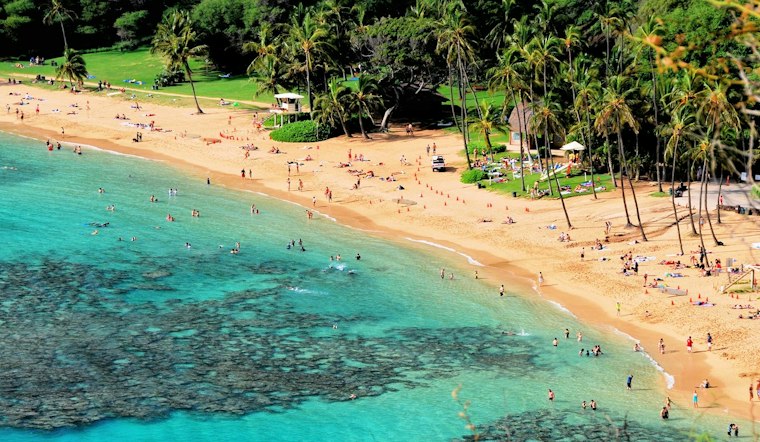
An older adult man swimming about 15 feet offshore near Lifeguard Tower 3B at Hanauma Bay went unresponsive around 10:30 a.m. on Thursday, and lifeguards who had been watching him from the water reached his side within moments. They pulled him to shore and began CPR. After three cycles of compressions, he regained consciousness with his breathing and pulse restored.
Lifeguards Were Already Watching Him
According to Hawaii News Now, Honolulu Ocean Safety Department lifeguards had been monitoring the man near Tower 3B on the left side of the bay before he suddenly stopped responding in the water. Lifeguards reached him immediately, brought him to shore, and started chest compressions rather than waiting for him to be fully clear of the surf. The outlet reports that after three rounds of CPR, he began breathing again and his pulse returned. Honolulu Fire Department personnel arrived to assist, and Honolulu Emergency Medical Services crews reached the scene shortly after, at which point lifeguards handed off patient care so EMS could continue evaluation and treatment.
It's a scenario that has played out at this same preserve before. In April, a 66-year-old woman was pulled unresponsive from the water roughly 10 feet offshore directly in front of Tower 3C and rushed to an emergency room in critical condition after lifeguards performed CPR, according to Beat of Hawaii. Hoodline covered that near-identical rescue near Tower 3C at the time, underscoring how even shallow, closely watched sections of the bay can turn into medical emergencies within seconds.
A Known Physiological Risk in Calm Water
Sudden unresponsiveness like Thursday's incident isn't always a simple case of inhaling water. A two-year Snorkel Safety Study commissioned by the Hawaii Tourism Authority and published in 2021 found that many unexplained snorkeling-related drownings in Hawaii stem from hypoxia brought on by Rapid Onset Pulmonary Edema, a condition in which fluid rapidly fills the lungs during physical exertion in the water, as detailed by Civil Beat. Researchers behind the study identified the condition as a key contributor to silent drownings among tourists and older swimmers, even in calm, shallow water like Hanauma Bay's.
The bay itself is hardly an unregulated free-for-all. The Honolulu Department of Parks and Recreation caps non-resident entry at 1,400 visitors per day, requires online reservations booked two days in advance, and mandates that every visitor watch a nine-minute safety orientation video before stepping onto the beach. Yet state figures show drowning remains the leading cause of injury-related death among tourists in Hawaii, with snorkeling responsible for 169 of 650 total ocean drownings statewide between 2007 and 2016, including 156 tourist deaths, according to statistics reported by VOA. A peer-reviewed study of lifeguard incident logs at Hanauma Bay found that 63.2% of all ocean rescues there occurred at a single reef channel known as The Slot, with non-residents representing 96% of rescue victims despite making up 88% of visitors, per the Wilderness Medical Society.
A Newly Independent Agency Keeps Responding
Thursday's rescue also reflects an agency still settling into its own identity. The Honolulu Ocean Safety Department became an independent, standalone city agency after Mayor Rick Blangiardi signed Resolution 24-103 in May 2024, with Oahu voters approving an oversight framework that November. Kurt Lager, a 20-year lifeguard veteran, was sworn in as the department's first official Chief of Ocean Safety in December 2025, and 31-year veteran Jimmy Barros was named Deputy Chief the following month — an appointment Hoodline detailed in its report on Barros becoming deputy chief.
In June, the department shifted islandwide operations away from paper log sheets to a digital mobile application called Watchtower across all Oahu lifeguard towers, a move the Office of the Mayor says allows instant logging of preventative actions, medical responses, and coordination between agencies.
The Honolulu Ocean Safety Department is reminding ocean users to stay aware of their surroundings, know their limitations, and swim near a lifeguard whenever possible.




