

























































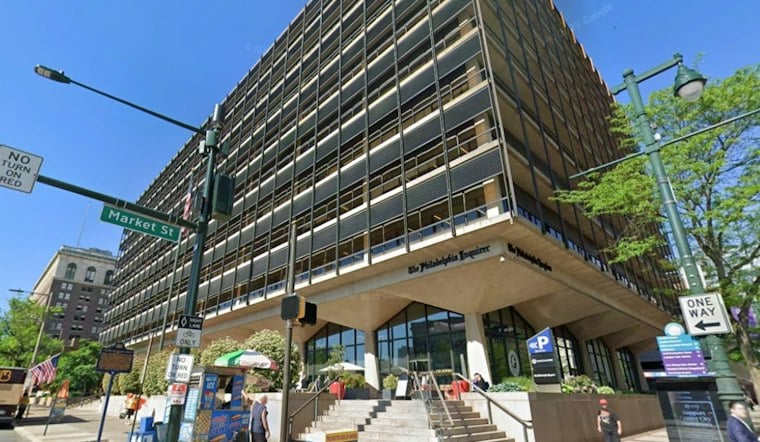
A nine-story modernist landmark near Independence Hall, the 300,000-square-foot tower is long known as the Rohm and Haas building.
Mezzanine debt sits behind the primary mortgage, and a lender may submit a credit bid using outstanding debt in a foreclosure-related sale. Newmark had listed the property for sale at $30 million, a steep markdown from the $40.5 million that Keystone Property Group and its partners paid for the building in 2013.
Parkway Corp., the Philadelphia-based real estate firm, operates the multi-level parking garage directly beneath the building.
A Tower Built for Plexiglas, Now Caught in a Debt Spiral
Nomura purchased Macquarie's U.S. arm in 2025. Macquarie announced in 2018 that it would move into the building in 2020. Dow Chemical had relocated out of the building; Dow acquired Rohm and Haas, the chemical company that built the tower as its headquarters, in 2009.
Construction was completed in 1964, and Rohm and Haas moved into the tower in 1965. The tower was the first private investment in the urban renewal of Independence Mall, designed by modernist architect Pietro Belluschi in collaboration with George M. Ewing Co., according to the Preservation Alliance for Greater Philadelphia. Belluschi was dean of architecture at MIT when he was approached to work on the design, and its translucent facade sunscreens were made of Plexiglas, the signature product of original tenant Rohm and Haas. The building earned a spot on the National Register of Historic Places on February 9, 2007, under reference number 07000031, gaining the listing despite being less than 50 years old at the time due to its exceptional significance in International style modern architecture, per Wikipedia.
Part of a Citywide Reckoning for Office Towers
The Rohm and Haas auction is not an isolated case. Centre Square, One South Broad, and Market Street towers are all undergoing foreclosure proceedings or receivership, reflecting mounting distress across Philadelphia's commercial real estate market. By late 2025, Greater Philadelphia had accumulated more than $1.3 billion in delinquent CMBS office debt spread across 24 properties, with Center City towers including 1700 Market St., 1818 Market St., and 1650 Arch St. entering receivership, the Business Journal reported.
One South Broad offers a particularly stark comparison: the 25-story landmark saw its net annual cash flow plunge from more than $3.8 million to under $600,000 following major tenant departures, before facing a $36.2 million foreclosure lawsuit in late 2025, as reported by the Business Journal. Lost office tenancies since 2020 have repeatedly triggered mezzanine and CMBS debt foreclosures across Center City, even as some buildings keep much of their space filled.
Market-wide numbers help explain why even a well-leased building like the Rohm and Haas tower can struggle to hold its value. Central Business District office availability across Philadelphia stood at 22.7 percent in the third quarter of 2026, according to Savills, even as total regional office leasing volume climbed to 1.3 million square feet during the quarter. Persistent high interest rates and hybrid work models have depressed downtown office values nationwide, pressuring owners to refinance debt taken on when borrowing costs and tenant demand looked very different.
The Rohm and Haas building's historic designation and modernist design stand in contrast to the broader pressure on Philadelphia's office market.





