

























































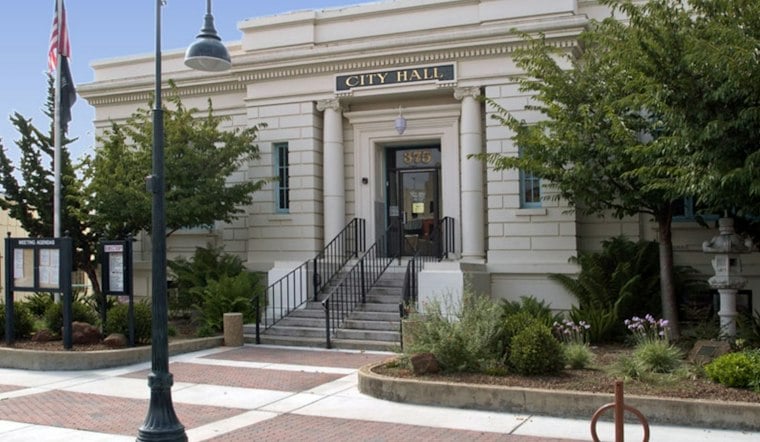
Hollister's police department lost most of its civilian workforce this week after the city's general fund balance collapsed to just $178, forcing layoffs that the police union says have left the agency effectively closed for business. The cuts hit records clerks, code enforcement, evidence staff and even an administrative captain, according to the Hollister Police Officers Association.
The layoffs stem from a financial emergency that the Hollister City Council formally declared on October 2, after City Manager Ana Cortez reported the general fund could not cover the city's upcoming payroll. As reported by SanBenito.com, the general fund reserve had held nearly $7.8 million in cash as recently as June 2025 before plummeting to its near-empty balance. To keep the city running, the council unanimously approved an $18 million interfund loan, pulling $11 million for the general fund and $7 million for the water fund from traffic and parks impact fee accounts at 4% interest, due back by June 30, 2027.
According to The Mercury News, the police department laid off eight civilian staff members on Wednesday, according to Hollister Police Officers Association president Bo Leland, who said the city also terminated one probationary civilian staffer earlier in the week and laid off an administrative police captain. Leland said the city manager cut every civilian police employee without consulting the police department, the union, or the police chief. The city alerted the police union to the impending reductions as a professional courtesy on Monday and sent the same notice to other affected labor groups the same day.
Union Warns Department Can't Keep Up With Basic Work
The Hollister Police Officers Association said the layoffs would leave the department without records staff, code enforcement, building and fleet maintenance, patrol community service officers, and evidence-section personnel. Leland said no one would be left to answer phones, release reports, or release towed and impounded vehicles, and that no one would be available to process arrest reports for delivery to the district attorney's office. He said police officers are not trained in California public records law, and that civilian work had ground to a halt and could not restart until employees returned.
The department now has just one administrative services supervisor remaining as its only non-gun-carrying employee, per Leland's account to the same outlet. The police lobby closed at 10 a.m. Wednesday and was expected to reopen at 8 a.m. Thursday. The city said senior administrative leadership and the animal control division were not impacted by the cuts, and called the union's characterization of the layoffs premature, misleading and factually inaccurate, though it did not confirm the exact number of employees affected.
San Benito County Sheriff-Coroner-Marshal Eric S. Taylor said he was deeply concerned about the cuts to civilian police staff, warning that removing civilian employees would harm public safety because they support police operations. The city said it intends to fill seven vacant police officer positions, budgeting $1.99 million for those roles, while the laid-off civilian employees accounted for $1.4 million in the budget, according to figures Leland provided.
A Decade of Deficits Finally Catches Up
City officials say Hollister faced a budget deficit of almost $7 million for the 2025-2026 fiscal year, with anticipated revenue of $50.2 million against budgeted expenses of $57.1 million. The city said other personnel had to be reduced to protect police and fire services, and that workforce reductions became unavoidable because personnel costs make up a substantial share of its operating budget. Officials acknowledged the decisions affect dedicated public servants who contributed to the community.
The warning signs stretch back months. City departments will revise service levels and operating hours in the coming days to adjust to the reduced staffing, per the city's own statement. Cortez told the council at its June 9 meeting that the city had been operating under structural deficits for at least ten years, according to BenitoLink, though council members struggled to agree on alternative budget proposals or reserve targets during subsequent discussions. The city offered retirement and voluntary-separation incentives in July, and several employees accepted them, but the city later said those earlier reductions did not generate sufficient savings.
Hollister had not completed budget audits since 2022. Cortez, who assumed office in February with an annual base salary of $265,000 after previously serving as city manager in Helena, Montana, and Carnation, Washington, cited years of improper interfund transfers and weak cash controls in explaining how the shortfall compounded. She replaced former City Manager David Mirrione, who stepped down in September 2025 following a vote of no confidence from the local firefighters union.
Water Rates and Tax Increases Among the Options on the Table
The city is facing financial problems, and possible water-rate increases have also been discussed. BenitoLink reports that Cortez found in April that the potable water department had spent $26.4 million more than it collected over the past decade. The council also voted to request state legislation that would let Hollister seek voter approval for a 1% local transaction and use tax increase above the state cap, a move that would push the city's local sales and use tax rate, currently 9.25%, even higher.
The Service Employees International Union Local 521 posted about the layoffs, while city employees commented at the October 2 council meeting. The city also lost key administrators throughout the year, including former Fire Chief Jonathan Goulding in June, alongside vacancies in the public works and parks directorships, with temporary retired officials appointed to fill the gaps.
The council also approved a multi-year utility rate restructuring plan in June that raises fixed monthly charges through fiscal year 2030, lifting fixed monthly residential water charges from a range of $23.98 to $37.52 up to $33.33 to $52.15. Whether that plan, the interfund loan, a possible water privatization deal, or deeper staff cuts will ultimately stabilize city finances remains an open question as tensions continue between Cortez, labor unions and public safety personnel over the path forward.





