

























































William Arnold Newton was 25 years old when he was killed and dismembered in 1990, his severed head and feet turned up in a dumpster near Santa Monica Boulevard and La Brea Avenue, and for more than three decades nobody was ever charged. Now a documentary called My Brother's Killer has put a name to the person investigators believe did it, and the film has a personal thread running through it: a man who says he survived an attack by the same suspect just months before Newton died.
A Freelance Writer's Brush With Death
Phil Tarley, a freelance writer and American Film Institute cinematography fellow from the class of 1980, says he met DarraLynn Madden outside a 7-Eleven on Santa Monica Boulevard in 1990 and brought her back to his home. According to Hollywood Times, Madden attacked him with a knife, slitting his throat so severely that a surgeon said the cut came close to his jugular. Tarley says it took twenty-two stitches to close the wound, and he escaped only by driving Madden out of his own apartment.
Tarley, who was also inducted into the Gay Porn Hall of Fame as producer-director Phil St. John and directed a picture under that name in the Valley, returned to work just two days after leaving the hospital. It wasn't until later that he and filmmaker Rachel Mason realized the man who tried to kill him was the same person suspected in Newton's murder. Tarley, who contributed archival footage to Mason's documentary, put it simply: “I am in it because the person who killed Billy London also tried to kill me,” he said, per the same account.
From Circus of Books to a Cold Case
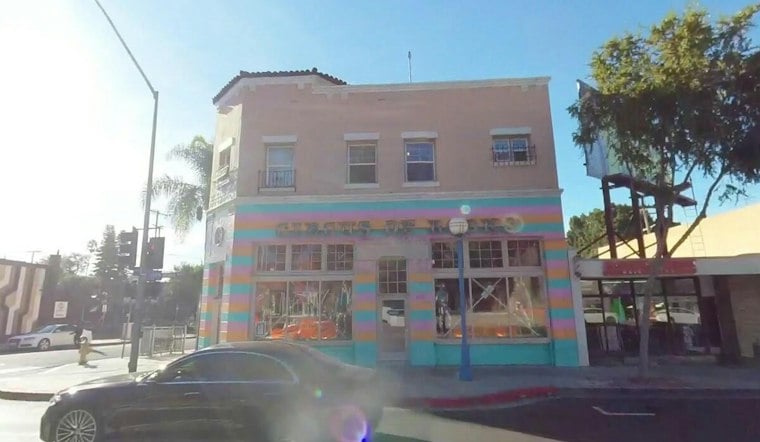
Mason grew up around the world of Circus of Books, the West Hollywood porn shop her parents owned, and she discovered Newton's murder while researching an old magazine during work on her 2019 documentary about the shop. According to The Los Angeles Times, she had been working on that Circus of Books project in 2017 or 2018 when the case first caught her attention. She went on to work with cold case detectives, amateur sleuths and old adult video materials, some of which turned out to be evidence, per Hollywood Times.
Newton performed in gay adult films under the name Billy London, and his case had gone cold for more than 30 years before amateur researcher Clark Williams identified Madden as a person of interest, according to The Los Angeles Times. Williams developed the lead that convinced LAPD detectives to travel to an Oklahoma penitentiary, where Madden was already imprisoned for the murder of another gay man, the paper reports. The investigation, as described by The Hollywood Reporter, also involved LAPD detective John Lamberti and a man named Kevin Clarke who knew someone connected to the case. Earlier amateur efforts included podcasters Christopher Rice and Eric Shaw Quinn, who put out a call for tips and conducted interviews around 2020, The Los Angeles Times notes.
A Confession, but No Charges
According to The Los Angeles Times, Madden confessed to killing Newton during an interview with LAPD detectives; the documentary itself shows Madden confessing to Mason on camera. Prosecutors ultimately declined to bring charges, the paper reports, citing insufficient evidence beyond the confession and Madden's existing life sentence in Oklahoma. Tarley, for his part, described Madden as a serial killer, and Mason said she believes there may be more undiscovered victims, according to Hollywood Times.
Tarley is believed to be the only person known to have escaped one of Madden's murder attempts, per the same account. He says the trauma of the 1990 attack resurfaced while the documentary was being filmed, and again at the film's SXSW screening in Austin this past March, where he watched the finished film for the first time. He had sat down with Mason for an interview at his West Hollywood home in February.
A Hate Crime Against a Community Under Siege
Mason has said Newton's murder was tied to the white-nationalist skinhead movement and broader violence against gay people at the time, telling Filmmaker Magazine that she wanted the historical record to serve as a marker for what she sees happening today. The killing occurred amid the height of the AIDS epidemic and widespread gay-bashing violence in Los Angeles, as Variety notes in its review, a period when, per Yahoo Entertainment, the city's overall violent crime rate hit 1,758.4 per 100,000 residents in 1990.
Despite that backdrop, Mason has said she wanted to show a community that was buried and beaten fighting back against homophobia, and the film includes early 1990s footage of Queer Nation marching in the streets, some of it shot by Tarley for his short documentary The Year of the Queer. Mason used the activist group's motto, “An attack on one of us is an attack on all of us,” as the film's subtitle. Mason told Filmmaker Magazine that because the gay community was so oppressed at the time, there was also great resilience within it.
Where and When to See It
My Brother's Killer, directed by Mason and co-written with producer and editor Dion Labriola, premiered at South by Southwest in March 2026. The film screens again on October 24 at 7 p.m. at the TCL Chinese 6 Theatres in Hollywood as part of AFI FEST 2026, according to AFI. Sources differ on the film's exact running time, with Hollywood Times listing it at 87 minutes, Variety reporting 98 minutes, and Metro Cinema citing 95 minutes.





