

























































A Houston woman says she only learned she had breast cancer because a drunk driver hit her car. Bianca Bukram says the crash happened on June 1, 2025, leaving her unconscious at the scene before she was taken to a trauma unit at a Miami hospital — and it was there, during routine trauma scans meant to check her crash injuries, that doctors found something she never expected.
Bukram had no identifiable symptoms and had never had a mammogram before the diagnosis, according to her account shared with CW39 Houston. Doctors performed CT scans to assess her crash injuries, and it was through that process that they discovered the cancer, she told the station. As they worked to determine whether the disease had spread to her lymph nodes, doctors initially considered both stage two and stage three breast cancer, Bukram said.
The diagnosis came as her father was battling stage four pancreatic cancer. Bukram's family lost him in February, she said, meaning she was navigating her own treatment while grieving a parent at the same time.
Surgery, Hormone Therapy and a Year of Fear
Bukram underwent a lumpectomy on Oct. 16, 2025, and she has since had surgery and is now receiving hormone therapy, per the CW39 report. She recently marked what she considers her one-year cancer-free anniversary, but the milestone hasn't erased her anxiety. She says fear of the cancer returning has not entirely disappeared.
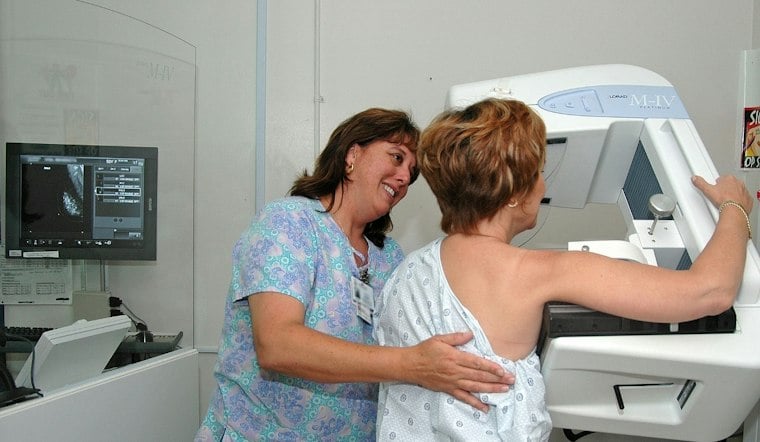
“I'm still scared to go get my follow-ups,” Bukram said, according to the station's report. She has another mammogram scheduled for Oct. 27. Bukram also said she faced medical bills totaling approximately $265,000 and credits her medical team's kindness and support with helping her through treatment.
A National Screening Gap
Bukram's case underscores a broader pattern in breast-cancer outcomes. The U.S. Preventive Services Task Force recommends that women ages 40 to 74 at average risk get a mammogram every two years, though it says evidence remains insufficient to weigh the benefits and harms of screening for women 75 and older, and insufficient as well to recommend for or against supplemental ultrasound or MRI for women with dense breasts. The task force also notes that Black women are roughly 40 percent more likely to die of breast cancer than white women, and that an estimated 43,170 women died of the disease nationwide in 2023. The CDC echoes the biennial screening guidance for average-risk women in that age range.
Bukram's story also has an echo elsewhere: Wendy Sanchez, a patient treated at Huntington Health, returned to the medical center two years after a near-fatal 2022 car accident when she felt a breast lump, leading to a diagnosis of stage 1 triple-positive ductal carcinoma, according to Cedars-Sinai. Sanchez underwent tumor removal, lymph-node removal and a bilateral mastectomy in May 2025 and is now considered cancer-free, the health system reported. A medical oncologist told Sanchez that available data does not establish that car accidents cause cancer, though physical trauma, stress response and inflammation may potentially create conditions where cancer cells thrive.
Turning Survival Into a Fundraiser
Bukram shared her story publicly for the first time in the CW39 interview, and she channeled it into action. She hosted “Coming Back to Bianca,” a 3D, AI-powered immersive presentation chronicling her car crash, cancer diagnosis and multiple family losses. The event benefited two organizations: Global Empowerment Mission, which provides disaster relief, and the Ade Music Foundation, which is associated with Houston violinist Damola.
The evening featured salsa music from Grupo Cache along with a guitarist Bukram identified as a member of Marc Anthony's band. Tickets were $50, and after the event nearly sold out, organizers opened an additional table with 10 seats for latecomers.
“I want my life being saved to be a reason that somebody else can have a second chance,” Bukram said, describing herself as grateful, excited, vibrant and proud as she prepares to tell her story on stage.


