

























































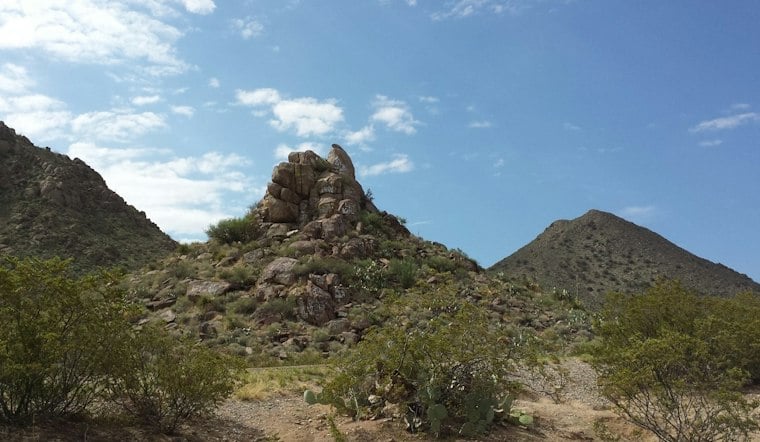
A proposed $15 billion data center campus is planned for the desert near the small community of Desert Haven in Hudspeth County. Local officials say they had little information about the project before organizers confirmed their plans. The sprawling project, led by Los Angeles-based Kaufman & Company alongside other partners, is planned to cover roughly 24,000 acres and generate 350 megawatts of power once complete — enough, by one estimate, to light up at least 100,000 homes.
County Officials Seek Answers on Proposed Data Center
According to KTSM 9 News, Kaufman & Company and other companies are planning the project near the Desert Haven community. Construction could start as early as 2027, and project managers have helped grade private roads. Hudspeth County Judge Joanna MacKenzie had very little information before organizers confirmed their plans. She visited the site Thursday and met with the project's contractors to get answers.
Project planners acknowledged that communication with local government and the community had been insufficient, and apologized for it, per the same KTSM account. Project representatives committed to improving communication going forward, and agreed to make a presentation on the campus's development at a public meeting scheduled for Oct. 27. The data center sits on private property, and Texas counties, unlike cities, do not have zoning power to regulate land use — a limitation that leaves Hudspeth County with few formal levers to control what gets built there.
Water Questions Loom Large Over Desert Project
The proposed data center could impact local use of power and water, a concern that has become central to the county's response. Planners told MacKenzie the campus will draw water from a well connected to an aquifer beneath the property, but that water would be drawn from the property only one time, during the campus's initial setup. The campus is also expected to use a water catchment system and operate as a closed-loop system going forward, according to KTSM. MacKenzie said the project was expected not to draw on local water sources and would power its own data center.
Still, KVIA reports that Hudspeth County is seeking information confirming that the facility will not impact surrounding water users — a request that underscores how little documentation county officials have been given so far. The same outlet notes the project is expected to bring 800 construction jobs over four to five years, plus 200 to 300 permanent jobs once operational. ServerDomes, a Boise-based company, is also involved in the project, and the campus is planned to include dome-like structures spread across the desert land.
A Bigger Pattern Across Texas
Hudspeth County's scramble for answers mirrors a broader scramble playing out statewide. Texas already has more than 400 data center facilities with roughly 70 more on the way, and the Texas Tribune reports that existing facilities were estimated to consume about 25 billion gallons of water in 2025 — just 0.4% of the state's total water use. The Tribune notes that data center water use could represent up to 2.7% of the state's total annual water use by 2030. Data centers use water both directly, for cooling, and indirectly, through the electricity they draw on, and that electricity demand is expected to help nearly double Texas' overall power demand by 2030, per the same report.
Researchers at the University of Texas have said data centers could account for as much as 3% to 9% of the state's water use by 2040, according to UT News. The Houston Advanced Research Center has also said the Texas State Water Plan does not currently account for the industry's forward-looking growth.
Other Texas projects illustrate the scale of what's coming. Near Austin, a 600-megawatt hyperscale campus from Skybox Datacenters and Prologis is already under construction in Hutto, according to the Austin Free Press. By comparison, Minnesota requires data center developers to consult with the state's environmental agency to confirm a proposed site has an adequate water supply before building — a check Texas has not required statewide, per the Tribune.
For now, Hudspeth County residents are left waiting on the Oct. 27 meeting for more details about a project planned for the desert outside their doors.





