

























































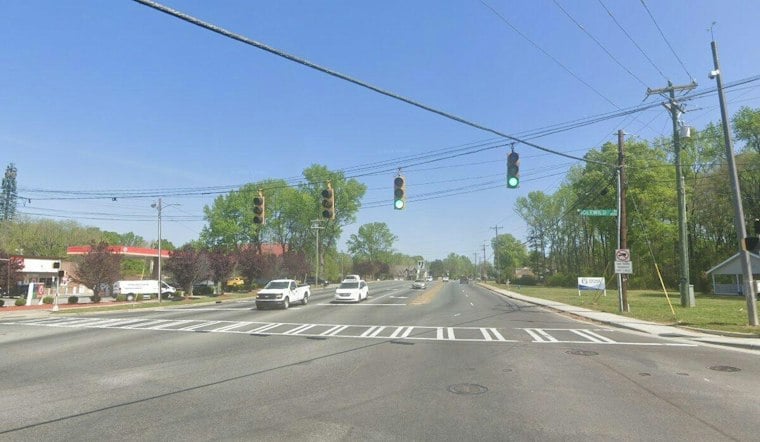
Atilio Portillo says he was driving to work with his brother and nephew on Idlewild Road near W.T. Harris Boulevard on Wednesday morning when ICE vehicles boxed in his pickup truck. What happened next, he says, left him too shaken to sleep that night: agents ordering him out at gunpoint, his truck windows shattered, and nearly 30 minutes in handcuffs despite being a U.S. citizen.
Portillo told agents he was a citizen as soon as they approached, and he says he yelled it again during the encounter — “I am a U.S. citizen” — a moment a bystander captured on video, according to WFAE. He says agents still ordered him to open the driver's door at gunpoint, then broke the truck's windows and pulled all three men out, pointing a gun at his face in the process. Portillo became a citizen in 2013 after arriving in the U.S. from El Salvador in 1988, WFAE reported.
According to Portillo's account, agents demanded identification from the men and checked his and his nephew's citizenship before handcuffing both of them for nearly 30 minutes. He says agents never showed him a warrant. Eventually, Portillo and his nephew were released — but his brother, who Portillo said is undocumented, was taken to the Stewart Detention Center in Georgia, the outlet reported. ICE did not respond to WFAE's request for comment on the incident.
A Pattern of Citizens Caught Up in Immigration Stops
Portillo's account echoes other cases emerging across North Carolina this year. In Salisbury on Jan. 5, ICE officers pulled over U.S. citizens Edwin Godinez and his stepbrother Yair Napolés in an unmarked vehicle after demanding they stop recording and turn off their phones, according to WUNC. Neither man was arrested, and the officers eventually left them, the station reported.
A federal class-action lawsuit covered by NC Newsline was filed by four U.S. citizens and a visa holder, accusing the Department of Homeland Security of making immigration arrests in North Carolina without warrants or probable cause. One plaintiff named in that case, naturalized citizen Willy Wender Aceituno, alleged that agents smashed the window of his truck and handcuffed him even after other officers had confirmed his citizenship. ProPublica reported that on Nov. 15, 2025, federal agents in Charlotte stopped Aceituno twice, broke his vehicle window, pulled him from the car and detained him despite his protests that he had already proved who he was.
Citizenship Checks Are Multiplying Nationally
Portillo's case fits into a much larger national tally. ProPublica identified more than 500 American citizens detained during the administration's immigration crackdown, including more than 100 who were held after agents questioned their citizenship. The scrutiny has not been limited to the East Coast: the New York Times reported that a California man identified as Ricardo Gonzalez was hospitalized in Long Beach after an altercation with ICE left him pinned to the ground in handcuffs, according to his family, in an incident reported two days before Portillo's.
Arrests Have Surged Across North Carolina
The enforcement activity behind these encounters has intensified sharply. NC Newsline reported that ICE arrested 3,304 people in North Carolina between Jan. 20 and Oct. 15, 2025 — more than 2.8 times the total over the same period the year before. The Charlotte Observer reported that arrests statewide averaged about 20 people per day in December, January and February, then jumped to 270 arrests statewide in the first 10 days of March alone, including at least 155 in Mecklenburg County.
Charlotte itself has seen immigration arrests more than double so far this year compared with the same period in 2025, according to newly released data cited by WFAE. Totals from a prior operation known as Operation Charlotte's Web also remain disputed: the Guardian reported DHS said it made more than 250 arrests across the state, while the Assembly reported the Charlotte-area operation netted more than 425 arrests. An ICE FAQ states that all people who violate U.S. immigration law are subject to arrest and detention regardless of criminal history, though that guidance does not address how the agency verifies citizenship in the field.


