

























































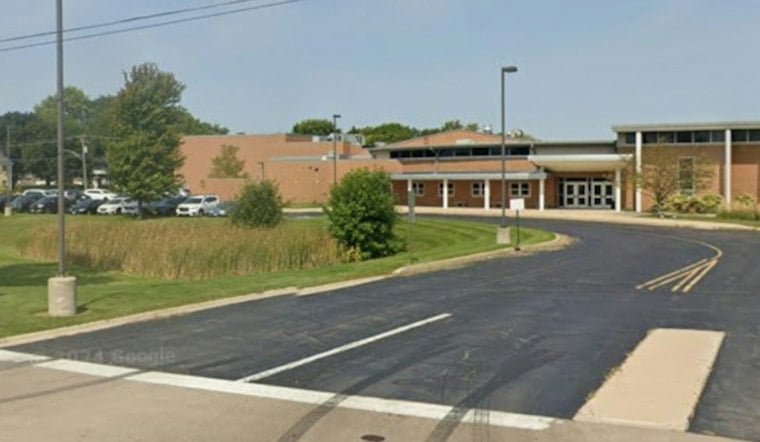
Hinckley-Big Rock Community Unit School District 429 has shifted from assigning each student a personal Chromebook to keeping shared devices at school for checkout as needed. The change is not a ban on classroom computers; it gives teachers and students more discretion over when screens are used, as the small west suburban Illinois district reconsiders their role in class.
The district, which serves a little over 700 students across an elementary school, middle school and high school in Hinckley and Big Rock, is located a little less than 60 miles west of Chicago. According to the Chicago Tribune, the one-to-one Chromebook model began during the COVID-19 pandemic and continued even after students returned to in-person classes. Under the new approach, computers are housed at school and shared rather than issued to each child individually.
The shift followed the district's decision in fall 2024 to adopt a strict no-cellphone policy, a move Superintendent Jessica Sonntag has tied to fewer disciplinary issues and more positive social interactions, as reported by Northern Public Radio. Families were notified of the shared-device plan over the summer, and the policy went into full force at the start of the 2026 school year, per the Chicago Tribune's reporting.
Where Paper Fits in the New Approach
Students now do many readings and assignments on paper, and handwrite essay drafts before typing a final copy, the Tribune reports. The district has also brought back focused handwriting instruction in elementary school. Northern Public Radio reports that it bought significantly more physical math and science textbooks and that almost no homework is assigned online anymore.
Computers haven't disappeared from Hinckley-Big Rock classrooms entirely. The district still uses them as needed for research and continues teaching keyboarding, the Tribune notes. Fifth-graders take a basic computer skills course covering Google applications, and the high school offers computer programming for interested students. District officials are also considering a return to paper standardized testing, though the Tribune's reporting does not specify a timeline for that change.
Chromebooks Are Used More Selectively
The numbers illustrate just how far device use has dropped. Older elementary students now spend about 45 minutes to an hour per week on a Chromebook, according to Deborah Kabasenche as cited by the Tribune. At the high school, teacher Becky Lauer said a Chromebook now gets signed out about once or twice a day, down from a time when she estimated computers were in use more than half of the school day.
High school students may still check out a Chromebook to take home when needed, and the district sold some older devices to community members so families could have access at home, Sonntag told the Tribune. Kindergarten through eighth-grade students generally are not expected to need devices at home for schoolwork.
Students and Teachers Describe the Difference
Student board representatives Beckett Neibert, a 15-year-old sophomore, and Meegan Kubinski, a 16-year-old junior, described changes in participation and collaboration, according to the Tribune. Neibert said more students are raising their hands in class. Kubinski said students now talk through group assignments before turning to a Chromebook, giving classmates more chances to befriend one another.
Teacher Denise Zartmann told the Tribune that students aren't rushing through assignments as much anymore. She said they're using longer and more varied sentences when writing by hand, and are asking her for more feedback than before.
A Book That Shaped District Thinking
District administrators point to a specific text as influential in the policy shift: The Digital Delusion by Jared Cooney Horvath. Sonntag said the book validated concerns about student focus, memory and critical thinking, and she believes prolonged screen use and the gamification of education affect students' ability to learn, according to the Tribune.
A district survey found that 92.9% of Hinckley-Big Rock teachers said they have seen improved student engagement since the shift toward more intentional technology use, Northern Public Radio reported in September. In June, the district planned to sell older Chromebooks to community members for $35, according to Citizen Portal.
Part of a Wider Illinois and National Trend
Hinckley-Big Rock isn't alone. Some other Illinois schools are also scaling back student laptop use as part of a broader movement to rethink screens in the classroom, Northern Public Radio reports. Illinois public schools are also set to restrict cellphone use during instructional time starting next school year, according to the Tribune.
Nationally, the picture looks similar. Several states and the Los Angeles Unified School District are setting limits on screen time in schools, according to NPR, with the LAUSD school board voting unanimously to limit screen time at all grade levels, emphasizing eliminating screens for elementary students. Since January, Alabama, Tennessee, Utah and Virginia have passed legislation reevaluating technology's role in instruction and assessment, and NPR reports more than 10 other states are weighing similar restrictions. At least 14 states proposed laws to limit school screen time in 2026, per the Tribune's reporting.
Schools elsewhere have made similar moves. The New York Times reports that McPherson Middle School in Kansas asked all 480 of its students to return school-issued Chromebooks, keeping laptops in classroom carts for limited, teacher-assigned activities, with students now taking notes mostly by hand. Schools in North Carolina, Virginia, Maryland and Michigan that once bought devices for every student are now reevaluating heavy classroom technology use, the Times notes, and at least 10 states, including Kansas, Vermont and Virginia, have introduced bills to restrict student screen time. In Missouri, an initial proposal would have capped screen time at 45 minutes per day and mandated cursive-writing instruction, according to NPR.
The Evidence Calls for a Balanced Approach
Researchers caution against drawing sweeping conclusions. NPR cites researchers arguing that widespread computer use has not delivered on higher test scores or student achievement, though an education technology policy expert warned that broadly banning school screen time could be too sweeping, since different screen activities carry different educational effects.
Liz Kolb, a clinical professor of educational technologies and teacher education at the University of Michigan, told the Tribune that research does not support an all-or-none approach to classroom technology. She said moderate technology use paired with good instructional design can yield moderate learning gains compared with either paper-only work or technology overuse, adding that removing technology may help some students but is not a magical cure for classroom distractions. “A balanced approach is best,” Kolb said. She also noted that technology's classroom use matters more for learning outcomes than screen time alone, and pointed to other factors affecting achievement, including standards changes, absenteeism and fewer available teachers.
Shared Devices and Student Attention
The district has used shared Chromebooks before: its 2019-2020 plan described dedicated Chromebook carts in every classroom for grades 1-5, according to Hinckley-Big Rock CUSD #429. Under the current policy, devices are kept at school and shared; families were notified over the summer, and the change took effect at the start of the 2026 school year. A 2024 report from the OECD Directorate for Education and Skills found that 59% of students across OECD countries said other students’ use of phones, tablets or laptops diverted their attention in at least some math lessons. That finding addresses distraction from other students’ device use; it does not, by itself, determine whether a particular classroom use of technology helps learning.
Hinckley-Big Rock's graduation rate sits at roughly 87%, slightly below the Illinois average, and its ACT averages in English, math and science are slightly below state averages, according to data cited by the Illinois State Board of Education in the Tribune's report. Even so, district teachers and administrators describe the new device policy as a positive change, the Tribune reports, as the shared-computer model continues into its first full school year.





