

























































American shoppers can still find bananas for less than a quarter apiece, even as costs rise across the supply chain. Diesel prices in the United States have climbed about 70 percent since the Iran war began seven months before publication, peaking above $6 per gallon. The increase adds expense to the many steps involved in bringing bananas from Central American plantations to U.S. shelves.
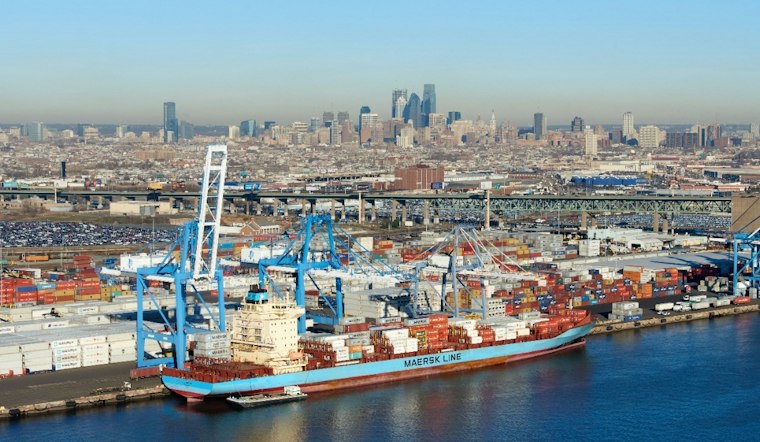
One example of that supply chain appeared in The New York Times. Reporter Ana Swanson, who covers international trade for the paper, described a banana supply chain involving Guatemala, the Del Monte Spirit and Holt Terminal.
A 40-Hour Race to Unload Millions of Bananas
The Times account said the Del Monte Spirit's crew had 40 hours to unload millions of bananas before the ship left for its next weekly pickup. Bananas are ripened by gradually increasing temperatures and using ethylene gas to turn green fruit yellow.
Bananas get hit harder than many other foods by rising energy costs because they travel long distances while refrigerated the entire way, the Times reports. Rising fuel and other input costs add pressure across the supply chain.
Hormuz Disruptions Ripple Through Fertilizer Markets
The Strait of Hormuz is a key route for global fertilizer trade. Transits through the strait are now a small fraction of former levels, and global oil prices have repeatedly breached $100 per barrel over the preceding seven months. Zero Carbon Analytics says that in 2024, roughly 34 percent of globally traded urea and 23 percent of global ammonia passed through the strait, and around 30 percent of global nitrogen fertilizer exports transit it. Middle Eastern natural gas is a key feedstock for synthetic nitrogen fertilizers exported worldwide. Higher energy costs ripple through the supply chain.
In Guatemala, the top foreign supplier of bananas to the U.S. market, more than $1.1 billion worth of the fruit was exported to the United States in 2025, according to the Observatory of Economic Complexity, with Ecuador and Costa Rica following behind.
Peru's Disease-Ravaged Valleys Show the Toll
In northern Peru, grower Miguel Angel Morales has watched disease wipe out one in three banana-growing valleys in his region. His operation now fills just one banana container where it produced 12 containers five years earlier.
That disease is Panama disease, also known as Fusarium wilt Tropical Race 4, and it specifically threatens Cavendish bananas, the variety Americans almost exclusively encounter today. The fungus can survive in soil for decades and cause permanent loss of farms. It was first detected in South America in Colombia in August 2019 before spreading to organic banana farming regions in northern Peru in April 2021 and Venezuela in 2023, according to the Alliance of Bioversity International and CIAT.
Researching Disease-Resistant Bananas
Banana companies are researching genetic alternatives to guard against a possible global supply collapse, though Del Monte declined to comment on its own program. Australia has already moved on this front: in February 2024, regulators approved QCAV-4, the world's first genetically modified Cavendish variety, engineered by Queensland University of Technology with a single gene from a wild Asian banana species to resist the disease, according to the USDA Foreign Agricultural Service.
Why Grocery Shelves Haven't Felt the Squeeze Yet
Despite all this upstream pressure, U.S. shoppers have barely noticed. Average retail bananas cost about 65 cents per pound in August, with prices remaining relatively stable over the last decade, the Times reports. Bananas remain America's most consumed fresh fruit, with Americans eating around 80 bananas per person per year on average.
What supply and price data show
The U.S. market’s reliance on imported fruit sits within a globally concentrated export geography: according to the Food and Agriculture Organization of the United Nations, more than 90 percent of bananas for export originate in Central and South America and the Philippines.
Grocery stores often price bananas cheaply to draw customers, while producers have little leverage to raise prices because several companies sell what is essentially an identical product. Del Monte's banana margin was just 2.3 percent in the second quarter.
Trucking Rules and Tariffs Add Pressure at Home
The squeeze isn't limited to the fields and ports overseas. In March 2026, the Federal Motor Carrier Safety Administration implemented stricter final rules restricting eligibility for non-domiciled Commercial Driver's Licenses.
The Trump administration did exempt some food not locally grown from tariffs in November 2025, but banana producers still face a pileup of challenges beyond the Iran war, including disease, climate change, tariffs and an exceptionally severe El Niño. Together, these pressures could eventually affect the prices paid by American shoppers, who have grown used to paying pocket change for the country's favorite fruit.




