

























































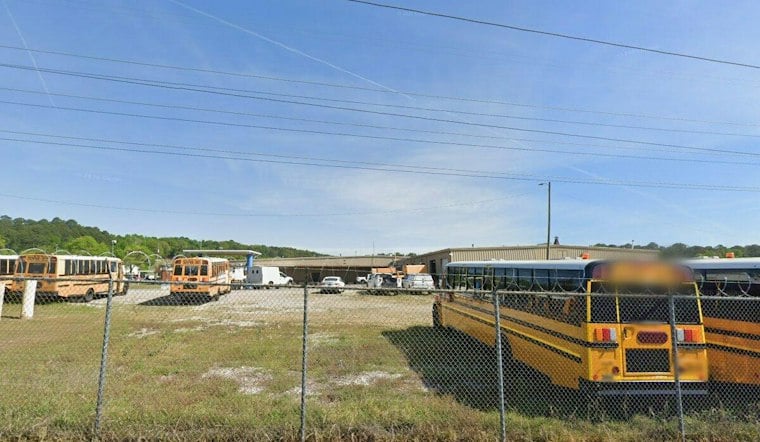
Nearly 500 school buses across Jefferson County are getting air conditioning, and the work has already begun. The Jefferson County Board of Education approved a bid to retrofit around 500 buses in the fleet, with installation underway and a goal of wrapping up before the hotter months of 2027 arrive.
The district confirmed the scope of the project to WBRC, which reported that a bid to retrofit around 500 buses with air conditioning was approved and that installation has already started. Beyond the retrofits, the district says it will also exclusively purchase new buses equipped with factory A/C going forward, meaning the system is moving toward equipping its entire fleet with cooling instead of waiting for aging buses to be replaced one by one.
Superintendent Walter Gonsoulin framed the move as a direct response to requests from families and staff. “Our parents and bus drivers have asked us to do this, and I want our community and employees to know that we are listening,” he said, according to the station’s report. Gonsoulin has also said students and drivers deserve comfortable rides and working environments, and he credited the transportation department, district leadership and board members for supporting the project, per the same account.
A Summer That Pushed Bus Temperatures to 112 Degrees
The push for air conditioning follows a brutal stretch of heat that hit central Alabama while students were back in class and riding buses. Birmingham reached 102 degrees on September 5, according to the National Weather Service, marking the third consecutive day the city had hit at least 100 degrees, as reported by al.com. That day’s high ran 14 degrees above the average for the date, and heat advisories across north and central Alabama were expected to stay in effect until 8 p.m. the following Sunday.
Inside the buses themselves, conditions reportedly got far worse than the outdoor air. Former Jefferson County bus driver Charles Belvin said drivers had sent him readings well above the ambient heat. “I’ve had bus drivers send me thermometer gauges at 112 degrees,” Belvin told WVTM 13. The same report noted that Jefferson County Schools was short 48 bus drivers needed to cover the district’s 488 routes heading into the school year, prompting the district to enlist 25 mechanics to help drive buses while transportation director Kevin Snowden said 21 new drivers had been hired for the year.
What the District Hasn’t Said
Several key details remain unknown. Jefferson County Schools has not disclosed the project’s total cost, has not identified the retrofit contractor, and has not provided a per-bus cost or an explanation of how the work will be funded. The district also has not specified which buses or routes will receive air conditioning first.
Even with a properly functioning system, heat can still seep back into a bus. Engineers from Daimler Truck and Thomas Built Buses published research in 2024 finding that sunlight, heat transfer through vehicle surfaces and circulating air all contribute to how hot a bus interior gets, though their computer model predicted cooling somewhat faster than actual testing showed — and that research did not examine Jefferson County buses specifically. Separately, industry reporting from School Transportation News notes that bus air conditioning is generally designed to provide only around a 30-degree differential from the outside feel, and that a full passenger load, direct sunlight, frequent stops and repeated door openings all introduce additional heat even when a system is working as intended.
A Patchwork Across Alabama Districts
Jefferson County is far from alone in confronting this problem, and other districts show just how uneven bus cooling remains statewide. Shelby County Schools has about 350 buses serving roughly 10,000 students who rely on district transportation, and most of that fleet is not air conditioned, though buses serving students with special needs are air conditioned and outfitted with special accommodations, seating and trained staff, per WBRC’s earlier reporting.
Montgomery Public Schools has taken a slower, phased approach, having installed A/C units on about 65 of its 220 buses — roughly 30% of the fleet — according to WSFA. The district said it paid $98,000 for air-conditioned buses in 2023 and $145,000 this year, while retrofitting an older bus would cost close to $10,000; every bus serving Montgomery’s special-needs students already has air conditioning. Ohio County Schools, meanwhile, told WBKO it plans to retrofit two buses a month, aiming for 32 air-conditioned buses by the end of the school year and 36 of its 48 total buses by next August, with each retrofit costing a little over $15,000; only 20 of the district’s 48 afternoon routes currently have cooled buses.
Under Alabama school bus specifications, air conditioning is required on certain buses serving students with special transportation needs, but it is otherwise left to local school systems to decide for regular routes — meaning students across the state can have very different experiences depending on where they attend school. Jefferson County’s retrofit push effectively closes that local gap for its own fleet, even as neighboring districts continue working through far smaller shares of their buses.


