

























































Jersey City's Planning Board voted unanimously, 6-0, on October 13 to add 43 Black historic sites to the Historic Preservation Element of the city's Master Plan.
The vote covers a sweeping range of locations, from Underground Railroad safe houses to civil rights landmarks to the site where Jackie Robinson broke organized baseball's color line, as reported by Hudson County View. Jersey City staff will now revise the Master Plan appendix to incorporate the full report, which details both existing buildings and the locations of structures that no longer stand, according to the same outlet's account of the meeting.
A Survey Years in the Making
The move traces back to 2023, when Jersey City adopted a new Historic Preservation Element in its Master Plan that specifically recommended a survey of African American history in the city and the identification of sites worth formal adoption, per Hudson County View's reporting. The city hired Trenton-based Hunter Research in 2024 to conduct that survey, with Jersey City planning staff providing the firm starting points and later connecting researchers with community members for deeper digging.
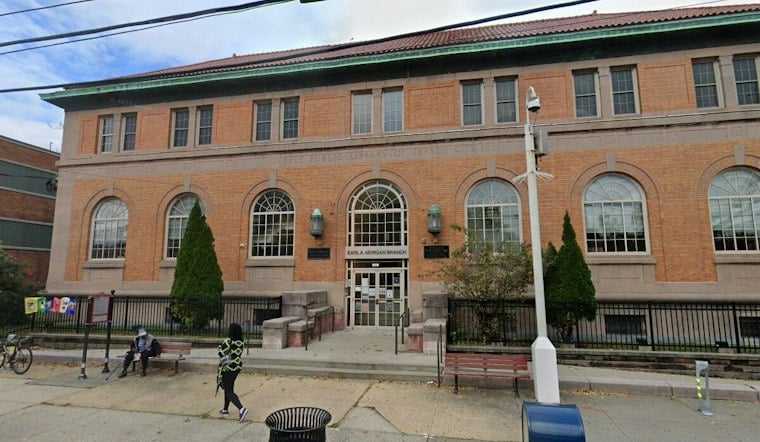
Hunter Research's work drew on collaboration with Neil Brunson of the Afro-American Historical Society Museum, Jersey City NAACP President Charles Mainor, and Gillian Sarjeant-Allen of Radical Solutions, the outlet reported. The firm also reviewed existing scholarship, including Mayor Glenn Cunningham's Hidden Footprints and Martin Pierce and Deborah Hairston's History of Jersey City, 1630 to Present. The Afro-American Historical Society Museum itself, which operates on the second floor of the Jersey City Public Library's Greenville Branch and features diorama exhibits of Underground Railroad routes through Hudson County, according to the Jersey City Public Library, was itself among the 43 sites approved.
Jersey City's Historic Preservation Commission had already recommended the report for adoption before it reached the Planning Board, and Supervising Planner Matt Ward recommended approval at the meeting, Hudson County View reported. Commissioner Andy Kaplan, who also directs the city's Department of Infrastructure, said the report was enlightening about the city's rich history and called preserving its Black history important and exciting, per the outlet. Kaplan recused himself from a separate 5-0 Planning Board vote amending the Master Plan's transportation plan component because his department helped develop the application. Board Chair Vidya Gangadin thanked Senior Historic Preservation Specialist Maggie O'Neill, her staff, and the community members involved in the study.
From Underground Railroad Routes to a Jackie Robinson Milestone
Among the approved sites is the former home of Thomas and John Vreeland Jackson, freed slave brothers who bought land in Jersey City's Greenville section in 1831 using earnings from their Hudson River oyster business, establishing what became a crucial safe house link on the Underground Railroad along what is now Martin Luther King Drive, according to the American Littoral Society. Jersey City served as the final New Jersey terminal on escape routes for enslaved people fleeing to northern states and Canada, the group notes. Also on the list is the Holden-Hilton residence at 79 Clifton Place, another Underground Railroad site, alongside a separate unspecified Underground Railroad stop.
Roosevelt Stadium made the cut as well, the Art Deco venue where Jackie Robinson played his first integrated professional baseball game with the Triple-A Montreal Royals on April 18, 1946, going 4-for-5 with a home run, according to the Society for American Baseball Research. The stadium hosted major sporting and cultural events for decades before it was demolished in 1985 and replaced by residential development, the organization notes.
Cultural history is represented too: the approved sites include the former George E. Cannon house and the studio of the Frederick Douglass Film Company, a pioneering Black studio established in Jersey City in 1916 to counter racist depictions in films like The Birth of a Nation. The Majestic Theater at 275 Grove Street, where the company's debut film The Colored American Winning His Suit premiered in July 1916 before an interracial audience of more than 800 people, was also approved as a community building.
Medicine, Civil Rights, and Women's Suffrage
The list includes the shared residence of Lena Edwards and Lewis Keith Madison. Edwards established her medical practice in Jersey City in 1925, broke barriers in obstetrics at Margaret Hague Hospital, and became one of the first African American women board-certified in obstetrics and gynecology before President Lyndon B. Johnson awarded her the Presidential Medal of Freedom in 1964, according to the National Library of Medicine.
Two sites tied to Reverend Dr. Florence Spearing Randolph's residences, covering 1891 to 1908 and 1908 to 1919, were also approved. Randolph moved to Jersey City, organized the New Jersey State Federation of Colored Women's Clubs, and was active in women's suffrage, per Discover NJ History; she went on to serve as pastor of Wallace Chapel A.M.E. Zion Church in Summit for 21 years. The residence of Bishop Alexander Walters of the AME Zion Church was approved separately.
Other approved sites span churches, schools, and civil rights milestones: Clair Memorial United Methodist Church, Metropolitan A.M.E. Zion Church, St. John's Episcopal Church at 130 Summit Avenue, Christ the King Catholic Church, Salem Baptist Church, Monumental Baptist Church, and Claremont-Lafayette United Presbyterian Church. The Ollie E. Culbreth Jr. School, the Dr. Ercel F. Webb School, and the Gladys Cannon Nunery School round out the educational sites, alongside a 1964 civil rights protest location and the residence of Glenn D. Cunningham and Sandra Bolden Cunningham.
What Comes Next
The city will revise the Historic Preservation Element appendix to incorporate the report on the 43 sites.
O'Neill told the Planning Board that the commission is primarily a land-based commission and that this approach aligns with its ordinance, Hudson County View reported. She also described the report as a starting point rather than an ending point, noting it could support further research since historians are only beginning to explore this theme, per the outlet's account.
The addition of 43 Black heritage sites to the Master Plan now sits alongside the city's broader struggle to balance preservation with development pressure.





