

























































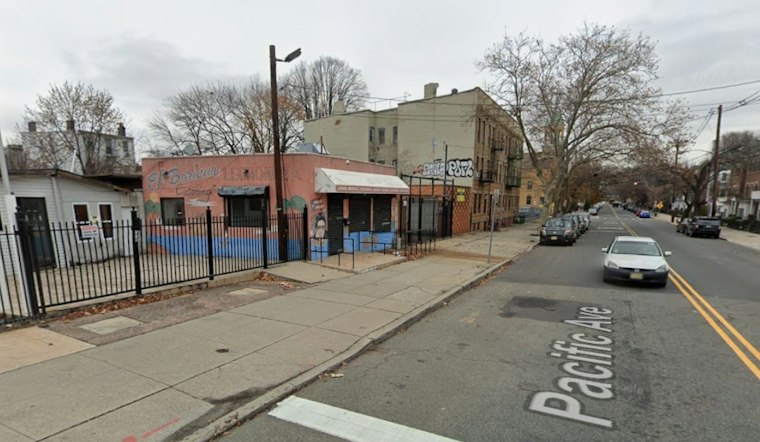
A five-story, 96-apartment building is moving forward near Berry Lane Park after the Jersey City Planning Board approved a final site plan and a signage variance for 176 Halladay Street and 213 Pacific Avenue. The proposal includes 25 car spaces—about one for every four apartments—along with retail space and bicycle parking, according to Jersey Digs. That ratio is a comparison of the planned spaces and units, not a statement about the project’s zoning requirements.
The applicant, Pacific Luxury Condominiums LLC, plans 16 studios, 68 one-bedroom apartments, 11 two-bedroom apartments and one three-bedroom apartment. Ten units are designated affordable: four studios, five one-bedrooms and the three-bedroom unit. The city says its affordable-housing program limits eligibility to households with combined income under 80% of Hudson County’s median income; the city’s program information provides the policy context.
Parking and public concerns
Plans call for 49 bicycle spaces and a 25-car lot, with vehicle and parking access from Halladay Street. The ground floor is to include more than 1,800 square feet of retail space and a lobby facing Pacific Avenue. During public comment, one resident raised both concerns reported by Jersey Digs: that the project could worsen existing parking problems and that it showed little consideration for the neighborhood.
The building is also planned to have a lounge, fitness center and golf simulator in a 2,200-square-foot ground-floor amenity area, plus rooftop amenity space and a terrace. Its facade is expected to use mostly beige brick, with gray and black fiber-cement panels; the outlet reported that board members praised the design.
Nearby proposals are not one project
The approval comes amid other housing proposals near Berry Lane Park. Jersey Digs has reported that the nearby Canal Crossing project is planned to add 508 homes, including 102 affordable units. But the city’s Canal Crossing redevelopment plan describes that area as “separate and distinct” from the Halladay Street project. The comparison offers neighborhood context; it does not make the developments part of the same project or approval.



