

























































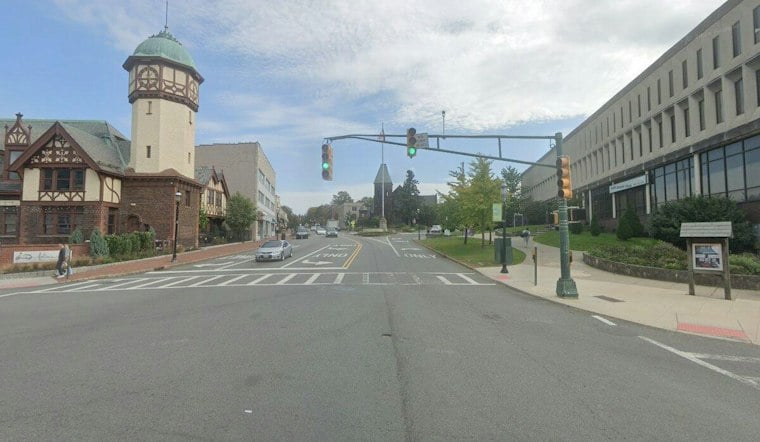
South Orange Village Council voted November 23 to adopt the township's Safe Streets for All Action Plan, a roadmap intended to reduce traffic deaths and serious injuries across the village. The vote came through Resolution #2026-268, which also formalized the village's self-certification of compliance with federal grant requirements tied to the plan's development.
The adoption was first reported by TAPinto, whose coverage detailed the data behind the plan. According to the outlet, the plan team analyzed five years of crash data, from 2018 through 2022, and found that roughly 21% of South Orange's roadway network accounted for nearly 80% of fatal and serious-injury crashes. Consultant Courtenay Mercer, who worked on the plan, noted that vulnerable road users — pedestrians and cyclists — were involved in 56% of those fatal and serious-injury crashes, per the same report.
Where the Danger Clusters
The analysis pointed to specific trouble spots: portions of South Orange Avenue, Wyoming Avenue and Irvington Avenue around downtown and the train station emerged as crash hotspots, TAPinto reported. Prospect Street was identified as the first municipal roadway among the plan's priority corridors, while some of the riskiest stretches are major county roads that will require coordination with Essex County — including eastern South Orange Avenue, which falls under the county's own Safe Streets for All plan, the outlet noted.
South Orange has ongoing safety work already underway along Academy Street, Irvington Avenue and Valley Street, according to the TAPinto article. Older figures from the South Orange Police Department's 2020 Traffic Crash Analysis offer some historical backdrop: that report counted 349 motor vehicle crashes townswide in 2020, with the Valley Street/Scotland Road corridor alone logging 49 crashes and the Valley Street and First Street area flagged as the most problematic stretch. The department attributed a 40% drop in crashes that year partly to pandemic-related reductions in traffic and partly to local safety measures, though that data predates the new plan and doesn't reflect current conditions.
What Residents Told the Village
Community input shaped the plan's priorities. TAPinto reported that participants most frequently flagged unsafe or confusing intersections, aggressive driving, perceived speeding and drivers failing to yield to pedestrians. Engagement ran from October 2025 through spring 2026 and included two focus groups, advisory committee meetings, a virtual community meeting, pop-up events and an online survey, recording more than 1,600 engagements and over 4,000 map points identifying specific safety concerns, according to the outlet's report.
The village also distributed paper surveys to residents at senior housing locations to broaden participation, the report noted. That outreach fed into a Safe Streets Advisory Committee that included village departments, the police department, Walk Bike Ride South Orange, the Board of Education, the SOMA Two Towns Senior Committee, JESPY and other community organizations, per the same TAPinto account. The village's own Safe Streets 4 All webpage says the plan promotes a data-driven and community-led approach to improving safety, access and quality of life, and that it aims to reduce roadway fatalities and serious injuries within the village. That page also noted a virtual community meeting held June 24 focused on the village's high-crash locations.
Policy Themes and Next Steps
The action plan establishes three policy themes, TAPinto reported: safer-street planning and design, traffic safety education, and partnerships with neighboring communities, the county and local schools. Recommendations include upgraded traffic signals, leading pedestrian intervals, high-visibility crosswalks, improved street lighting, curb extensions, speed humps, better sidewalks and ADA-accessible ramps, along with reduced vehicle speeds and expanded bicycle infrastructure, according to the outlet.
Village officials stressed that none of those recommendations amount to automatic directives — individual projects will still need engineering studies, updated data and detailed design work before anything gets built, per the TAPinto report. The Transportation and Pedestrian Safety Committee is expected to review updated information annually and help establish performance measures and implementation timelines, the outlet said, and Mercer told the council that communities typically revisit plans like this about every five years.
During the meeting, council members discussed how the plan complements existing Walk Bike Ride recommendations and other pedestrian and bicycle safety initiatives already in motion, according to TAPinto's account. The plan was developed with a $100,000 federal grant from the U.S. Department of Transportation, and the village said it was required to adopt a plan by December 31, 2026, to remain in compliance with that funding. Village officials encouraged residents to keep submitting feedback on street safety and noted that the plan, its appendices and the presentation given to council are available for review on the village website.
A Statewide Pattern Behind the Push
South Orange's push fits into a broader statewide concern. A Rutgers Policy Lab study of New Jersey pedestrian- and bicycle-involved crashes from 2016 to 2020 found that fatal and non-fatal crashes occurred disproportionately more often in low-income neighborhoods, and that crashes in darkness without streetlights were six to 7.5 times as likely to be fatal as daytime crashes. The same study found posted speed limits above 40 mph were linked to three to five times greater fatality risk for cyclists and pedestrians, and that pedestrian and bicycle fatalities made up 30.6% of all traffic deaths in New Jersey in 2020 — nearly double the 16.8% national average.
South Orange isn't alone among local governments adopting these plans. Union County's Board of County Commissioners adopted its own Safe Streets and Roads for All Action Plan at an April 30 meeting, identifying potential safety improvements along 20 county roadway corridors. Union County officials noted that not every recommendation in that plan will be implemented directly by the county, with some projects likely to involve municipalities or be led locally — a dynamic South Orange's own plan anticipates in its coordination with Essex County on shared corridors.




