

























































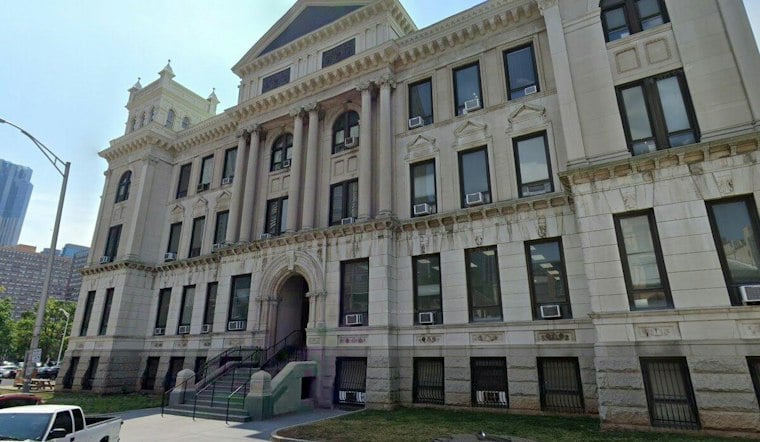
Jersey City has registered 2,251 new businesses for its municipal payroll tax since January, according to city officials, generating roughly $689,836 earmarked for the Board of Education as of August. The city says it has collected $75.9 million overall in payroll tax this year, money that flows directly to the district's budget rather than the municipal government's own coffers.
The enforcement push, first reported by Hudson County View, comes as Jersey City leans on a new data-sharing arrangement with the state. Mayor James Solomon's administration signed a memorandum of understanding with the New Jersey Department of the Treasury that gives the city access to employer wage data needed to audit payroll tax filings, a deal the city negotiated with state treasury officials and the state attorney general's office over several months, per the outlet's reporting. Jersey City also says it will adopt data-protection measures to safeguard the shared employer information.
Closing the Gap on Unregistered Employers
City officials say the employer data lets them identify corporations that are underpaying or not paying the 1% tax at all, and the administration is working to bring unregistered employers into the system, according to the same report. Businesses are already required to register for the payroll tax before the city will issue them a construction permit, a rule meant to catch new commercial activity before it starts operating under the radar.
Jersey City first adopted the 1% employer payroll tax under Municipal Ordinance 18-133 in November 2018, with the tax taking effect in January 2019 to replace local school funding lost to state aid cuts, according to the City of Jersey City. The ordinance exempts wages paid to Jersey City residents, quarterly payrolls under $2,500, government entities, and qualified non-profits, a structure meant to reward businesses for hiring locally while still capturing revenue from commuting workers. The New Jersey Supreme Court upheld the tax's constitutionality in August 2022, rejecting a Commerce Clause challenge from commercial property owners, according to a state and local tax analysis from Plante Moran.
State Legislation Opened the Door
The data-sharing framework behind this year's registration drive traces back to Senate Bill S-4219, which outgoing Governor Phil Murphy signed into law in January, requiring the state Division of Taxation to share employer wage and withholding data with qualifying municipalities. The bill was sponsored by state Senator Raj Mukherji of District 32, and Mayor Solomon says he provided input during its drafting, according to Hudson County View's reporting. Jersey City and Newark remain the only two New Jersey municipalities with populations over 200,000 authorized under state statute to levy a municipal employer payroll tax at all, per reporting from EY Tax News.
The revenue has already been climbing before this year's audit expansion. Payroll tax collections grew from $67.7 million in 2023 to $103 million in 2024 following earlier local audits and business outreach, according to the Hudson Reporter. Jersey City disbursed approximately $112 million to the school district in 2025, and this year it has already sent $20.2 million to the district through vouchers issued in January and March, per Hudson County View. Two additional vouchers totaling $55.7 million are set to go before the city council at its meeting next week, which officials say will deliver the full amount collected so far directly to the schools.
Why the Payroll Tax Matters to Homeowners
Mayor Solomon has framed the enforcement effort as a way to shield residents from rising property taxes. “The payroll tax paid by corporations reduces the amount schools need to seek from homeowners and renters,” Solomon said, according to Hudson County View's reporting. He added that businesses benefiting from Jersey City's workforce and infrastructure have an obligation to help fund classrooms, and said his administration is simply ensuring employers who owe the tax actually pay it.
The stakes for local taxpayers are real. Jersey City property owners saw a net 13.8% increase in their overall tax bills this year from combined municipal, school, and Hudson County levies, according to a tax advisory from Skoloff & Wolfe. The Jersey City Board of Education adopted a $1.096 billion general fund budget for the 2026–2027 school year that requires $625.3 million in local property tax support, a figure Hoodline previously reported amid severe overcrowding at schools like P.S. 16. The city council separately adopted an $886.4 million municipal budget in August with a 15.15% property tax rate increase to address an inherited $255 million structural deficit, backed by a $105 million state transitional aid loan.
How quickly the new state data-sharing arrangement translates into additional disbursements for the Board of Education, and whether stronger corporate compliance will meaningfully ease future residential tax burdens, remains to be seen in upcoming budget cycles.





