

























































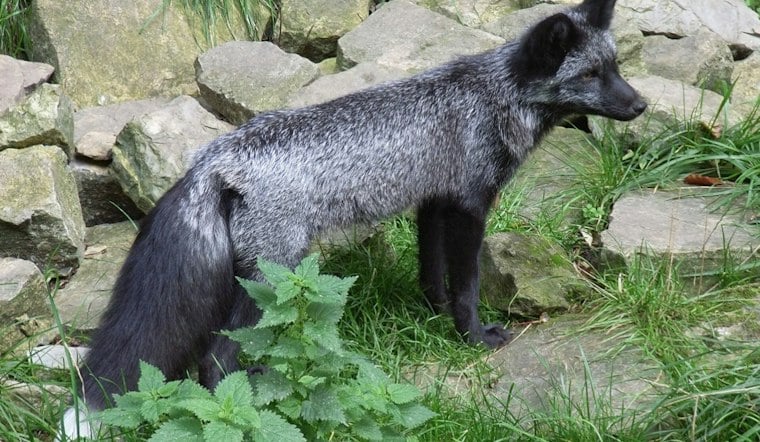
A jet-black fox photographed in a backyard in Hastings, Michigan, back in June 2019 has resurfaced as what state wildlife officials call one of the rarest sightings they have on record. The resident who snapped the photos submitted them to the Michigan Department of Natural Resources through its Gray Fox Observation portal, and the agency says it may be the only documented case of its kind in the entire region.
The animal is a melanistic gray fox, meaning a genetic mutation darkened its pigmentation so heavily that it appears nearly jet black rather than the species's usual salt-and-pepper coat, according to ClickOnDetroit. A typical gray fox has gray fur, reddish legs and neck, and a white or cream-colored belly and throat, but this particular animal's dark pigmentation stood out enough that the DNR flagged it as exceptional. The agency described the find bluntly: “This is an incredibly rare sight, and it’s the only example we’re currently aware of in the Midwest.”
When the DNR shared the photos more widely, some viewers questioned whether the images had been altered, noting a faint purplish cast to the fox's coat in some shots. The agency pushed back on that theory directly, stating, “These images are not AI-generated, and we did not add a filter to them.” Officials explained that the purple tint some people noticed likely comes down to the screen someone is viewing the photos on, along with the dusk lighting and poor visibility at the time the pictures were originally taken. The images trace back to an observation originally posted on iNaturalist in 2019.
A Species Michigan Barely Understands
The sighting lands amid a broader effort to figure out just how many gray foxes remain in Michigan at all. Cody Norton, a DNR furbearer specialist, put it simply in comments reported by MLive: “Gray foxes are one of Michigan’s least understood mammals.” Michigan sits at the northern edge of the species's range, which stretches through North and Central America and as far south as northern South America, per the same ClickOnDetroit report.
Gray foxes are generally smaller than their red fox cousins, with shorter legs and a telltale black stripe running down the tail, according to MLive's reporting. They're also one of the only members of the dog family that can climb trees, thanks to semiretractable claws — a trait that sets them apart from the more commonly seen red fox, Michigan's two native fox species being distinguished that way by Digital Camera World.
Why Researchers Want Your Photos
Recent research suggests gray foxes may be rarer across Michigan than wildlife officials previously believed, and that uncertainty is driving the push for public sightings. The DNR says residents can help “get a better sense of where these animals occur and provide information that will shape future research and conservation efforts,” per ClickOnDetroit. Researchers specifically want to know whether gray foxes are genuinely absent from certain areas, simply hard to detect, or using habitat that traditional wildlife surveys tend to miss.
That question has real stakes beyond Michigan. A study spanning 16 counties in southern Illinois found gray fox occupancy fell from 20 percent during the 2008–2010 survey period to just 6 percent by 2022–2023, according to Discover Magazine. Surveys and local observations likewise point to gray fox populations and range shrinking in Michigan and across the Midwest over recent decades, as noted by Leelanau.com. Experts are still working to understand why gray fox numbers may be declining across both the Midwest and Northeast.
The research effort behind the gray fox survey brings together the DNR, Northern Michigan University, the Keweenaw Bay Indian Community, the Sault Tribe of Chippewa Indians and the Little River Band of Ottawa Indians. Anyone who spots a gray fox in Michigan, melanistic or otherwise, can submit photos and details through the DNR's reporting portal to help fill in the gaps researchers are racing to understand.





