

























































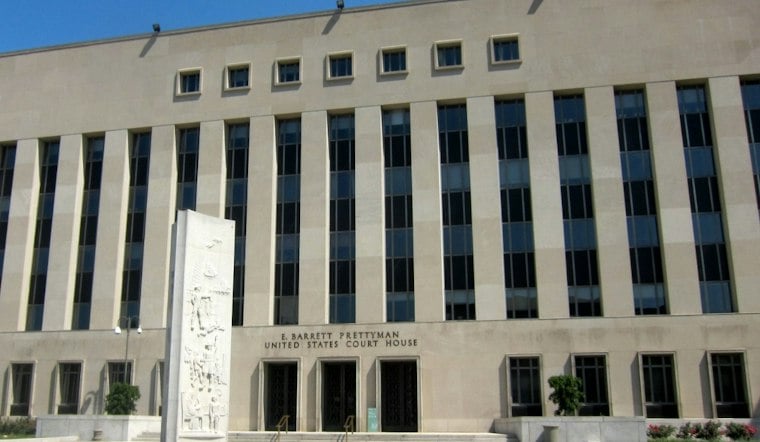
A federal judge has temporarily blocked the US Department of Education from publishing names of foreign donors to Harvard, Columbia and other American universities. The Association of American Universities sued to stop the release, arguing that identifying donors would expose people who had expected privacy and could deter lawful giving. The dispute centers on whether the department can make donor identities public beyond the disclosures required by Section 117 of the Higher Education Act.
The Association of American Universities filed its lawsuit against the Education Department on Thursday, and US District Judge Tanya Chutkan granted a temporary restraining order shortly afterward, according to the New York Post. The group says the department has been compiling individual donors’ identities since 2020, beyond what universities must report under Section 117. The statute, 20 U.S.C. § 1011f, requires institutions to report foreign-source gifts or contracts worth $250,000 or more, including transactions combined from the same source in a calendar year, and makes those reports public records available for inspection.
The Post reported that Chutkan found the planned release could expose previously anonymous donors to safety risks, including donors living in politically repressive countries, and that disclosure could cause irreparable harm. The judge also found the release would likely violate the Administrative Procedure Act, according to the report. The restraining order is set to remain in place for 28 days while Chutkan considers whether to issue a longer-lasting injunction.
What the Education Department Wanted to Release
The Education Department’s proposed list involves up to $5.2 billion in foreign gifts to universities since 2020, the Post reported, with non-natural-person entities accounting for most of the total. An Education Department official described the sources as potentially including foreign governments, militaries, businesses and enterprises connected to universities; the Post also reported that some gifts came from Arab countries.
Education Department spokeswoman Ellen Keast said the ruling would prevent the disclosure of funding from foreign actors the department considers malign, and argued that foreign funding can support campus centers, faculty and partnerships that the administration views as a national-security concern, the Post reported. Keast said the administration would continue its legal fight, describing disclosure as a way to provide transparency about overseas funding of US campuses.
University Group Says Privacy Promises Are at Stake
The Association of American Universities, which represents at least 69 US research universities, including the University of Pennsylvania and Yale University, welcomed the ruling, the Post reported. The group argues that donors gave with assurances their privacy would be protected and that publishing their identities could discourage lawful support for scholarships, research and teaching. It also says the department’s collection of individual donor identities since 2020 goes beyond what Section 117 requires universities to report.
In a statement on its website, the AAU said it filed suit in the US District Court for the District of Columbia to prevent the department from publishing the information and that the court granted a temporary restraining order after a brief hearing.
Part of a Broader Federal Crackdown on Foreign Funding
The dispute follows President Trump signing an executive action in April 2025 strengthening enforcement of Section 117, and Education Department officials launching a probe that same month into the University of California, Berkeley over funding the university received from China. According to Inside Higher Ed, the department opened the Berkeley investigation after finding the university's disclosures might be incomplete, and a senior department official said Berkeley had received hundreds of millions of dollars from foreign governments, particularly China, that had not been reported as required by law. Inside Higher Ed also reported that the department opened a similar review into Harvard the week before the Berkeley investigation began.
The scrutiny has deep roots: the Education Department announced investigations into Harvard and Yale in February 2020 over compliance with foreign-gift disclosure law, and had previously investigated Cornell, Georgetown, Rutgers, Texas A&M, MIT and the University of Maryland on similar grounds, Inside Higher Ed reported at the time. In that earlier review, Harvard had reported 31 anonymous gifts or contracts totaling $101 million since 2015 from China, Qatar, Saudi Arabia, Iran and Russia, while the University of Pennsylvania reported 92 gifts or contracts totaling $62.2 million and Yale reported 18 gifts or contracts totaling $22 million from the same group of countries.
Earlier Donor-Disclosure Disputes
A separate precedent is the Supreme Court’s July 1, 2021, decision in Americans for Prosperity Foundation v. Bonta. The case concerned California’s requirement that charities report major-donor identities to the state attorney general—not a federal plan to publish university donors—according to the Supreme Court’s opinion. Earlier federal oversight also focused on universities’ compliance with Section 117. In a June 16, 2021, letter to the Education secretary, House lawmakers said the department had found more than $6.5 billion in unreported gifts and contracts and opened 19 university investigations, according to the House Committee on Education and Labor. The letter describes an earlier compliance effort, not the donors involved in the current case.
A Dashboard Already Under Fire for Lacking Context
The department has also built a public dashboard tracking foreign gifts and contracts to US colleges, and as of May, 559 colleges and universities had reported more than $72 billion in gifts and contracts from 194 countries, according to Higher Ed Dive. Qatar was the largest reported source at $8.8 billion, followed by China at $6.8 billion, the outlet reported, and colleges reported 8,300 foreign-funding transactions totaling more than $5.2 billion in 2025 alone. Dashboard figures attributed $630 million in Chinese funding to Harvard, while New York University, Stanford and Yale each reportedly received more than $400 million from China and MIT received $134.3 million from Russia.
Higher-education experts have criticized that dashboard for presenting cumulative data without clearly showing the relevant time periods or purposes behind the gifts and contracts, Higher Ed Dive reported, noting the portal includes disclosures reported by universities dating back to 1986, with the vast majority filed since 2019. Separately, The College Fix reported that 697 transactions in the reported data involved entities identified as Counterparties of Concern, with universities accepting more than $380 million from foreign entities on government watch lists. A separate Congressional Research Service search snippet, flagged in the record as low confidence, suggested Harvard received the largest aggregate amount of foreign gifts and contracts at about $4.5 billion, followed by Cornell — a figure that has not been reconciled with the dashboard's higher Qatar and China totals.
For now, the order prevents publication while Chutkan considers what comes next. The case concerns the boundary between Section 117’s public reporting requirements and the department’s proposed release of individual donor identities.





