

























































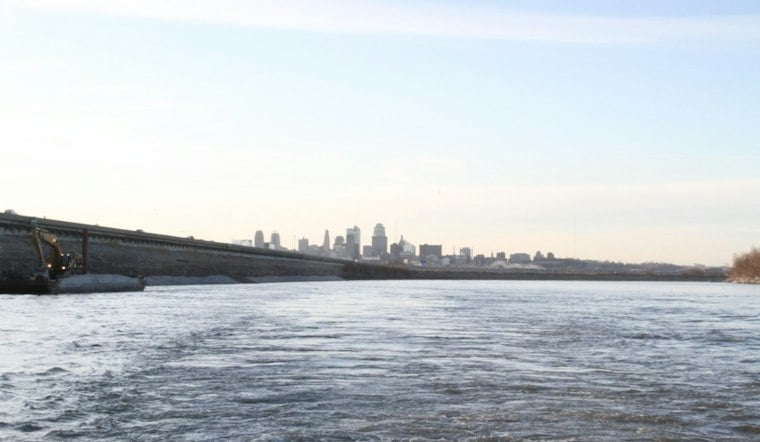
A five-year construction effort to rebuild more than 16 miles of levees and floodwalls across three Kansas City neighborhoods has wrapped up, with contractor Lane announcing the Kansas City Levees Flood Risk Management Project is complete. The work, done for the U.S. Army Corps of Engineers, touched Argentine, Armourdale and the Central Industrial District along the Kansas River, areas long considered vulnerable to major river flooding.
Lane, the U.S. subsidiary of Webuild Group, built more than 16 miles — roughly 25 kilometers — of levees and floodwalls under the contract, according to International Water Power. The scope included 25,000 feet, or 7.6 kilometers, of new concrete floodwalls, more than one million cubic yards of earthworks, 120 relief wells, the replacement of 12 railroad closure structures and modifications to 175 existing utilities. Crews kept existing infrastructure operational throughout the construction, the outlet reported.
Lane broke ground on the project on October 13, 2021; it was commissioned under a $258 million U.S. Army Corps of Engineers contract, according to a Webuild Group press release. Webuild said the work was recognized by the Corps for its efficiency and delivery, the trade publication's report noted. Finishing it required coordinating across federal agencies, local governments and railroad operators, given the rail lines and utilities running through the protected corridor.
Who Benefits From the Upgraded System
The improvements are intended to protect more than 27,000 residents, 2,700 businesses and structures, and nearly $10 billion in property and infrastructure, per the completion report. The protected area includes industrial and commercial districts along with a major freight rail hub, underscoring how much economic activity sits behind the levee line in this stretch of the metro.
This contract is one piece of a much larger system. The Kansas City levee network as a whole consists of seven levee units spanning roughly 60 miles of levees and floodwalls, according to Stormwater Solutions. Earlier phases completed between 2009 and 2017 delivered nearly $30 million in improvements to existing levees and floodwalls, Construction Equipment Guide has reported, while a separate final component of the broader program was estimated at $529 million — a figure distinct from Lane's $258 million contract, according to the American Society of Civil Engineers.
Why the Levees Matter — And What They Don't Fix
Kansas City's levee system has been tested before. During the region's historic 1993 flooding, the system came within inches of overtopping, ASCE has reported. A U.S. Army Corps of Engineers feasibility report similarly found that the entire metropolitan system of seven levee units withstood the 1993 Missouri River flood, though some components were nearly overtopped or experienced underseepage issues.
Project Manager Craig Weltig has said storms have grown more frequent or more intense, adding urgency to the need for levee resiliency, according to KCUR. That concern was illustrated in July 2025, when a storm dumped up to 10 inches of rain in 12 hours, triggering widespread flooding and highway closures across the area, the public radio station reported. That flooding in Wyandotte County was attributed to an interior rainfall event rather than a levee breach — as one account put it, “It wasn't from (a levee breach.)”
The distinction matters for residents weighing how much protection the newly completed work actually provides. The levee and floodwall upgrades address river and levee-system flood risk, but they are not designed to eliminate flooding caused by heavy rainfall pooling inside the protected area itself. The Corps' feasibility study behind these kinds of levee reexaminations was conducted under Section 216 of the 1970 Flood Control Act, which gives the agency continuing authority to revisit completed civil works projects and recommend modifications.
For now, the newly finished stretch in Argentine, Armourdale and the Central Industrial District is part of a flood-protection effort that has spanned more than a decade and hundreds of millions of dollars, with federal, local and railroad partners still managing a system built to hold back two major rivers.





