

























































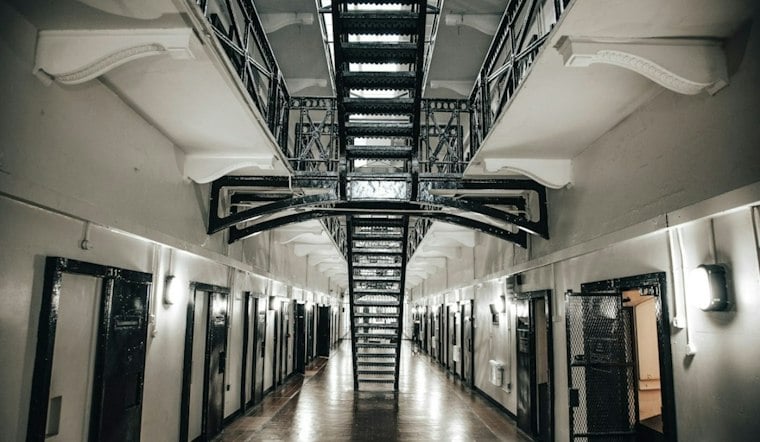
Kansas City's $22 million temporary jail in the East Bottoms was supposed to be open in time for this year's World Cup games. Instead, the modular facility sits mostly empty, with no kitchen, no laundry, and just a fraction of the corrections staff it needs to operate, leaving city officials unable to say when inmates will actually move in.
According to KCUR, Kansas City has hired only about 10% of the roughly 100 corrections officers and supervisors required to staff the 100-bed facility. A new academy class aimed at filling those jobs isn't scheduled to begin until December 9, assistant city manager Lane Cline told the police board, according to the same report. City officials now expect the jail to begin housing inmates sometime next year, though no firm date has been set.
The delay is a blow to a project city leaders fast-tracked specifically so Kansas City would have local detention space before this year's World Cup matches. The Kansas City Police Department made only a handful of arrests during the World Cup games, the station's report notes, meaning the jail's absence didn't create the public safety crisis officials once feared — but the missed deadline still underscores how far behind schedule the project has fallen.
Permanent Concrete for a Temporary Jail
Despite being billed as a stopgap while the city plans a permanent detention center, the modular jail doesn't look especially temporary up close. Johnathan Duncan said the facility's concrete foundation, plumbing, and steel cells make it seem permanent, per KCUR's reporting. Mayor Quinton Lucas has said a certificate of occupancy has already been issued for the building, and that hiring remains the main obstacle standing between the jail and its opening.
Councilman Crispin Rea said city staff and consultants can still work out the operational issues standing in the way, according to the same account. Those issues go beyond staffing: the jail currently has no kitchen and no laundry, gaps that would need to be addressed before it could fully function as a detention facility.
A Decades-Long Gap Since Kansas City's Last Jail
Kansas City hasn't operated its own jail since 2009, when it shuttered the Municipal Correctional Institution — a facility known as “The Farm” that sat on a former hog farm in eastern Kansas City and housed low-security code offenders for more than a century. City leaders closed MCI amid an $85 million city budget deficit and escalating repair costs, according to KCUR's historical reporting.
After that closure, the city leaned on an interim bed-sharing arrangement with Jackson County, but that contract expired in 2019 amid disagreements over rising per-bed costs, as The Beacon has reported. Since then, Kansas City has relied on contracts for roughly 105 total beds split between Vernon and Johnson counties. The city now spends about $1.8 million annually to house inmates in those two counties, per KCUR's account.
Even once the temporary jail opens, Kansas City will keep sending some inmates to those rural counties, KCUR reports. Vernon and Johnson counties can choose which inmates they accept and are able to reject people with substance abuse or mental health problems. Duncan said those rejected inmates will end up held at the modular jail instead, even though he noted a medical-type facility would be more appropriate for them.
The Price Tag Keeps Climbing
The jail's cost has grown steadily since the project began. The Kansas City Council approved nearly $16 million for construction in 2025, then added $3.5 million in January and another $1.3 million in March, pushing the total construction budget to roughly $22 million, per KCUR's reporting. The council originally selected Louisiana-based Brown & Root Industrial Services to build the modular facility, choosing that construction method specifically to speed completion ahead of the World Cup.
That spending is funded in part by the public safety sales tax, which Kansas City voters renewed for 20 years in 2025 with 60% support, according to Ballotpedia. The measure, first passed in 2002 and renewed in 2010, was projected to generate about $24 million a year, or roughly $480 million over its life, aimed primarily at a municipal detention center and other public safety upgrades.
A Much Bigger Price Tag Looms
Those tax dollars may not stretch nearly far enough. A September city financial presentation showed Kansas City facing a $402.6 million pipeline of public safety projects — including a $201 million permanent jail — while dedicated sales tax revenue can cover only about $100 million in debt service over 20 years, according to the Kansas City Business Journal. That leaves just $8.6 million available annually for debt service against a required $34.2 million for all the proposed projects combined.
The city council recently heard an updated plan for a permanent jail that would expand the temporary facility at a cost of $120 million, adding about 80 beds along with a kitchen, laundry, visiting space, and administrative offices, per KCUR. Lucas has said 180 beds is the right size for Kansas City. Beyond the jail itself, police want to build a new central patrol division campus projected to cost about $90 million, while some council members are pushing for a roughly $90 million community resource center offering crisis observation and detox services.
Many council members support all three projects, but they're working with limited funds. Duncan said the city needs to clarify its priorities and decide what it actually intends to fund, according to KCUR's reporting. Local police patrol stations also hold people.
Jackson County's New Jail Sets a Contrast
The city's prolonged jail struggles stand in contrast to Jackson County, which cut the ribbon in March on a new $317 million to $320 million, 1,000-bed regional detention center on U.S. Highway 40 to replace its aging downtown facility, per KCUR's reporting. Kansas City and Jackson County had attempted joint jail negotiations before abandoning shared plans in 2023 over cost and liability disputes, leaving each government to pursue separate facilities.
Separately, the city's Alternatives to Incarceration Commission has discussed community diversion programs for low-level offenders, according to The Community Voice. That commission was formed in 2023 to evaluate jail bed needs alongside non-carceral alternatives for low-level offenders.





