

























































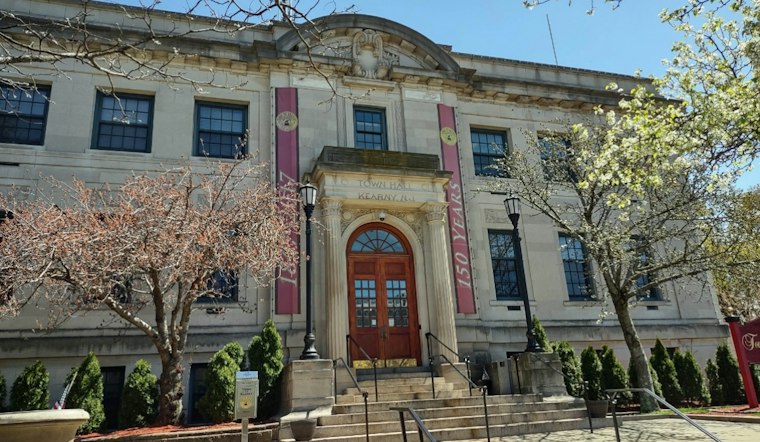
Kearny’s council is weighing how to address a projected budget gap without relying on further tax increases or drawing more heavily on surplus. At a discussion of a three-year financial plan, CFO Shuaib Firozvi estimated that meeting that goal could require reducing the municipal budget by about 20%, or roughly $20 million, over the next three years, according to Hudson County View.
Firozvi tied the scale of the cuts to the town’s personnel costs and said the police and fire departments, Kearny’s largest departments, could account for about 20 positions if reductions were made proportionally. He also gave a separate estimate: hiring and promotion freezes, along with police-officer retirements, could leave the town with 15 fewer municipal employees by the plan’s third year. These are different projections, not a single estimate of reductions across the police and fire departments.
Officials have discussed using hiring and promotion freezes, a department-efficiency audit, a property-tax revaluation and higher local fines and fees to reduce the gap or raise revenue, Hudson County View reported. The revaluation would be Kearny’s first in 40 years. Councilman Fred Esteves argued that freezes alone could resolve the problem within three years, while Firozvi described the workforce reductions as a gradual process.
Councilman Stathis Theodoropoulos questioned whether the town could balance its budget within three years without reducing police and fire staffing, and sought figures showing how much the proposed measures would save. Firozvi cautioned that the estimates could change with factors including retirements and retiree health-benefit costs, and said he could not reliably project beyond 2027, according to Hudson County View.
The debate follows the council’s 5-4 approval of a budget with a 14.12% municipal tax increase. The Observer reported that the plan included $4 million to be raised through taxes rather than taking more from town surplus funds: The Observer. Wider county costs add to the fiscal backdrop: the Hudson County levy rose $42 million, or 9.27%, from 2025 to 2026, while state-plan health insurance premiums increased 36%, from about $63 million to $85 million, according to the Hudson Reporter.




