

























































A 41-year-old Kent man is sitting in a South King County jail cell on $250,000 bail, accused of posing as a deputy U.S. Marshal during an armed home invasion robbery nearly 2,500 miles away in Auburn, Alabama. Zealand Adams was arrested Monday alongside co-defendant Ramiro Vasquez, who was picked up the same day in Chico, California, in a coordinated, cross-country operation by federal fugitive task forces.
Adams and Vasquez are wanted on multiple counts of robbery, burglary, unlawful imprisonment and impersonating a peace officer, according to a press release cited by the Bellevue Reporter. Investigators allege the pair entered a victim's residence in Auburn during the early morning hours of September 3, holding the occupants at gunpoint and making off with valuables, per the Auburn Police Department. Adams allegedly told the victims he was a deputy U.S. Marshal before the robbery unfolded.
The arrests came together simultaneously Monday, with the U.S. Marshals Pacific Northwest Violent Offender Task Force taking Adams into custody in Kent while the Pacific Southwest Regional Fugitive Task Force detained Vasquez in Chico. That coordination traces back to Auburn police investigators, who asked the U.S. Marshals Gulf Coast Regional Fugitive Task Force for help after the suspects vanished from Alabama. The Gulf Coast task force has arrested more than 76,000 fugitives across Alabama and Mississippi over its 20-year history, according to the U.S. Marshals Service.
How License Plate Cameras Cracked the Case
Once Auburn police suspected the men had fled the state, they turned to the city's automated license plate reader network — technology built predominantly by Flock Safety that logs vehicle plates, timestamps and physical characteristics across more than 50 documented cameras citywide, according to Finding Flock. That system allowed investigators to identify the suspects' rental vehicle and confirm it had left Alabama, generating the leads that were funneled to task forces in Washington and California.
The Pacific Northwest Violent Offender Task Force that took Adams into custody is led by the U.S. Marshals Service's Western District of Washington and draws on 27 federal, state and local agencies spanning Washington, Oregon and Alaska. Both men were arrested without incident Monday and booked into local jails to await extradition back to Alabama, a process that under the U.S. Constitution's Extradition Clause and federal law requires either a formal governor's warrant or an explicit waiver before custody can transfer across state lines.
A Violent History Stretching Back to 2014
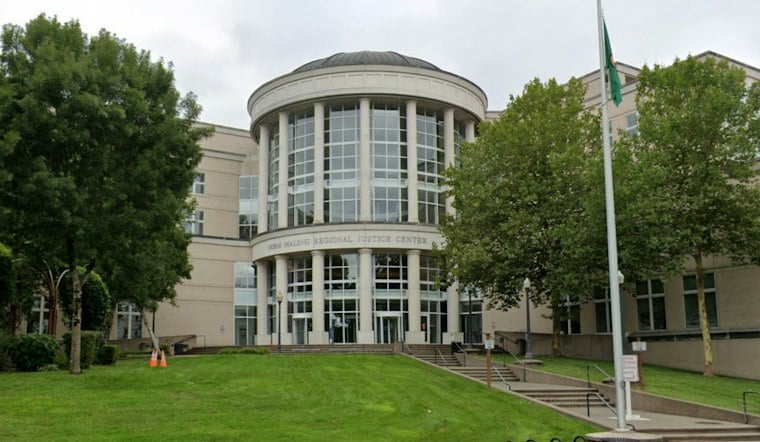
Adams was booked into the Maleng Regional Justice Center in Kent at 9:30 a.m. Monday and remains there on $250,000 bail as of Wednesday, per the Bellevue Reporter. The facility serves as King County's main judicial court and detention complex for South King County.
This is not Adams's first brush with violent crime. In 2014, he led officers on a high-speed chase in Utah before holding a 2-year-old child hostage during a five-hour standoff, and he was subsequently convicted of kidnapping in that case. He was also wanted in connection with a murder in Louisiana at the time and was later convicted of manslaughter there, according to the U.S. Marshals Service.
Acting U.S. Marshal for the Western District of Washington Donrien Stephens addressed the broader stakes of the case, saying that impersonating law enforcement undermines public trust and threatens community safety. Under Alabama law, first-degree robbery involving a deadly weapon is a Class A felony carrying 10 to 99 years or life in prison, while falsely acting as a law enforcement officer is a separate Class C felony under state code, according to FindLaw. If federal impersonation charges are pursued for allegedly posing as a deputy U.S. Marshal, that offense carries a potential sentence of up to three years under federal statute.




