

























































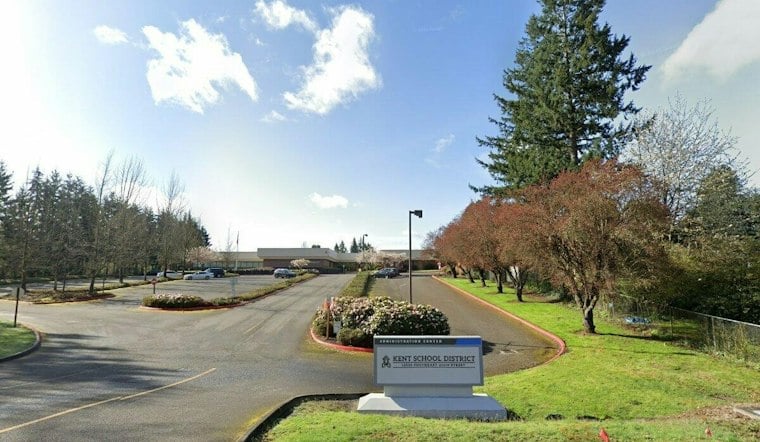
Kent School District voters are deciding by Nov. 3 whether to approve a replacement levy that officials say is critical to keeping the district's budget intact. Proposition 1 would collect $452.9 million over four years, from 2028 through 2031, replacing an existing educational programs and operations levy set to expire in December 2027. District leaders warn that rejecting the measure could put roughly 900 jobs at risk and force deeper cuts to a system already grappling with falling enrollment and years of budget strain.
The current levy, which covers about 15% of the district's general operating funding, pays for teachers, counselors, transportation, safety, athletics, arts and other classroom support, according to the KING 5 report on the measure. Kent School District serves nearly 24,000 students across 44 schools, and acting superintendent Wade Barringer has said that 85% of the district's budget goes toward people, meaning a $104 million hole would hit significantly those who support students. Without a replacement levy, Barringer has said the district could face roughly $104 million in budget reductions.
Jennifer Harjehausen, a Covington City Council member who chairs Citizens for Kent Schools, has said approximately 900 district jobs — including teachers, custodians and counselors — could be at risk if the levy fails. That figure represents the possible scale of cuts rather than an announced layoff list, according to the reporting.
What the Levy Would Cost Homeowners
Under the current levy, the 2027 tax rate is projected at $1.76 per $1,000 of assessed property value. Proposition 1 would begin at an estimated $1.95 per $1,000 in 2028, according to Kent Reporter, then decline each following year to $1.93 in 2029, $1.88 in 2030 and $1.84 in 2031. The district expects the higher collection to raise an additional $6 million to $10 million over four years, the paper reports.
For a property assessed at $605,000, the median residential value within Kent city limits in 2026, the increase would amount to about $115 more per year under the proposed levy, assuming the value stayed the same, per KING 5. A property assessed at $660,000, the median residential value across the broader school district, would see about $125 more annually. The outlet notes that future tax bills may differ as assessed values and levy rates change, and that its reported figures reflect all property taxes, not just school levies, comparing each year's median-valued home rather than tracking a single property over time. By that measure, the annual tax bill on a median-valued Kent home grew from about $4,685 in 2021 to $6,092 in 2026, an increase of roughly 30%.
Conflicting Budget Shortfall Figures
The scale of the district's financial pressure has been described differently across sources. The Kent School District's own December update cited a projected $35 million budget shortfall for the 2026-27 school year, while a more recent Kent Reporter account pegged the shortfall at an estimated $30.5 million, noting the board approved reducing 229 employees to help close the gap. Losing the levy entirely would remove approximately $104 million in local funding that the district would need to address separately, per the same account.
The district's general fund costs average $47 million a month, according to the district's own budget update. That update also flagged workers' compensation costs projected to rise by $3 million, alongside roughly $8 million in federal funds at risk of reduction or elimination. Even if the levy passes, the district may still need an additional $9 million in cuts for the 2027-28 school year, Kent Reporter reports.
Enrollment Keeps Sliding
Much of the financial squeeze traces back to enrollment. Kent School District enrollment fell by 567 annual average full-time-equivalent students this year, dropping from 23,319 in 2025-26 to 22,752 in 2026-27, and has declined 12.8% over the past decade, according to Kent Reporter's October report. The district overprojected enrollment by 2.6% for fiscal year 2027 — a recurring pattern, having also overprojected by 3.7% for fiscal year 2026, 3.1% for fiscal year 2022, 3.8% for fiscal year 2021 and 2.9% for fiscal year 2019. The district's own budget materials note that enrollment decline is projected to continue, with revenue losses expected to outpace reductions in expenses.
Voices for and Against
Supporters point to the district's track record. Levy backers have cited seven consecutive independent financial audits as evidence of responsible management, per KING 5's reporting. Dee Klem, who teaches at Kent-Meridian High School and volunteers for Citizens for Kent Schools, has said residents often do not realize how much school programs rely on locally approved levies. Her husband, Kent homeowner Steve Klem, has said he dislikes levies and bonds in general but believes rejecting them would harm the district's future.
Not everyone is on board. Joseph Riley, writing in the King County voters' pamphlet, argued the district needs greater financial accountability, pointing to declining enrollment, growing class sizes and previous program cuts. Riley also noted that existing funding continues through 2027, meaning the district could bring another proposal before voters if this one fails — something Kent Reporter also reports is possible, with district officials suggesting a return trip to voters in the spring if Proposition 1 does not pass. Barringer has said passing levies is becoming harder generally, as Washington's living costs and taxes make such choices difficult for residents.
Proposition 1 requires only a simple majority to pass. It's a lower bar than the district's past bond measures have faced, and one shaped by a bruising recent history: Kent's bond and levy measures failed in April 2023, November 2023 and April 2024 before a scaled-back $97.8 million capital projects and technology levy finally passed in November 2024 with 50.7% support, after being cut by more than half from its original size. That levy had first been proposed in July 2024 as a three-year, $97.8 million measure, representing a $92.4 million, or 49%, reduction from the district's previous two failed measures.
Kent voters will determine the fate of Proposition 1 on Tuesday, with ballots due back to King County Elections.





