

























































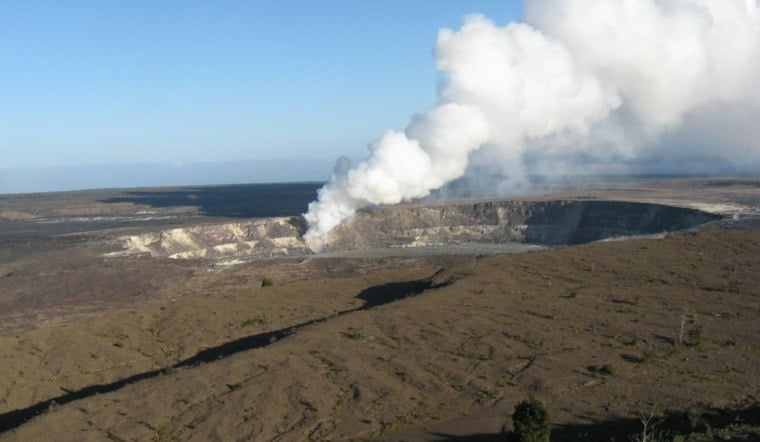
A magma intrusion beneath Kīlauea's summit triggered nearly 100 shallow earthquakes in just 24 hours between September 30 and October 1, forcing Hawaiʻi Volcanoes National Park to shut down the Keanakākoʻi area as scientists scrambled to track the underground shift. Ground tiltmeters registered rapid inflation of roughly 40 microradians during the unrest, a sign of serious pressure building beneath the surface.
The park's closure covered Old Crater Rim Drive, the Keanakākoʻi Overlooks, and the Crater Rim Trail to Keanakākoʻi, according to Big Island Video News. That area sits directly adjacent to the summit zone where satellite and seismic data detected the ground movement, and officials moved quickly given the stakes for visitors still eager to catch a glimpse of the ongoing eruption. Seismic readings compiled by SuaraGarut.ID show the tiltmeters swung between 38.5 and 40 microradians of inflation as the quakes rolled through.
Per the U.S. Geological Survey's Hawaiian Volcano Observatory, the seismic activity actually began around 2 p.m. on September 30 about a mile below Halemaʻumaʻu's active vents, producing an initial swarm of more than 30 located earthquakes that lasted about six hours. Around 8 p.m. that same evening, the activity migrated northeast of the active vents, kicking off a second swarm that ran nearly eight hours and included more than 50 detected earthquakes, as detailed in a Maui Now report penned by observatory scientists. The largest quake, a magnitude 3.4, struck at 9:52 p.m. about a mile below the surface within that northern cluster and generated 30 felt reports from residents.
Satellite Data Hinted at Trouble Days Before the Swarm
The second earthquake swarm was centered near an area where satellite observations had shown ground changes.
Seismic activity finally subsided around 4 a.m. on October 1, though the Maui Now report notes activity is still considered ongoing in the region. The summit itself deformed dramatically throughout the episode, with tiltmeters showing extremely rapid changes consistent with east-west crack growth near the current vent area, and elevated deformation continued until roughly 3 a.m. that same morning.
Vent Behavior Turned Chaotic Before the Shift
In the days leading up to the intrusion, south-vent overflow began September 27, and short, rapid cycles began on the evening of September 28 and continued through the afternoon of September 30, Big Island Video News reported. The north vent had previously been the dominant overflow site, while the frequency of overflows decreased greatly starting September 29; intermittent overflows continued at both vents. Overflows from the existing Halemaʻumaʻu vent complex decreased before the intrusive activity began, though flames and spatter continued throughout, and overflows resumed once seismicity moved away from the current vents.
Hawaiian Volcano Observatory geologists flew a monitoring overflight over the summit on the morning of October 1 and found no anomalously hot areas or obvious new ground cracks resulting from the intrusion, per the Maui Now account. The caldera floor still bears cracks from the 2018 summit collapse and the eruptions and intrusions that followed, and lava was observed deep within the north vent during the flight.
A Record-Setting Eruption Still Under Pressure
This intrusion is the latest twist in an eruption cycle that began December 23, 2024, and has now produced 54 distinct lava-fountaining episodes, an all-time record for this eruptive style, according to Love Big Island. Fountains during Episode 43 earlier this year reached a peak height of 1,770 feet. A spatter cone inside Halemaʻumaʻu was about 36 to 39 feet tall, according to Love Big Island.
Kīlauea's summit has carried a high level of pressurization since early September, and that kind of pressure typically culminates in a lava-fountaining episode from the north or south vent, per the Maui Now report. Lava has not fountained since Episode 54 ended on August 25, and the summit pressurization has been accompanied by an increase in small earthquakes beneath the region. Six new vents erupted on and near the northwest wall of Halemaʻumaʻu crater on September 14, generating small lava flows on the crater floor without producing high fountaining or triggering earthquake swarms, scientists say the lava exploited existing crack systems in the caldera rather than forging new pathways.
What Could Happen Next
Observatory scientists say another fountaining event could occur from the north or south vent complex, or lava could erupt passively from the September 30 intrusion or existing crack systems. Magma could also intrude into new areas of the summit region, and any new intrusions could either remain buried underground or form new vents entirely. Kīlauea's activity has stayed confined to the summit region for nearly two years, but scientists caution that magma could eventually migrate out of that area with little to no warning, and the Hawaiian Volcano Observatory says it continues monitoring the volcano for signs of change.
In a status report issued October 3, the observatory confirmed the intrusion had not reactivated and that no anomalous seismic activity or ground deformation had spread into Kīlauea's East or Southwest Rift Zones, according to the U.S. Geological Survey. Past rift zone migrations have drawn magma away from the summit toward inhabited lower flanks, and the notice warned that the location of eruptive activity could change.
Why Keanakākoʻi Carries Extra Risk
Park officials have reason for caution around Keanakākoʻi specifically. Historical USGS records show that past Kīlauea summit eruptions outside Halemaʻumaʻu, including major events in August 1971 and July 1974, overflowed the caldera rim and sent lava cascading directly into Keanakākoʻi Crater, with some of those episodes lasting several days and reshaping the local terrain.
Hoodline previously reported on precursory activity ahead of the expected next episode, and under the alert protocol adopted in April 2026, the observatory shifts Kīlauea's status between Advisory/Yellow during quiet pauses and Watch/Orange whenever fountaining or heightened unrest returns.




