

























































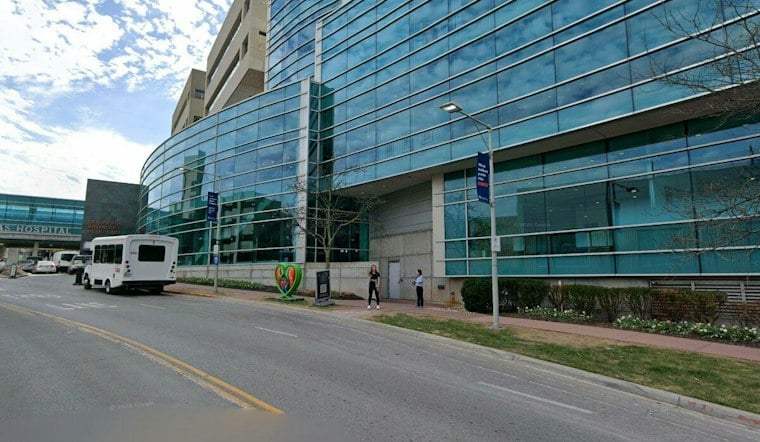
In Kansas City, unpaid medical bills can lead to lawsuits and wage garnishments, but the collection approach varies by hospital system. The University of Kansas Health System and NKC Health have sued more than 400 people across Missouri and Kansas over unpaid bills and garnished patients' wages.
The split in approach was detailed in reporting originally published by The Beacon and later published by KCUR, which found that the University of Kansas Health System filed around 218 medical debt cases in Missouri and another 114 in Kansas in 2026, according to a court database cited in that reporting. NKC Health filed 92 debt collection lawsuits in Missouri courts over the same period, the same court database shows. NKC Health has also placed liens on patients' property to obtain payment, in addition to garnishing wages.
The collection policies of other major systems serving the metro differ. The Beacon reported that St. Luke's Health System and AdventHealth send unpaid bills to outside collection agencies but do not use agencies that sue on their behalf, garnish wages or place liens. HCA Healthcare, which owns five Kansas City-area hospitals, does not sue patients over unpaid bills either. Prime Healthcare, which owns St. Mary's, St. Joseph and Providence medical centers, also operates in the metro.
Why the Collection Tactics Differ
There is no legislated standard for medical debt collection, and hospitals can set their own policies for pursuing unpaid balances. As KCUR's reporting notes, that leaves systems such as KU Health and NKC Health able to seek court judgments while other systems rely on internal outreach and voluntary payment plans.
NKC Health, which describes itself as the area's only independent hospital, says lawsuits and garnishments are rare. NKC Health chief financial officer Austin Jones provided no specific figure; senior marketing director Amy Schemenauer said by email that, anecdotally, extraordinary collection activities are likely used in less than 0.01 percent of cases, though the hospital could not provide exact numbers. Both NKC Health and the University of Kansas Health System say they offer financial assistance, discounts and interest-free payment plans to qualifying patients, and help patients find insurance coverage, including Medicaid.
Nonprofit hospitals are required to provide financial assistance for emergency and medically necessary care. Under IRS Section 501(r)(6), tax-exempt 501(c)(3) nonprofit hospitals are barred from pursuing lawsuits, wage garnishments or property liens without first making reasonable efforts to determine whether a patient qualifies for financial assistance.
What Hospital Filings and Other States Show
The IRS's 2024 Schedule H asks hospital filers whether their collection policy addresses patients known to qualify for financial assistance. The form asks about policy provisions; it does not establish how any particular Kansas City-area hospital answered, according to the IRS form. A separate North Carolina case offers a point of comparison, not a Kansas City development: Atrium Health's parent, Advocate Health, decided in 2022 to stop filing lawsuits and property liens to collect patients' medical debts, NBC News reported. In that state, a Duke University School of Law and North Carolina treasurer's office analysis counted 5,922 hospital collection lawsuits filed from Jan. 1, 2017, to June 30, 2022, Fierce Healthcare reported.
Charity Care and Revenue Figures
The University of Kansas Health System wrote off $150.5 million in patient charges as charity care in fiscal year 2025, down slightly from $155.3 million the year before. The system reported $5.4 billion in operating revenue and $120 million in operating income in fiscal year 2025. Colette Lasack, who spoke about the hospital's collection practices, said going to court is always the last resort, and she urged patients to call the hospital rather than ignore bills, messages and phone calls.
NKC Health reported $788 million in net patient service revenue in 2025. The hospital provided just over $20 million in charity care that year, up from $12.5 million in 2024, while writing off just under $45 million in uncollectible accounts in 2025, compared with roughly $43 million the year before. The University of Kansas Health System and Liberty Hospital, whose partnership was established in 2024, announced new services under that existing relationship last month, expanding the system's regional footprint.
How State Law Shapes the Fight Over Paychecks
Missouri gives health care providers a long runway to collect. Under Missouri Revised Statutes Section 516.110, providers and debt collectors have up to 10 years to file a lawsuit to collect unpaid medical debt under a written contract, according to CareRoute — one of the longest statutory windows in the country. Even a partial payment on an old bill can reset that 10-year clock.
Missouri Revised Statutes Section 525.030 generally caps ordinary wage garnishments at 25% of disposable earnings, but the limit drops to 10% if the debtor is a resident head of a family supporting dependents, per Nolo. Across the state line, federal law also limits wage garnishments for consumer debts, including medical bills.
Default Judgments and a Regional Precedent
Medical debt cases on Jackson County, Missouri collection dockets frequently end in default judgments when patients fail to appear, according to legal aid attorneys and court observations reported by The Beacon in September. That outcome lets health systems obtain garnishment orders before patients realize they've been sued, since summonses are often sent to outdated addresses or misunderstood by the people who receive them.
A similar pattern emerged at Topeka-based Stormont Vail Health, which filed more than 2,000 collection lawsuits in a single county, leading to 25% wage garnishments against low-wage hourly workers who qualified for free charity care under the hospital's own written policy, according to the Ginsburg Law Group. That case reportedly involved a McDonald's worker earning $14,400 annually whose paycheck was garnished after a default judgment.
A Nationwide Pattern, and a Pushback
Kansas City's divide mirrors a broader national picture. A nationwide investigation by KFF Health News and NPR found that a majority of the nation's roughly 5,100 general hospitals maintain policies allowing lawsuits, property liens and wage garnishments against patients, with an estimated 100 million Americans carrying health care debt totaling more than $220 billion.
Some state lawmakers are pushing back. KFF Health News reported in February that at least eight state legislatures introduced bills seeking to restrict or completely ban wage garnishment for medical debt, with proposals ranging from raising income exemptions to outlawing the practice outright. Meanwhile, credit reporting remains a live pressure point: a federal district court in Texas vacated a Consumer Financial Protection Bureau rule in July 2025 that would have barred medical debt from consumer credit reports nationwide, according to the National Consumer Law Center.





