

























































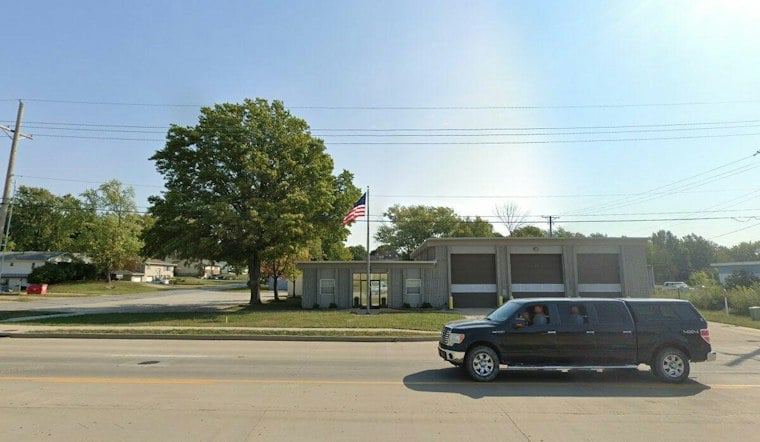
An Oak Grove EMS official says a synthetic opioid sold legally at vape shops and gas stations across Missouri is behind a string of recent overdoses in his community, including cases involving minors. One recent call sent first responders to the home of a high schooler who survived only because the teen's parents kept take-home Narcan on hand.
EMS Battalion Chief Scott Hilton said the evidence points to the drug, known as 7-OH, as the cause of multiple recent overdoses in the area his crews serve, according to FOX4KC. Sni Valley Fire Department first responders have found 7-OH packaging at overdose scenes, and witnesses have told crews that the person who overdosed had taken it. Hilton said several minors have overdosed on 7-OH as of the report's publication.
A Legal Opioid Sold Next to Energy Drinks
Unlike heroin or fentanyl, 7-OH is not an illegal street drug — it's a product sold openly in vape shops and gas stations throughout Missouri, per the same FOX4KC report. Hilton said parents and adults are finding it increasingly difficult to keep up with the substances now available to teenagers, a concern underscored by the state's own public health guidance.
The Missouri Department of Health and Senior Services has described 7-OH as a potent psychoactive compound increasingly found in unregulated consumer products. Isolated 7-OH can be up to 13 times stronger than morphine at opioid receptors and has not been tested for safety in humans, the agency warned. In Missouri, it's sold in forms including gummies, candies, powders and liquid shots, often both in stores and online.
Narcan Use Spikes 47% This Year
Hilton said he has seen a rise in Narcan administrations since 7-OH entered the market, and data he provided shows his medics have administered 47% more Narcan so far in 2026 than during the same period in 2025. Still, he was careful not to overstate the connection — he said he cannot definitively attribute the overall Narcan increase to 7-OH, even though on-the-ground evidence suggests some of those calls are linked to the drug.
That caution echoes a broader pattern showing up in poison control data across the region. The Missouri Poison Center received 47 reports of exposures involving kratom or 7-OH from January through September 2025, nearly double the number from 2024, according to the state health department's bulletin. Three of those cases involved isolated 7-OH, with at least one requiring hospital evaluation. Separately, calls to Missouri's poison center over kratom exposure spiked from 24 in 2024 to more than 75 in 2025, per reporting from St. Louis Public Radio.
Across the state line, a HIDTA report cited by KSHB found a notable upward trend in kratom and 7-OH-related emergency responses both regionally and nationwide. Johnson County and Sedgwick County, Kansas, each logged more than 25 EMS calls for kratom- and 7-OH-related overdoses between January 2023 and April 2025, the station reported.
Manufacturer Pushes Back on Overdose Claims
Vince Sanders, who claims to be the creator of the commercial version of 7-OH and the largest manufacturer of it in America through his company American Shaman, has said the product is supposed to prevent overdoses and that people are finding a safe off-ramp through it. That claim is disputed by the CDC, the U.S. Drug Enforcement Administration, the U.S. Food and Drug Administration and state health departments, which the FOX4KC report says all disagree that 7-OH prevents overdoses.
Sanders and American Shaman agreed to stop selling the product in a settlement with the Missouri Attorney General's office, though products made by other companies have remained available, the station reported. That settlement is similar to agreements reached with other sellers: Attorney General Catherine Hanaway struck a deal barring St. Louis-based Green Dragon and its owners from selling or marketing 7-OH or other kratom products in Missouri, according to the Missouri Independent. That agreement followed earlier settlements involving Kansas City-based American Shaman and Relax Relief Rejuvenate Trading LLC.
Bans Spreading as Federal Scheduling Looms
Regulatory pressure on 7-OH has been building on multiple fronts. Kansas City, Missouri, enacted an ordinance banning synthetic 7-OH and gave businesses 60 days to stop selling it, and the city is now deploying a task force to pull the products from store shelves, prioritizing high-risk areas, per KSHB. Businesses that violate the ban could face license suspension or revocation, fines of up to $1,000 per day, or up to six months in prison.
Kansas Governor Laura Kelly signed a bill banning both 7-OH and its parent product, kratom, statewide, the same station reported. At the federal level, the Drug Enforcement Administration announced on July 1 that it intends to temporarily place concentrated 7-OH and three related substances in Schedule I under the Controlled Substances Act, according to the Federal Register. The Department of Health and Human Services, specifically its Office of the Assistant Secretary for Health, has separately sought input on whether additional data supports a proposed or alternative concentration threshold for what constitutes an imminent hazard to public safety, per the agency's own guidance.
In Missouri, Hilton has called for more regulation at the state and potentially federal level. State Senator Mike Henderson introduced a bill in 2025 to classify certain amounts of 7-OH as a Schedule I controlled substance, though dissenting voices held up the legislation. Henderson said lawmakers are developing a broader approach to prevent the adulteration and creation of new drugs, and he believes he has enough votes to pass the bill in the next session. He added that educating people about the urgency of the issue is one of his jobs.
Missouri's health department has urged residents to avoid products containing 7-OH until more safety data becomes available, and to call 911 and administer naloxone if an overdose is suspected.





