

























































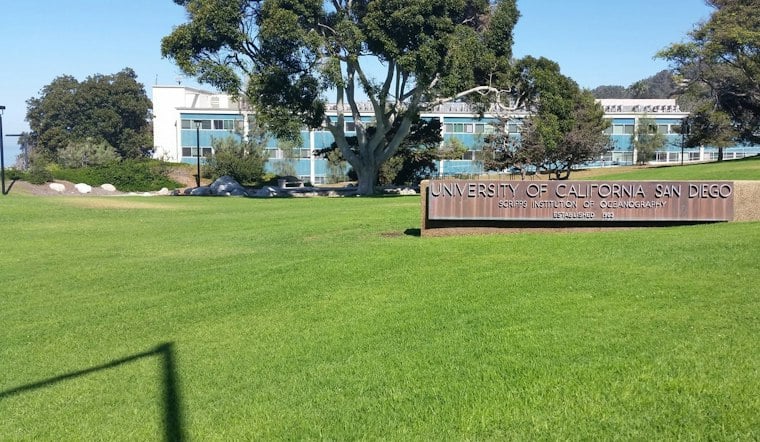
Researchers at Scripps Institution of Oceanography at UC San Diego have found that playing recordings of a healthy coral reef underwater can draw dramatically more fish larvae to artificial structures, and may also help coral larvae settle in the right spots. The findings come from two field studies conducted at artificial reefs off Moku o Loʻe in Hawaiʻi during coral and fish spawning events in 2023 and 2024.
The research, first detailed by San Diego Union-Tribune, centers on a concept called underwater acoustic enrichment — essentially playing back the sounds of a thriving reef to see whether drifting young fish and coral treat the noise as an invitation. Scientists recorded a healthy reef off Oʻahu, capturing the layered clicks, pops and chatter produced by fish, shrimp and crustaceans, according to Scripps Institution of Oceanography. They then broadcast those recordings from an underwater speaker for two weeks, running the audio from sunset to sunrise.
The team placed 37 artificial structures on the seafloor at a depth of 4.5 meters, scattered at distances ranging from 1 to 42 meters from the speaker, per the same account. Cameras recorded responses from dawn until dusk, capturing how fish and coral larvae behaved around the structures as the nightly playback rotated through recordings.
Fish Larvae Flooded In — Coral Larvae Took More Convincing
The results were lopsided. Fish larvae responded far more dramatically to the acoustic playback than coral larvae did, arriving in much bigger quantities at structures near the speaker. Overall, the acoustically enriched site attracted four to 14 times more fish larvae than the control site, the Scripps account notes.
Coral settlement followed a more complicated pattern. The nearest structures to the speaker saw the highest levels of coral settlement, and among those, structures coated with a biological reef ink — nicknamed BRINK — performed best, according to the same Scripps report. A related study published in Nature detailed how researchers tested acoustic enrichment alongside custom-built artificial structures and living microbial coatings during a two-week July 2024 experiment timed to a natural spawning event of the Hawaiian stony rice coral Montipora capitata, as reported by Nature. That trial used 19 coral settlement modules, six uncoated microhabitat cinder blocks, six BRINK-coated cinder blocks and six fish habitat modules.
Statistical analysis from that study found that BRINK presence, structure type and speaker distance up to 20 meters were all significant predictors of how densely coral larvae settled, Nature reported. Still, the study’s authors described conclusions about acoustic enrichment’s effectiveness for coral settlement as tentative, saying larger restoration trials are needed before drawing firm conclusions.
Océane Boulais and Aaron Thode Weigh In on What the Cameras Caught
Océane Boulais, one of the researchers involved, said the autonomous cameras used in the field were low-cost and low-power, and that they captured schools of fish larvae gathering near the artificial reef structures, according to the Union-Tribune. Fellow researcher Aaron Thode said drifting organisms appear to interpret an abundance of reef sound as a sign the area is a favorable place to settle.
Thode cautioned, however, that factors beyond sound may also be contributing to the larval attraction researchers observed. The coral-larvae study itself found strong evidence that synthetic chemical cues also strongly attract organisms to reefs, suggesting sound is likely just one piece of a larger puzzle. Researchers also noted they do not yet know which specific sound features attract larvae, or precisely how larval species perceive sound in the first place.
Lunar phase also appeared to shape the results. Fish larval counts at both the acoustically enriched and control sites peaked around the new moon, according to Scripps, suggesting that natural lunar cycles interact with any acoustic effects rather than being overridden by them.
Echoes of Earlier Reef-Sound Experiments Elsewhere
The Hawaiʻi findings build on a body of earlier work suggesting sound can shape where young marine life settles. A six-week field experiment on Australia’s northern Great Barrier Reef, broadcasting healthy reef sound on coral-rubble patch reefs for 40 days in November and December 2017, found that playback increased fish settlement and retention on degraded habitat, according to a study published in Nature Communications. That experiment reported a doubling in overall fish abundance and 50% greater species richness compared with unmanipulated reefs, with acoustic enrichment boosting juvenile fish numbers across all five major trophic guilds studied — herbivores, omnivores, planktivores, invertivores and piscivores.
Coral-specific trials have shown similar promise. Woods Hole Oceanographic Institution researchers found that broadcasting the soundscape of a healthy reef at a degraded reef caused coral larvae to settle at significantly higher rates, according to WHOI. Running the same experiment twice in June and July 2022 with mustard hill coral larvae in the U.S. Virgin Islands, WHOI found coral larvae settled at rates 1.7 times higher on average, and as much as seven times higher, in sound-enriched conditions versus reefs with no added sound — with the strongest settlement occurring five meters from the speakers, though even cups placed 30 meters away still outperformed the comparison reefs.
The Scripps and Nature studies, along with the broader Rapid Resilient Reefs for Coastal Defense effort, were funded by the Defense Advanced Research Projects Agency. Separately, the University of Hawaiʻi is pursuing its own DARPA-backed project to build an engineered structure meant to dissipate wave energy while providing habitat for corals and other reef life, using sounds that mimic a healthy reef to attract organisms that help coral growth, according to the University of Hawaiʻi School of Ocean and Earth Science and Technology. Funding figures for DARPA-backed hybrid reef work in Hawaiʻi have varied across accounts, with Scripps and the University of Hawaiʻi each citing different project cost estimates.
Why a Reef Structure Doesn’t Need to Be Alive to Help
One takeaway researchers emphasized is that a reef structure doesn’t need to be a living coral reef to provide value — it can still offer meaningful habitat for fish larvae even as an artificial installation, per the Union-Tribune report. That distinction matters for restoration efforts trying to rebuild fish populations on damaged or rubble-strewn seafloor where live coral has yet to return.
Thode and Boulais both said they remain interested in the broader role sound plays across the ocean floor beyond larval settlement alone. Thode specifically pointed to sound’s role in kelp forests as a long-term research interest, suggesting the acoustic approach tested in Hawaiʻi’s reefs could eventually inform how scientists think about other underwater ecosystems entirely.



