

























































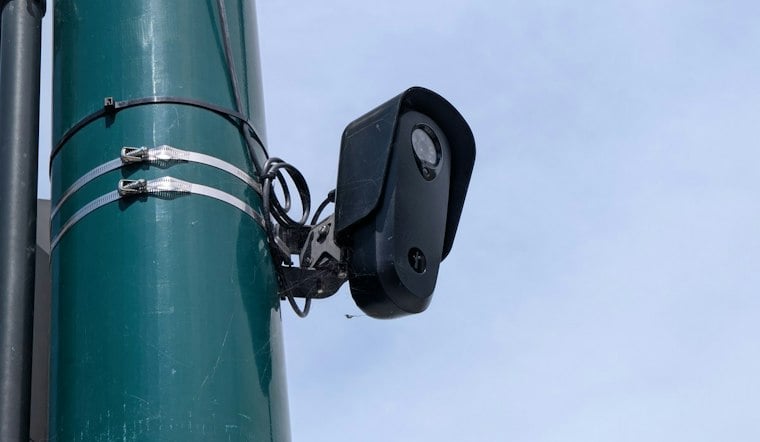
Lafayette's city council voted unanimously to rip out all 30 of its Flock Safety license plate reader cameras, ending a surveillance program that had run since 2022. The vote on Tuesday means the city will begin the removal process immediately, and Lafayette will not sign on with another automated license plate reader vendor unless a future council directs it to.
The decision, reported by KDVR, caps weeks of mounting resident pressure. City staff will cover the cameras governed by Lafayette's contract until Flock physically removes them, and the city plans to disclose which devices are tied to the license-plate program versus other functions like traffic sensing and speed radar. A city spokesperson also noted that other automated license plate readers near Lafayette — potentially under contract with corporations or neighboring municipalities — fall outside the city's own agreement and won't be affected by the shutdown.
Residents Pushed Back Hard at an Early October Meeting
The reversal traces back to a council meeting on October 6, where residents raised pointed concerns about the cameras tracking their movements. One attendee said the Flock system was too invasive, telling the council that police did not need to know where people were at all times. That same night, Lafayette temporarily suspended its Flock Safety data access.
Councilor Kyle Beaulieu said community members had increasingly raised concerns, citing reported abuses of the technology elsewhere and claims that the cameras were less secure than officials had originally been told. The council followed up by passing Resolution 2026-24B in a 5-1 vote on October 6, stripping Flock funding from the proposed 2027 budget and advancing a defunding ordinance on first reading, according to Boulder Reporting Lab. Tuesday's unanimous vote finalized that process and set the camera removal in motion right away.
The Cameras Helped Solve Hundreds of Cases
Lafayette police had pointed to real investigative payoffs from the system. Flock cameras aided 267 criminal cases, led to 65 arrests, and helped recover 14 stolen vehicles across Lafayette in 2024 and 2025, according to figures published by the City of Lafayette. The 30-camera network was installed in 2022 after local auto thefts jumped about 97%, climbing from 61 incidents in 2020 to 120 in 2022, a spike that pushed police toward automated surveillance in the first place, per Yellow Scene Magazine.
Statewide, Colorado vehicle thefts fell to 7,480 in 2025 after peaking in 2022, the outlet reports. Lafayette is a home-rule city of roughly 30,602 residents in southeastern Boulder County with a median household income of $119,040, according to U.S. Census Bureau figures.
No Statewide Rules After a Key Bill Died
Lafayette's move comes without any statewide guardrails to lean on. State lawmakers killed Senate Bill 70 in April, a bipartisan proposal that would have required police to get warrants before pulling historical license plate data older than 72 hours, as reported by 9News. Governor Jared Polis had threatened to veto the bill after law enforcement and district attorneys pushed back hard against it, leaving individual city councils to set their own rules.
Lafayette isn't acting alone. Longmont stopped sharing Flock data and later contracted with Axon, and Salida ended its Flock use. Golden was exploring termination of its Flock contract, according to the Denver Gazette. Denver removed its Flock cameras, while Colorado Springs replaced Flock cameras with Axon readers.
Legal Fights Are Piling Up Nearby
Just south in Boulder, two residents filed a class-action lawsuit in May against the city, alleging its 31 Flock cameras amount to warrantless, suspicionless dragnet surveillance that violates the Colorado Constitution, as reported by The Colorado Sun. That suit also challenges a police policy denying residents access to raw camera images of their own vehicles.
Elsewhere in the state, a false-identification case has become a rallying point for critics. Hoodline previously reported on a Colorado woman accused in connection with a $25 porch theft after Flock identified her vehicle; she challenged the accusation with GPS data and tailor-shop surveillance footage and filed a proposed class-action lawsuit against Flock Safety and local police. Physical attacks on the hardware have also sped up the retreat — Hoodline reported that the El Paso County Sheriff's Office announced on September 30, 2026, that it would discontinue its Flock network, and that three cameras had been cut down, while Summit County issued a 30-day suspension of its 30-camera system after eight units were cut down.





