

























































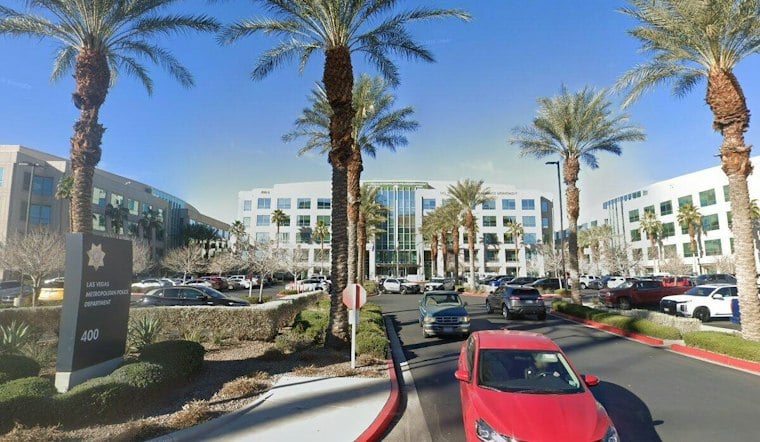
A Clark County District Court judge has ordered the Las Vegas Metropolitan Police Department to respond to Google's legal challenge over a search warrant the tech giant calls unconstitutional. The warrant sought search histories as police tried to generate leads in the July 2026 killing of a homeless woman. The Electronic Frontier Foundation has warned more generally that reverse keyword warrants can sweep up innocent internet users along with any real suspect.
Google, which fields roughly 14 billion searches a day, moved to quash what it describes as a reverse keyword search warrant in the case, according to court documents cited by KLAS 8 News Now. LVMPD pursued the warrant as a potential clue while investigating the homicide, and Google told police that fulfilling the request would breach customer information. In its filing, Google claimed the warrant violated both state and federal constitutional provisions. Clark County District Court Judge Erika Mendoza ordered LVMPD on October 7 to respond to the challenge, and the station reports LVMPD did not respond to a request for comment on the matter.
What Google Revealed About the Warrant Practice
Google's court filing went further than the single case at hand, disclosing that both LVMPD and the neighboring Henderson Police Department have repeatedly issued reverse keyword search warrants while imposing gag orders that barred public disclosure for months, according to The Nevada Independent. That detail suggests the practice is an established pattern in Southern Nevada law enforcement rather than a one-off tactic tied to a single investigation. The outlet also notes that Nevada has no specific statute governing reverse keyword search warrants.
That legislative gap stands in contrast to Delaware, which became the first state in the country to pass legislation explicitly banning law enforcement from using reverse keyword search warrants in summer 2026, the same outlet reports. Nationally, state supreme courts remain split on the issue: the Colorado Supreme Court ruled in 2023 that reverse keyword warrants infringe on constitutional privacy rights, while the Pennsylvania Supreme Court upheld a reverse keyword warrant, as reported by the Associated Press.
Where Federal Courts Stand on Digital Dragnets
The Nevada case also arrives alongside a major shift at the federal level. The U.S. Supreme Court ruled in June 2026 in Chatrie v. United States that reverse location, or geofence, searches constitute Fourth Amendment searches requiring specific probable cause, though no federal appellate court has definitively ruled on keyword search warrants. Privacy advocates have pointed to a related technical shift: after Google altered its Location History architecture in late 2023 to disable centralized geofence warrants, the change did not affect the risk of reverse keyword searches, according to the ACLU.
Judge Mendoza, who was appointed to Department 27 by Governor Joe Lombardo in March 2024, previously served as a prosecutor leading the gun crimes unit in the Clark County District Attorney's Office, according to Ballotpedia. The initial hearing on Google's motion to quash the LVMPD warrant has been scheduled for late October in Clark County District Court, as reported by Reclaim The Net.
ACLU of Nevada Raises Broader Privacy Concerns
Christopher Peterson, legal director for the ACLU of Nevada, said Google's challenge highlights concerns about residents' privacy rights, per KLAS. He said the potential illegal search warrant raises a First Amendment issue about accessing internet information as a public forum, and warned that people may stop using Google searches altogether if they fear police can learn what they searched.
Peterson pointed to a separate case as evidence of a pattern, noting that the ACLU of Nevada has taken LVMPD to the Nevada Supreme Court over its agreement with U.S. Immigration and Customs Enforcement. That lawsuit, appealed to the state's highest court in 2026, alleges Metro unlawfully held a detainee at the Clark County Detention Center past his court-ordered release date, according to the ACLU of Nevada. Peterson cited that case as a similar concern, questioning whether housing people at a local detention facility is appropriate for a jail intended for those committing criminal offenses and violating state law.
The outcome of Google's motion could set an early precedent for how Nevada courts treat digital dragnet warrants, an area the state legislature has yet to address directly. For now, the case moves forward with LVMPD required to respond to the challenge ahead of the scheduled October hearing.





