

























































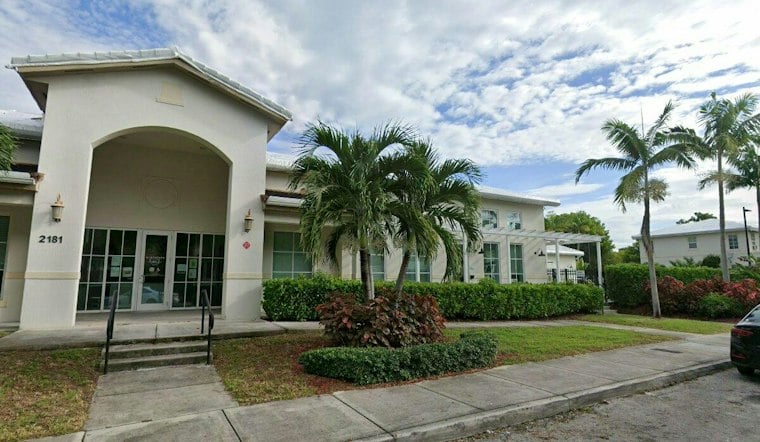
Whether North Park at Scott Carver will undergo a federal rental-assistance conversion remains unresolved: Miami-Dade County had not approved the proposal as of Oct. 8, and officials say it is still preliminary. For tenants in the 354-unit Liberty City complex, the immediate concerns include years of roof leaks, flooding and suspected mold, as well as what any renovation would mean for their homes. Those questions came to a head at an Oct. 8 community meeting at the NFL YET Center.
Jackie Walker, North Park's resident council president and a tenant for about 13 years, has served three terms in the role. She told WLRN Public Media, in a report produced by The Miami Times as part of a content-sharing partnership with the WLRN newsroom, that rumors and conflicting information have heightened residents' anxiety and that they deserve the chance to make informed decisions about their homes. At the time of her interview, Walker said property management had not discussed the proposal with her directly. She also pressed officials about what would happen if the conversion effort fell through.
The proposal centers on the federal Rental Assistance Demonstration program, known as RAD, which according to HUD was created to let housing authorities tap additional funding to maintain, repair and replace public housing units while preserving the resident processes and rights tied to public housing. A HUD resident fact sheet further explains that RAD allows housing authorities to convert a property's public housing subsidy into a Section 8 subsidy tied to the building itself.
What the Proposal Would Actually Do
Kyle Flood, development director for Miami-Dade County Housing and Community Development, said North Park would be among the county's first RAD conversions using this particular approach, potentially making it one of Miami-Dade's first federal housing conversions of its kind. The proposal calls for relatively light rehabilitation of the existing apartments, rather than demolition or extensive reconstruction, and short-term resident relocations during the work.
Residents under RAD could be temporarily relocated for roughly 30 to 45 days, though apartments with more extensive damage could require additional relocation time, per Flood. RAD-covered residents retain their right to return to the property, and written relocation agreements are meant to outline further protections for tenants. Still, county notices left on residents' doors led some to believe demolition was being considered, and Miami-Dade county board had not approved the plan as of Oct. 8, with officials stressing that everything remained preliminary. The county has not announced a construction timeline.
What Relocation Protections Are Described
HUD says residents have the right to remain at a property after a RAD conversion or to return if temporarily relocated for construction or rehabilitation. Miami-Dade County's RAD program page says residents needing a temporary transfer will receive at least 90 days' advance notice, a comparable replacement dwelling, advisory services and professional moving services at no cost. These program-wide protections do not establish the terms of North Park's still-unapproved plan; the cited guidance also does not spell out how disputes over an individual relocation would be handled.
Owner Acknowledges Years of Deferred Repairs
McCormack Baron affiliates currently own and manage the Liberty City development, and the company acknowledged that North Park's condition has been unacceptable. McCormack Baron attributed the maintenance problems to insufficient federal subsidies, saying inadequate Section 9 operating funding, depleted reserves, pandemic disruptions and rising insurance and operating costs combined to affect maintenance, staffing and management responsiveness. The company said those funding shortfalls stretch back more than a decade, depleting property reserves and forcing deferred maintenance and capital improvements.
The company maintained that delays in addressing resident requests did not reflect intentional disrespect or indifference by staff, and said it shared residents' frustration over conditions at the property. McCormack Baron said it would continue working with the housing authority to prioritize critical repairs going forward. Separately, Miami-Dade officials said the county had received several complaints from North Park residents and addressed them individually, according to WLRN, which also reported that demolition is not currently part of the plan being contemplated for the complex.
Advocate Demands Accountability on Both Sides
Trenise Bryant, executive director of Struggle for Miami's Affordable and Sustainable Housing, criticized how property management has handled residents' complaints, saying maintenance notices were ignored and repairs went uncompleted. She urged county officials to address the existing problems at North Park even as they plan for future renovations, and she questioned whether residents would receive sufficient information about their rights under any conversion.
Bryant also warned against repeating the displacement problems that marked an earlier redevelopment of the same site. The original Scott and Carver homes were demolished after Miami-Dade's housing agency first announced plans to replace them in 1999 with a $35 million Hope VI grant, according to the Miami Herald. That demolition scattered 1,150 residents across the county, and the county did not strike a development deal with St. Louis-based McCormack Baron Salazar until 2008, using the remaining Hope VI funds alongside tax credits, private financing and new federal grants.
The resulting $84 million NorthPark at Scott Carver, a publicly subsidized, privately built mixed-income community of 354 apartments and town homes, didn't welcome former residents back for about a decade, as CBS News Miami reported at the time. That history is part of why advocates like Bryant are watching the current proposal closely, even though officials describe the present approach — renovating rather than demolishing — as fundamentally different.
Residents Weigh Hope Against Fatigue
At the Oct. 8 meeting, residents voiced frustration with the complex's deteriorating conditions and questioned whether the proposal would bring meaningful improvements. Walker said the frustration reflected problems that had persisted for years, not a sudden crisis. She described herself as cautiously optimistic about the renovations, but said residents need much clearer information about how the work would proceed before they are asked to trust the process.
Walker said she wants to speak with residents elsewhere who have gone through a RAD conversion to learn what to expect. McCormack Baron affiliates are discussing a potential ownership and management transfer to affordable housing developer Smith & Henzy, but that change, like the rest of the proposal, has not been approved by the county board. Kyle Flood had introduced some details of the proposal to The Miami Times earlier in October, before the community meeting.





