

























































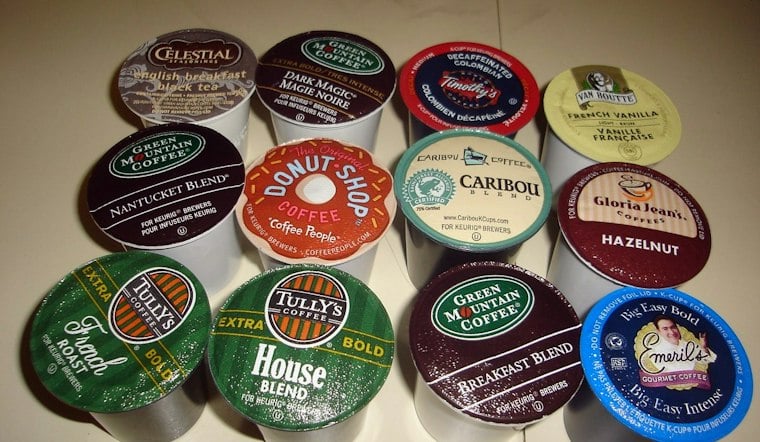
A federal judge has cleared the way for Rogers Family Coffee Co., the Lincoln, California company behind San Francisco Bay Coffee, to take its antitrust case against Keurig to trial after more than a decade of litigation. U.S. District Judge Vernon S. Broderick denied Keurig's request to throw out the case on Sept. 18, ruling that core claims of monopoly power, harm to competition and exclusionary contracts must now go before a jury.
Rogers Family Coffee Co. does business as JBR, Inc., which owns and operates San Francisco Bay Coffee, according to a BusinessWire release describing the company as a second-generation family coffee operation. The Lincoln, California-based company also sells coffee under its Organic Coffee Co. brand, and the Sacramento Business Journal covered Rogers Family Coffee Co.'s case against Keurig. The litigation, known as In re: Keurig Green Mountain Single-Serve Coffee Antitrust Litigation, carries case number 1:14-md-02542 in the U.S. District Court for the Southern District of New York, according to court records on CourtListener.
A Case More Than a Decade in the Making
The fight traces back to 2014, when the company filed its original lawsuit in California before the case was folded into consolidated proceedings in New York, the same BusinessWire release notes. The dispute has dragged on ever since, with Sacramento Business Journal describing the suit as delayed for more than ten years before finally heading toward its day in federal court.
At the heart of the case are allegations that Keurig Green Mountain Inc., the maker of single-serve coffee machines, used restrictive agreements with roasters, suppliers and distributors to dominate the pod market, according to the same BusinessWire account. Rogers Family Coffee Co. alleges that Keurig held a market share exceeding 85%, per reporting from FoodBev, though that figure is attributed to the plaintiffs rather than an independent finding by the court.
What the Judge Allowed to Proceed
Judge Broderick's September ruling denied Keurig's request to end the case on the central questions of monopoly power, harm to competition and the exclusionary contracts, the BusinessWire release states. The judge found that plaintiffs may try to prove Keurig's illegal tying of its brewers to its own coffee pods, and he determined that certain Keurig statements about the safety and performance of competing pods are, in general, literally false, allowing related false-advertising claims to move forward as well.
The ruling was not a one-sided win for Rogers Family Coffee Co., however. Broderick also narrowed the case, removing theories tied to Keurig's retail agreements, the redesign of its 2.0 brewer and earlier patent lawsuits, per the BusinessWire statement. Bloomberg's coverage of the decision similarly described a judge who agreed to narrow the scope of the long-running case against Keurig but denied the company's bid to dismiss the suit's core allegations.
Legal trade outlets framed the decision in similar terms. The case is moving toward trial, while VitalLaw described the outcome as Keurig facing trial on core exclusionary-conduct claims after the court denied much of the company's summary-judgment motion.
Damages, Sanctions and What Comes Next
Rogers Family Coffee Co. will also be permitted to present its so-called Amazon approach to calculating damages at trial, according to BusinessWire. Economists cited in the same company release estimated roughly $390 million in antitrust damages before any potential trebling, plus about $109 million in false-advertising disgorgement through mid-2025, though those figures come from the plaintiffs' side rather than a court determination.
The case has already produced friction beyond the merits. A separate ruling in July 2025 sanctioned Keurig for failures to preserve evidence and delays in producing transactional data, FoodBev reported. The court separately found that Keurig's alleged exclusionary agreements raised triable issues of fact over whether they contributed to the company's monopoly power, according to BusinessWire.
It's worth noting that the ruling does not constitute a final finding that Keurig violated antitrust law, FoodBev reported. Rogers is expected to get its day in federal court in 2027, according to the Sacramento Business Journal, and no outcome is guaranteed once the case reaches a jury. For now, the practical result is that a family-run coffee company out of Lincoln has cleared one of the last major hurdles standing between it and a courtroom showdown with one of the biggest players in American coffee.





