

























































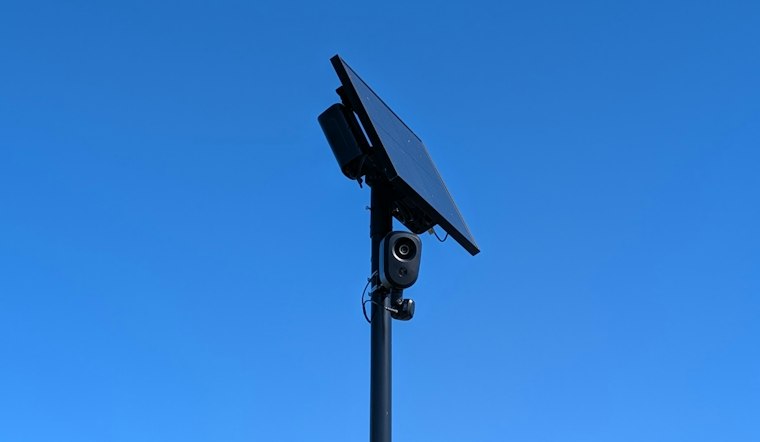
Lockport's Common Council voted 5-1 on Wednesday to revoke permission for all Flock Safety cameras in the city, undoing a decision made less than a year earlier to allow the license-plate-reading devices. The reversal came after residents packed the meeting to raise privacy concerns, and it leaves a Niagara County Sheriff's Office investigator's warning about losing access to shared crime-fighting data unheeded.
The resolution was introduced by 4th Ward Alderman Kathryn Fogle, who told WIVB that the push came directly from the people she represents. “It was really an urging from all my constituents,” Fogle said. As Spectrum News reported, privacy emerged as one of the top issues residents raised at Wednesday night's meeting.
Nearly 10 people spoke in favor of removing the cameras, according to the Lockport Journal. One meeting speaker, per Spectrum News, said they supported cutting down the cameras because driving past them made them sick to their stomach, worried about their data being run through the system. Rowland O'Malley, the 3rd Ward alderman and council president, cast the lone vote against removal, the same paper reported.
A Reversal Just Months After Approval
Lockport had authorized the installation and use of two Flock cameras back in February, the station's report notes. The about-face means the Niagara County Sheriff's Office will need to remove the devices, Fogle said, according to the same account. A sheriff's office investigator urged the council to delay the vote, telling members that “effective investigations depend on information sharing” across agencies.
That information-sharing network is substantial. Niagara County has installed 43 Flock Safety cameras on roadsides countywide through a Homeland Security grant, as reported by Yahoo News. Sheriff Michael Filicetti has said he can share the county's camera alerts with any subscribing law-enforcement agency in the nation, and that Erie County law enforcement has already been authorized to access them, per the same outlet.
Cheektowaga Misuse Case Looms Over the Debate
The Lockport vote lands amid fresh scrutiny of Flock technology across Western New York. An internal audit at the Cheektowaga Police Department, which has 30 Flock cameras around the town, found that three employees — one officer and two dispatchers — misused the system to search for a co-worker's license plate for months, according to WKBW. The three were suspended, but the Erie County District Attorney's Office said they will not face charges because, as WIVB reported, “the allegation did not rise to the level of criminal conduct.”
Public opinion on the cameras remains split. A Reuters/Ipsos poll cited by WKBW found 38% of respondents supported Flock cameras in their communities while 47% opposed them. The scale of usage in the region is also drawing attention: twenty police agencies across Erie and Niagara counties conducted more than 218,000 searches through the Flock network between January 2025 and early June 2026, according to Spectrum News' separate report on state legislation. Erie County reportedly had 291 license plate readers, more than any other county in upstate New York, per the same report.
Other Municipalities Chart Different Paths
Lockport is far from the only city grappling with how to handle the technology. The Town of Tonawanda has voted to switch to a different camera system once its Flock agreement expires, while Buffalo officials have said the police department has no Flock cameras and no desire to purchase the equipment. Buffalo Mayor Sean Ryan and Police Commissioner Erika Shields have said they are happy not to own automated license plate readers.
North Tonawanda took a similar step in August, stepping away from an agreement for county Flock cameras to be placed throughout the city after officials said they were unable to independently view how the data was being used, according to WGRZ. In Troy, the city council passed Local Law 3 on October 1, becoming the first municipality in New York to regulate automated license plate readers, according to News 10. That law cuts how long police can retain license plate data from 30 days down to 72 hours.
University at Buffalo Weighs Its Own Pilot
Not every institution is pulling back. The University at Buffalo has proposed installing 20 solar-powered Flock Safety license plate readers on its north and south campuses for a 60-day trial, with officials saying the technology is being considered to enhance security and safety. According to the University at Buffalo, the pilot would anticipate launching in March or April of 2027.
UB says it would build in guardrails its critics elsewhere have demanded: access limited to specific University Police investigators, routine internal audits, an opt-out from Flock's national database, and automatic data deletion after seven days unless investigators flag a case for longer retention. The university also says the cameras would collect license-plate information and vehicle characteristics rather than use facial recognition.
State lawmakers, meanwhile, are moving on separate legislation. An Assembly bill would establish minimum standards for automatic license plate reader use by nongovernmental and non-law-enforcement entities, though it would not directly regulate how police departments use the technology, per Spectrum News' statehouse coverage. If signed into law, the measure would take effect one year later. Separate legislation from state Senator Michelle Hinchey, described in a press release from her office, would impose what the release calls severe limits on the deployment and data retention of all automated license plate readers in the state.




