

























































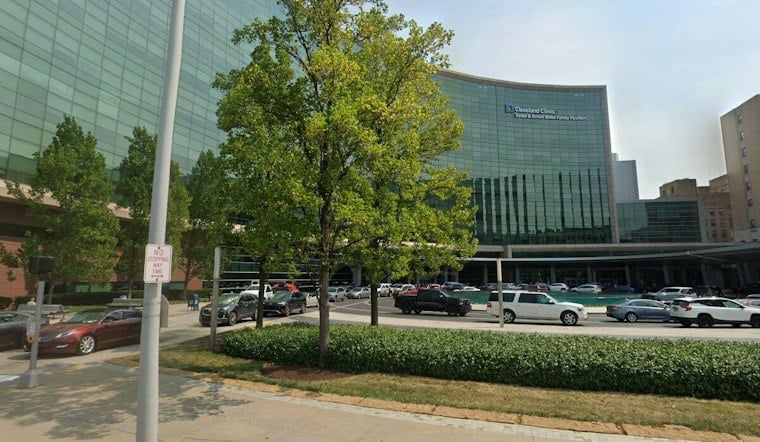
Thirteen-year-old Mariah Bowen, an eighth grader from Lorain, completed treatment for acute promyelocytic leukemia, or APML, and marked the milestone by ringing the Bravery Bell. Diagnosed in January, she has since returned to school and basketball and attended a Cleveland Cavaliers home game.
How uncommon is APML?
Acute promyelocytic leukemia is a distinct subtype of acute myeloid leukemia (AML), and it occurs in about 7% of children with AML, according to the National Cancer Institute. That figure refers to children with AML, rather than all children or all childhood leukemias.
Mariah received treatment at Cleveland Clinic Children's and spent much of that time in the hospital, according to FOX 8. The station reported that Cavaliers games were a source of comfort during her stay.
Support Through Treatment
Mariah's mother, Claudia Robinson, told FOX 8 that watching her daughter endure the treatment was especially difficult. Her account underscored the toll the months of care took on the family.
Mariah's care team at Cleveland Clinic Children's guided her through treatment. Alongside that medical support, watching the Cavaliers offered a familiar distraction during her hospital stay, FOX 8 reported.
Marking the Milestone
Mariah marked completing treatment by ringing the Bravery Bell at Cleveland Clinic Children's, according to FOX 8 Cleveland WJW. The station reported that she was nervous beforehand but ran to ring it when the moment arrived. The send-off had a Cavaliers theme.
Days later, Mariah attended the Cavaliers' home opener at Rocket Arena. It was her first time seeing the team play in person after following games during her hospital stay, according to FOX 8 Cleveland WJW.
Resuming Everyday Routines
Mariah has returned to school and basketball, FOX 8 Cleveland WJW reported.
Treatment, activity and follow-up
The National Cancer Institute says treatment options for children with acute promyelocytic leukemia may include arsenic trioxide and tretinoin, with or without chemotherapy, as well as supportive care. This general guidance does not establish Mariah's specific regimen. The information cited here describes treatment options, not comparative outcomes for childhood APL and other AML subtypes. See the National Cancer Institute's overview of childhood APL treatment.
Research on activity after childhood cancer treatment offers broader context, not an individualized return-to-sports plan: an NCI-reported pilot study found moderate-to-vigorous activity rose by an average of nearly 5 minutes a week in the intervention group, while it fell by more than 24 minutes a week in the control group. Mariah's bell marked treatment completion; it does not establish that follow-up care has ended. Cleveland Clinic says its Childhood and Young Adult Cancer Survivor's Clinic provides long-term follow-up for people five years from a pediatric cancer diagnosis and off therapy for at least three years, but its page does not specify Mariah's follow-up plan. The study is summarized by the National Cancer Institute; clinic details are from Cleveland Clinic Children's.
A separate FOX 8 segment also highlighted Mariah as a teenage Cavs fan ringing the bell at Cleveland Clinic Children's, underscoring how closely her recovery became tied to her love of the team. For now, Mariah's story stands as one of a young patient who found a steady source of hope during an otherwise uncertain year.




