

























































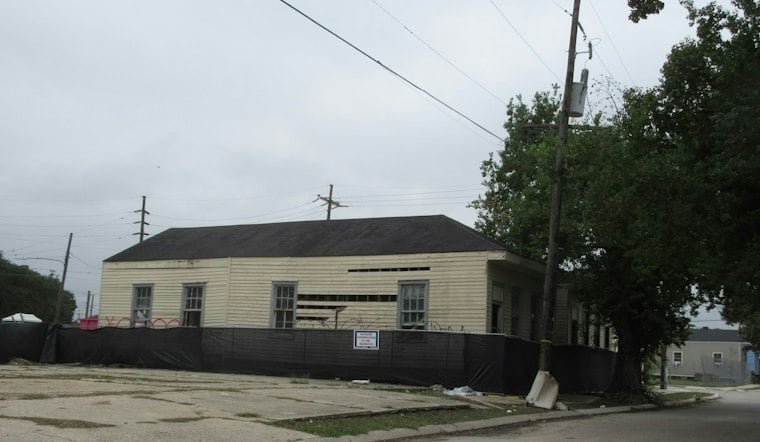
Louisiana voters head to the polls Tuesday to decide whether parishes should be allowed to hand out steep property-tax breaks to owners who fix up blighted or derelict buildings and lots. Amendment No. 10 would not force any parish to participate, but it would open the door to exemptions worth up to 75% of a rehabilitated home's assessed value for as long as 20 years.
The measure is one of 10 constitutional amendments Louisiana voters will consider on the Nov. 3, 2026 ballot, according to the Louisiana Illuminator. As reported by New Orleans CityBusiness, the amendment would allow local governments to offer an optional property tax exemption for blighted or derelict property that has been rehabilitated, giving parish governing bodies the final say over whether to take part.
Eligible property would include land or structures that had previously been declared a public nuisance, unsafe, a fire hazard, dangerous to human life, a public safety hazard or a health hazard, and that have since been rehabilitated, per the Public Affairs Research Council of Louisiana, known as PAR, which produced a voter guide on the amendment without taking a position for or against it.
How Big Could the Tax Break Get?
Under the proposal, residential property could see up to 75% of its assessed value exempted from property taxes for up to 20 years, according to PAR's guide. Parish governments would decide within the statutory limits how much of a tax break to actually offer, the Shreveport Times reports — meaning the size and duration of any exemption could vary widely from one parish to the next.
Vacant, unimproved land would qualify for a smaller break, though sources differ on exactly how much. PAR's guide states that vacant land could receive up to 25% of its assessed value exempted for up to 10 years, but only if the lot sits adjacent to a parcel with a residence or commercial structure already on it. KSLA, however, reported that rehabilitated vacant lots would qualify for a flat 20% property tax reduction. The dossier does not resolve which figure is accurate.
If approved, the amendment would also require the Legislature to enact laws governing how the exemptions are administered, per PAR. The Louisiana Legislature's own records point to proposed R.S. 47:1703.2 as the mechanism that would let a parish governing authority elect, by resolution, to implement the program, though the full statutory conditions were not detailed in the available text.
Who Is Behind the Measure
Amendment No. 10 was advanced through the Legislature as House Bill 214, sponsored by Republican state Rep. Chance Henry of Crowley, the Shreveport Times reports. The Louisiana House of Representatives' own committee records identify the bill as a constitutional amendment authorizing a property-tax exemption for blighted or derelict properties that have been rehabilitated.
Supporters argue the tax break could encourage redevelopment, reduce blight, improve neighboring property values and public safety, return abandoned properties to commerce, and ultimately increase the housing supply. Backers see it as a tool for turning around the kind of derelict buildings that drag down entire blocks.
The Case Against the Amendment
Opponents counter that special property-tax breaks erode the tax dollars available to local government agencies that provide needed services and shift the tax burden to fewer taxpayers, according to the Shreveport Times. Critics also warn that the law would not require a property that receives the exemption to remain habitable once the break is granted.
Other critics argue the exemption's length and scope — up to two decades of reduced taxes on a single property — are too generous and could end up benefiting developers or house flippers rather than everyday homeowners trying to fix up a family property. KSLA's reporting notes that it is difficult to determine whether the exemption itself would be the deciding factor that actually prompts someone to rehabilitate a blighted building in the first place.
Even the scale of the program's potential reach is murky. A Legislative Fiscal Office financial analysis says the number of properties that might qualify is unclear because assessors do not currently determine which properties are derelict or blighted, so there is no existing inventory to estimate how many parcels could become eligible if a parish opts in.
What a No Vote Means
A vote against Amendment No. 10 would maintain current property-tax exemptions as they stand, without authorizing parishes to create this new tax break for rehabilitated properties, according to PAR. A vote in favor would create an optional parish program allowing exemptions for formerly blighted or derelict property that has since been fixed up, leaving the ultimate decision to adopt it, and how generous to make it, in the hands of individual parish governments.





