

























































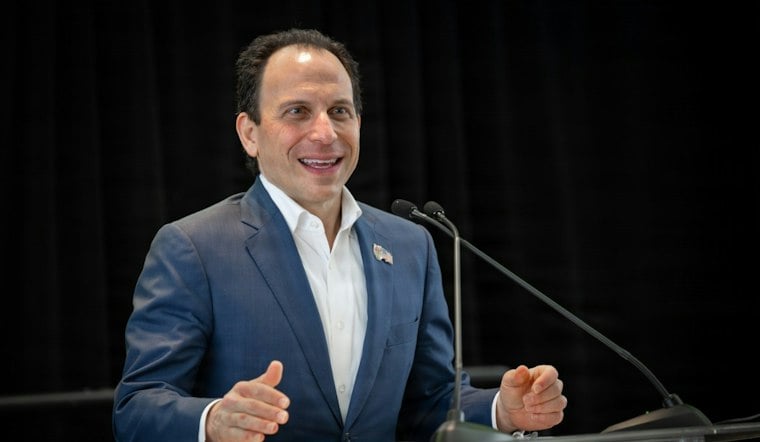
Louisville Mayor Craig Greenberg announced a new pilot program Tuesday that lets licensed psychologists watch live body-worn-camera footage from LMPD officers and offer real-time guidance during behavioral health crisis calls. Officers on scene will still make the final call, but they'll now have a trained mental health professional observing the situation as it unfolds and weighing in with observations and recommendations.
According to wlky.com, the program allows LMPD to get real-time guidance from licensed psychologists while officers remain on scene handling the call. Greenberg, writing on X under the handle @louisvillemayor
, said the initiative makes licensed psychologists available to assist LMPD officers during behavioral health crisis calls through their body worn cameras. The mayor described it as the first program of its kind in the country, to his knowledge.
The pilot brings together LMPD, MetroSafe and Shelton Forensic Solutions, the station's report notes, pairing the department's dispatch and communications arm with outside clinical expertise. It builds on LMPD's Advanced Crisis Team, which launched in September, extending that unit's work by giving officers a direct video line to a psychologist during active calls rather than relying solely on in-person responders.
How the Remote Support Works
Per the same account, psychologists will remotely watch live body-worn camera footage and offer officers observations and recommendations as a crisis unfolds. The mayor's office framed the effort as part of a broader push to improve how the city responds to mental health crises, rather than a standalone fix.
LMPD and its partners plan to review the pilot's outcomes and feedback to evaluate how effective it is in practice, the article states. That evaluation process suggests the city sees this as an experiment to be tested and refined rather than a finished system.
A Growing but Still-Developing Model
Co-responder programs, which pair trained officers with mental health professionals on calls involving people in crisis, have been expanding in various forms nationally, according to the Office of Justice Programs. Research from the National Institute of Justice on one such program found it showed potential to reduce mental-health-crisis-related call volume for patrol officers and improve crisis response, while also highlighting a need for expanded operational hours and tighter integration with broader mental health services.
Other cities have taken different approaches to pairing police with clinicians. In Denver, co-responders are licensed mental health clinicians who work in close partnership with that city's police department on calls involving people with mental illness, co-occurring disorders and substance use issues, per the Bureau of Justice Assistance.
Louisville itself has tried a version of this before. The city previously ran a crisis-call-diversion pilot in partnership with Seven Counties Services, which launched in LMPD's 4th Division with one shift operating seven days a week, according to LouisvilleKY.gov. That earlier effort followed months of research into best practices from other cities before it got off the ground.
For now, key details of the new pilot remain unannounced, including how many psychologists are involved, their staffing hours, and which specific calls will qualify for the live video support. City officials have not released information on the program's budget or how body-worn-camera access and privacy will be managed during these remote consultations. Whether the claim of being first in the nation holds up may become clearer once LMPD and its partners complete their planned review of the pilot's results.





