

























































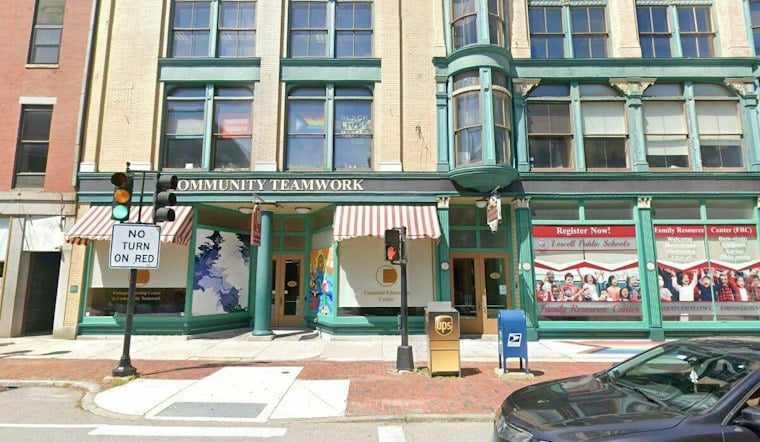
A women-only shelter in Lowell is built around a different kind of emergency accommodation: residents can stay through the day, not just overnight, while they work toward permanent housing. Community Teamwork Inc. held a ribbon cutting during the week of October 26, 2026, after years of planning. The facility was expected to open to residents in a few weeks.
Kim, whose story was first reported by GBH News, said there are no rents cheap enough for her to manage on disability benefits alone. She spent several days sleeping outside after losing the home she had shared with her boyfriend of more than three decades; he died two years before this reporting. Before the new shelter, she stayed at a Massachusetts shelter motel facing imminent closure. She said the displacement felt awful and made her feel like nobody, and that people often blame those experiencing homelessness for their circumstances. Many future shelter residents are being transferred from a state-funded hotel in Chelmsford that will soon become unavailable, according to GBH News.
A Shelter Built Around Staying, Not Just Sleeping
Community Teamwork Inc. held a ribbon cutting for the new facility in Lowell during the week of October 26, 2026, and the project has been years in the making. The nonprofit purchased the building at the corner of Warren and Church streets in 2024, according to the Lowell Sun, and has since renovated it into a dedicated space for women who do not qualify for family shelter or who do not feel safe in co-ed accommodations. Community Teamwork describes the project as serving women experiencing homelessness, domestic violence, and other crises.
Capacity figures have varied across sources: the Lowell Sun has reported the facility will provide emergency shelter to more than 50 women over 18, while Community Teamwork's own website describes it as a 60-bed shelter. The project's cost has also been described differently, with the Sun citing an estimated $5.4 million including acquisition and professional services, while other reporting on the facility puts the figure at $7 million. The city of Lowell contributed roughly $1 million in initial funding from American Rescue Plan Act dollars toward purchasing the building, part of a broader $2 million city investment across two Community Teamwork shelter projects. Corporate and private donors contributed $3 million more, the Theodore Edson Parker Foundation granted $250,000 over five years toward the project, and Community Teamwork plans to finance the remaining balance with a revolving loan.
What sets the new facility apart from Lowell's existing overnight options is that residents will not have to seek a bed each night. GBH News reported that women can stay throughout the day, make phone calls, and complete housing or medical paperwork. The shelter is expected to provide case management, supportive services, and two meals a day. Sean Wilson, who is associated with the project, said reliable food helps people manage job interviews and sleep.
Why Daytime Access Matters
In GBH News's reporting, Judith Gonyea, a Boston University School of Social Work professor who studies women experiencing homelessness, called the new Lowell facility incredibly important. She said overnight-only shelters do not provide the normalcy or stability people need to stabilize their lives, and that failing to track homelessness carefully makes the underlying problems harder to identify.
That critique echoes concerns Katelynn Travers raised in GBH News's reporting: overnight shelters often require people to line up daily without any certainty of receiving a bed. Kim also told GBH News that people without an available bed are simply turned away. The dynamic underscores why advocates see daytime access and extended stays, paired with ongoing housing applications and services, as a meaningful shift rather than just a new building.
Older Women Are a Fast-Growing Share of Lowell's Homeless Population
Lowell's own count data illustrates the trend driving this project. The city's 2026 Point-in-Time count visited 119 locations and tallied 267 people as homeless, and women over age 55 made up 28% of that total, according to the Lowell Sun's reporting on seniors as a growing homeless demographic in the city and nationally. Lowell residents age 55 and older counted as homeless rose from 46 in 2020 to 66 in 2026, an increase of nearly 44%, and the Lowell Transitional Living Center reported that adults 55 and older made up 30% of its shelter population at one point in 2025.
Robyn Frost, executive director of the Massachusetts Coalition for the Homeless, told GBH News that women older than 55 are among the fastest-growing groups becoming homeless, and that more women are outliving their money. She said caregiving responsibilities and sudden life changes, such as divorce or the death of a partner, can precipitate homelessness among women, and that public benefits often fail to cover rent, shared housing, and other basic expenses. Statewide, the number of homeless women in Massachusetts increased by 24.2% between 2022 and 2023, per the Lowell Sun, and the National Alliance to End Homelessness has reported that women experienced homelessness in greater numbers than men in Massachusetts in both 2023 and 2024.
National Data, and a Shifting Federal Count
The scale of the problem extends well beyond Lowell. The National Alliance to End Homelessness recorded 771,480 people experiencing homelessness in the 2024 national Point-in-Time Count, the highest total since data collection began in 2007, with overall homelessness up 18% from 2023 to 2024 and first-time homelessness up 23% since 2019. The group has also tied the trend to housing costs, noting that median rents increased 23% after inflation between 2001 and 2023 while renters' median incomes rose just 5%, and that a $100 increase in a community's median rent is associated with a 9% rise in homelessness. In Massachusetts specifically, 19,141 residents experienced homelessness on any given night in 2023, including 1,958 adults 55 and older, according to the organization's state fact sheet. Nationally, the 65-and-older population grew by almost 7% in 2025 data even as nearly every other age group declined.
Women experiencing homelessness are often less visible than men, advocates note, since many couch surf, live in cars, or move between temporary situations rather than appearing in street counts. The Point-in-Time count has historically focused on men as the more typical homeless population, and homelessness advocates have pushed for clearer gender breakdowns in the data. GBH News reported that under the Biden administration, HUD tracked men, women, and people who did not identify as either category, but the agency removed all gender categories from its 2025 data, listing only individuals. A HUD spokesperson said the change was intended to restore biological truth and improve data accuracy. It remains undetermined whether the next annual count will include a women's breakdown. Homeless people generally experience harsh living conditions that can lead to rapidly declining health, advocates say, underscoring the stakes of getting people into stable settings quickly.
What the counts can—and can't—show
The figures cited here do not establish comparable changes in homelessness among older adults in Lowell, Boston, and Portland, Maine; they cover different populations and periods, and no corresponding Boston or Portland figures are provided. HUD cautions that changes in a Continuum of Care’s counting methodology can affect reported homeless-count totals from one period to another, according to HUD Exchange.
Local Leaders and a Regional Comparison
Lowell Mayor Erik Gitschier praised Community Teamwork's work on the project, saying the city needs temporary housing with wraparound services specifically for women. He also noted that people from surrounding communities often seek services in Lowell, adding pressure on the city's existing shelter system. The National Alliance to End Homelessness has estimated that Lowell-area emergency shelters have capacity for only 43% of people experiencing homelessness in the region.
Lowell's approach has echoes in Boston, where Women's Lunch Place operates a shelter-to-housing program that gives each resident her own room along with meals, kitchen access, laundry, and a social worker, according to The Boston Globe. That program launched as a 50-bed overnight shelter-to-housing effort in 2024 and expanded to serve 65 women by 2025 through additional public and philanthropic funding, per Women's Lunch Place's own account of its mission. The Globe has reported that guests in that program are more than twice as likely to transition to permanent housing as the national average for people exiting emergency shelters. By contrast, Lowell's existing Transitional Living Center provides overnight shelter for men and women combined and adds 30 extra emergency cots during winter protocol.
For Kim, the specifics of financing and bed counts matter less than what the new shelter represents: a chance to stop moving from place to place and start building toward something permanent. She said she hopes to have her own place again someday, and the shelter's case management and wraparound services are meant to help her and other women make that transition from temporary housing into something lasting.




