

























































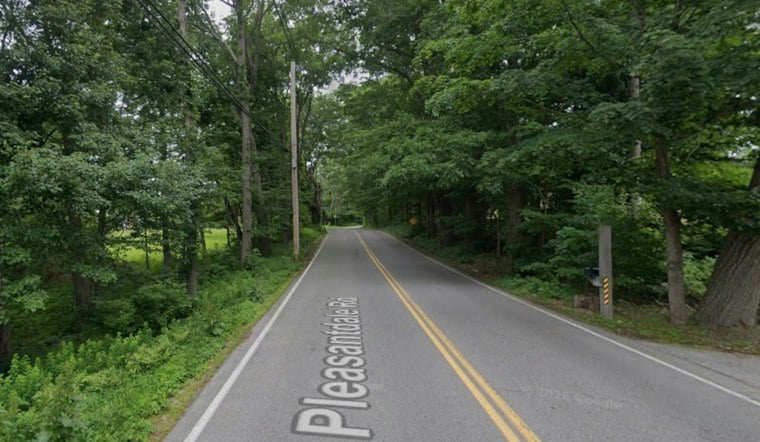
A 90-acre farm that sat in the same Rutland family for more than 70 years is on the verge of a new chapter, as Mount Grace Land Conservation Trust works to transfer Dolan Farm into the stewardship of the Chaubunagungamaug Band of the Nipmuck Indians. The land, which sits next to the Ware River watershed, would be renamed Naquag Farm once the handoff is complete, though the exact acreage involved is described differently across accounts of the deal.
Mount Grace says on its website that it is working to return 90 acres of forest and farmland in Naquag, the Nipmuc name for Rutland, to the stewardship of the Chaubunagungamaug Band, which it calls CBNI, according to Mount Grace. A separate account of a Rutland meeting, reported by Citizen Portal, describes the property as the roughly 84 to 90 acre Dolan Farm on Pleasantdale Road, so the precise footprint of the parcel is not consistent across the available sources.
At that same meeting, Mount Grace asked the Select Board to back a conservation restriction meant to keep the farm working agricultural land in perpetuity, the outlet reported. The meeting report also described the property as intended to transfer to Nipmuc tribal stewardship, with increased woodland stewardship and a forest management plan among the stated goals.
A Forest Plan Built With Tribal and Academic Partners
According to a second Citizen Portal account of Rutland deliberations, a forest management plan for the property is being developed with the tribe, a private forester, and a UMass collaborator, as detailed in the follow-up report. Mount Grace has also said it applied for and received the first Massachusetts State Tribal Land Acquisition Grant, framing the Dolan Farm effort as part of a broader reciprocal partnership with the band.
That partnership extends beyond the farm itself. Mount Grace describes the band's Nipmuc Cultural Hunt and Fish program as supporting the community's food sovereignty work through habitat stewardship, wild game hunting and processing, and fishing. The organization also says it is developing a Cultural Respect Easement with the band, intended to formally recognize Nipmuc citizens' inherent rights to hunt, fish, and gather on land Mount Grace stewards — though that easement remains under development rather than finalized.
Part of a Wider Pattern of Land Return in Central Massachusetts
The Dolan Farm effort fits into a broader pattern of Nipmuc land projects across the region. Pequoig Farm, located in Orange and operated by the Hassanamisco Nipmuc Band, returned to Nipmuc stewardship in 2022 through a partnership with the Farm School, according to Tamalpais Trust, which describes the farm's work as advancing Nipmuc food sovereignty through food, medicine, land-based education, and cultural connection.
The Farm School separately says that the farm formerly known as Maggie's is being held by both Nipmuc Tribe members and Farm School staff as they support the tribe's stewardship vision, and that the community has held gatherings and workshops while cultivating traditional crops and getting to know the land again, per the Farm School. In Belchertown, a proposed Massachusetts House bill would authorize the Hassanamisco Nipmuc Band to steward most of the 430-acre Lampson Brook Farm, with the Nipmuc Indian Development Corp. managing the property except for the historic Jepson farmstead parcel, as reported by the Daily Hampshire Gazette.
What The Gardner News Reported About the Rutland Sale
The fullest account of the Dolan Farm transaction comes from The Gardner News, which reported that the farm was owned by the Dolan family for more than 70 years, after Donald and Joyce Dolan bought it in 1954 and raised six children there. David Dolan, one of four surviving siblings who co-own the farm, told the paper that he and his siblings worked the land during school summers, tending hayfields, vegetable crops, and farm animals.
Per that report, Mount Grace paid $1.75 million for the farm, nearly $500,000 below its $2.2 million appraised value, after the Dolan family said they wanted it protected from a developer who had sought to subdivide the property and build 40 houses. David Dolan said he is glad the farm will not be developed, and is considering building a new home on five acres he owns across the street from the farm, the paper reported.
A Funding Gap Looms Before the 2027 Deadline
The Chaubunagungamaug Band contacted Mount Grace in 2024 to explore buying back Indigenous lands and went on to receive a $960,000 state grant for tribal land acquisition, according to the same report. That state grant requires Mount Grace to transfer the farm to the Nipmucs by June 30, 2027, and the trust needs $2.4 million total to cover its costs before the handoff, having raised $2.1 million so far — leaving a $280,000 gap it must close by that deadline or risk losing the grant.
David Kotker, Mount Grace's major gifts and grants manager, said the organization is under pressure to raise the remaining $280,000, warning that failure to do so would create a larger financial problem. Mount Grace borrowed roughly $1 million from private conservation lenders to buy the farm, the paper reported, and Kotker said the trust could negotiate an extension with those lenders or sell some assets to repay the debt if needed.
Ite Santana, chairman of the Chaubunagungamaug Band's tribal council, which represents 650 tribal members, said Mount Grace will transfer the farm even if the funding gap is not filled, while fundraising continues. Santana left a 30-year career as a semiconductor engineer to work full time at Mount Grace on a three-year Indigenous fellowship, according to the report, and said the land could support new crops and resumed hunting.
Reviving Traditional Crops on Newly Returned Ground
Santana envisions agricultural forestry with fruit and nut trees planted in the farm's forested sections, naming hickory, hazelnut, chestnut, and persimmon as traditional Indigenous food trees, per the paper's reporting. His team is receiving help from Yale School of Forestry and the University of New Hampshire, and the band plans to reintroduce Indigenous crops and potentially resume hunting deer and other wildlife on the property.
In the near term, Jordan Dairy Farm will manage the farm's hayfields, and some of that hay could feed cows at Pequoig Farm in Orange, the report noted. The farm sits next to the Ware River watershed in Rutland, which feeds into the Quabbin Reservoir, a source supplying drinking water to roughly 3 million people across eastern Massachusetts.





