

























































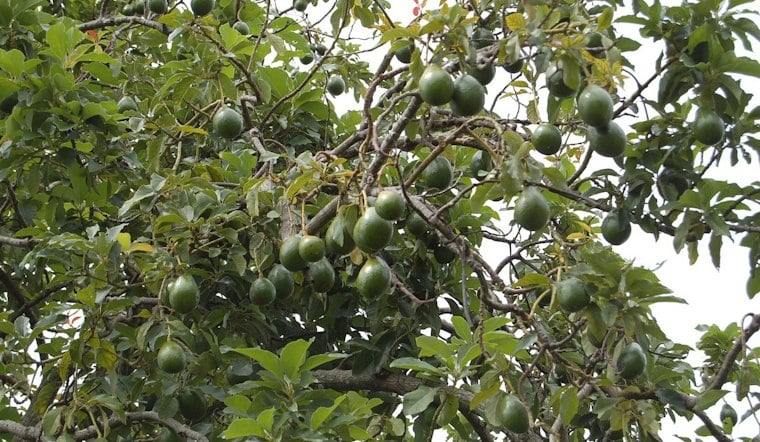
Mahi Pono wants to turn roughly 1,000 acres, mostly in former sugarcane fields below Pukalani, into an avocado orchard, with a projected annual harvest topping 10 million pounds once the trees mature. That figure alone would dwarf the entire state's current avocado output, and it marks the company's boldest bet yet on turning Maui's old plantation fields into a modern food-production hub.
The company announced the expansion after what it described as successful test plantings, according to the Honolulu Star-Advertiser. Mahi Pono expects an initial commercial harvest within five years, with full maturity yields eventually surpassing 10 million pounds annually. Justin Teixeira, the company's vice president of farm operations, said in a statement that initial plantings indicate quality avocados can be grown commercially on Maui, calling the orchard expansion “a long-term investment in producing more food here at home and keeping Maui’s agricultural lands productive.”
To put the scale in perspective, the entire state of Hawaii harvested just 880,000 pounds of avocados across 740 bearing acres in the 2025 crop year, worth a combined $1.14 million, according to the Hawaii Department of Agriculture and Biosecurity. A single Mahi Pono orchard, at full production, would produce more than ten times that statewide total. A survey prepared for HFUU and the Hawaiʻi Avocado Association found that roughly 44 of 70 growers farmed up to three acres, while five farmed more than ten acres.
Four Avocado Varieties, One Former Sugarcane Field
Mahi Pono intends to plant Lamb Hass, Sharwil, Gem and Greengold avocados, with most of the trees going into former sugarcane fields below Pukalani at elevations of roughly 700 to 800 feet, per the Star-Advertiser's reporting. The avocado stock for the orchards comes from Maui Native Nursery in Kula. The former sugarcane fields were part of a sugarcane plantation for more than a century until 2016, when it became the last sugarcane plantation in Hawaii to close.
Mahi Pono now owns roughly 41,000 acres of fertile land in Central Maui, purchased from Honolulu-based Alexander & Baldwin Inc. for $262 million in 2018. The company was formed by California-based Pomona Farming LLC, backed by a Canadian pension fund — identified elsewhere as the Public Sector Pension Investment Board, according to the Sierra Club Maui Group, which also notes that the joint venture acquired full ownership of the historic East Maui Irrigation Company.
Of its total landholding, Mahi Pono has put a little over half into agricultural production so far. The company has planted about 14,000 acres with more than 3 million trees, growing banana, coffee, macadamia, coconut, ulu, lemon, lime, orange and tangerine trees, plus onion, watermelon and lilikoi, and previously potatoes, all sold under the Maui Harvest brand across the islands. It also operates around 9,000 acres of pasture for its affiliate, Maui Cattle Co.'s grass-fed beef operations. Earlier in 2026, Mahi Pono announced its first commercial mandarin harvest, and the company has projected full productive use of all its farmland within three to five years.
Row Crop Production
The avocado orchard builds on a production track record the company has been quietly assembling for years. Mahi Pono's row crop division aimed to cultivate an estimated 2 million pounds of fresh produce in 2023, including kale, onions and watermelons.
Water Remains the Central Obstacle
Every acre of that ambition depends on water, and that's where Mahi Pono's plans run into trouble. Reaching full productive use of all its farmland requires enough irrigation water, and the farm draws that water from East Maui streams diverted through the East Maui Irrigation system — a supply that has been the subject of regulatory battles and litigation for decades, according to the Star-Advertiser.
Those battles have intensified this year. In July, State Circuit Court Judge Lisa Cataldo ordered the Hawaii Board of Land and Natural Resources to hold a contested-case hearing on Mahi Pono's East Maui stream diversion permit and lowered the interim diversion cap to 31.5 million gallons per day, as Hoodline reported at the time. The following month, the land board voted unanimously against putting a 30-year East Maui commercial water license up for public auction — a license that would have allowed up to 88 million gallons per day of stream diversion, according to Maui Now.
The same report notes that Maui County voters approved a charter amendment in 2022 establishing the East Maui Water Authority by a 64% majority, reflecting a local push toward municipal management and public stewardship of the region's water rather than continued corporate control. Water allocation in East Maui involves balancing farm use against public trust needs, including Native Hawaiian taro farming and stream ecosystems, a tension the Star-Advertiser's report frames as central to any expansion of Mahi Pono's irrigated acreage.
When surface water from East Maui streams runs short, Mahi Pono has turned to groundwater instead. State monitoring figures from May 2026 found the Central Maui Pāʻia aquifer was being pumped at roughly 217% of its sustainable yield of 7 million gallons a day, driven in part by Mahi Pono's groundwater pumping during East Maui drought conditions, Hoodline reported in a separate story on a nearby housing project.
Pests, Weather and a Federal Export Wrinkle
Even with sufficient water, Hawaii avocado growers face recurring biological threats. USDA agricultural reports identify the avocado lace bug as a persistent hazard, causing defoliation and fruit drop, while wild pigs, deer and severe wind events inflict additional physical damage on orchards statewide.
If Mahi Pono eventually looks to sell its avocados beyond Hawaii, federal rules add another layer of complexity — at least for the Sharwil variety among its four planned cultivars. USDA Animal and Plant Health Inspection Service quarantine rules allow untreated Sharwil avocados to ship to only 32 U.S. mainland states, and only during winter months from November through March, under strict pest-monitoring protocols designed to prevent the spread of the oriental fruit fly, according to FreshSource.
For now, Mahi Pono's focus remains on getting trees in the ground below Pukalani and proving out the five-year timeline to first harvest. Whether the company can secure the water to eventually farm all 41,000 of its Central Maui acres — avocados included — will likely depend on how the East Maui contested-case hearing and the broader water authority debate play out in the months ahead.





