

























































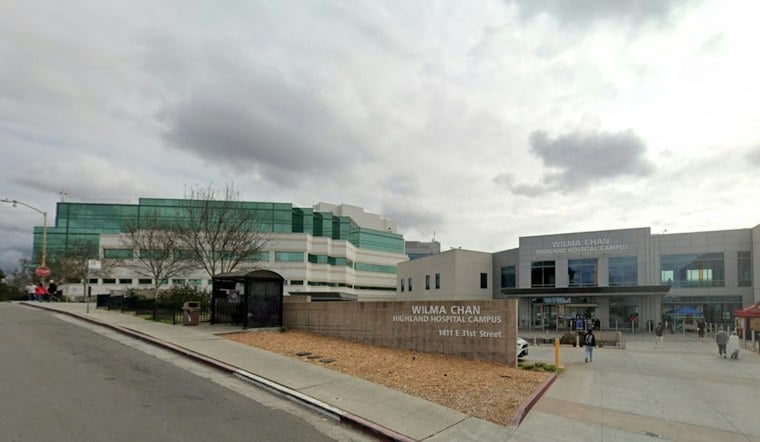
A man says he was stabbed four times while standing in the emergency room waiting area at Oakland's Highland Hospital over the weekend, an attack that has reignited questions about how weapons are making their way into the hospital. The victim told reporters he was trying to help an injured friend when he was attacked, and he's now asking a question hospital staff and lawmakers have been wrestling with for years: how did an armed attacker get inside at all.
According to KTVU, the man said he was stabbed four times in the ER waiting room while assisting his injured friend, and he questioned how someone carrying a weapon was able to enter the facility undetected. The outlet's report, published Monday, frames the incident as the latest flashpoint in an ongoing debate over hospital security at Highland, which serves as Alameda County's only adult Level 1 Trauma Center.
A Trauma Center Already Stretched Thin
Highland Hospital treats between 2,400 and 2,600 trauma cases a year as part of the public Alameda Health System, according to prior Hoodline reporting. That volume makes it the primary safety net for East Bay residents injured in violent incidents, including a multi-victim stabbing along International Boulevard in Oakland's Fruitvale district in August 2026, per the same report. Citywide, Oakland Police Department statistics reported in early 2026 showed violent crime fell in 2025, with aggravated assaults down 10% and homicides down 22% compared to the prior year, though the department remains understaffed relative to voter mandates, the Hoodline report notes.
Despite that downward trend, the latest stabbing lands inside the one place East Oakland residents are supposed to be safe once they arrive. It also lands amid a statewide reckoning over hospital weapons screening that has been building for more than a year.
New State Law Targets Hospital Weapons Screening
Under California Assembly Bill 2975, enacted in September 2024, general acute-care hospitals must install automated weapons-detection systems at main public entrances, emergency departments, and separate labor and delivery entrances. The Standards Board must update standards by March 1, 2027, and hospitals have three months after the standards are updated to comply, according to Facilities Dive. The law was created to address growing healthcare workplace violence, and its implementation rules are specific: handheld metal detector wands cannot serve as a hospital's sole screening method, and facilities must deploy trained, non-healthcare personnel to operate the detection devices, as detailed by Ogletree Deakins. Those staff must also receive at least eight hours of specialized training on de-escalation and device operation.
AB 2975 builds on older Cal/OSHA rules. California's SB 1299 regulations set April 1, 2017, as the deadline for incident logs and recordkeeping, and April 1, 2018, for comprehensive workplace-violence prevention plans, according to the California Nurses Association. California was the first state in the country to adopt comprehensive healthcare violence prevention rules of that scope. Separately, the state's Senate Bill 553 took effect on July 1, 2024, per the California Department of Industrial Relations.
Staff Have Been Raising Alarms for Years
Staff Have Been Raising Alarms for Years The concerns at Highland specifically are not new. SEIU Local 1021 members have rallied over safety and staffing concerns across Alameda Health System, according to the union.





