

























































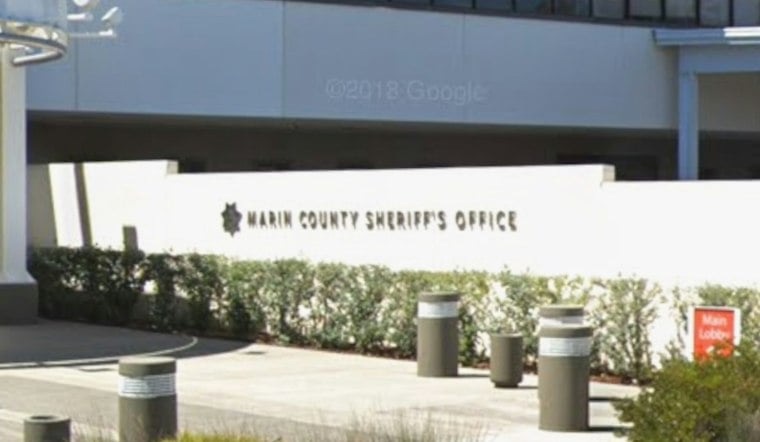
Marin County residents are rattled after learning that the sheriff's office's network of 31 Flock Safety license plate cameras let out-of-state agencies run more than 250,000 searches on local driver data in late 2024 — all without the department's knowledge for nine weeks. The breach has reopened old wounds for a county that already fought this battle once before, and lost.
According to NBC Bay Area, reporter Jodi Hernandez found that the Marin County Sheriff's Department did not discover the breach until weeks after it began, and only later moved to deactivate out-of-state agencies' ability to view its camera data. The department has said it is still waiting to hear from Flock Safety about why the breach happened, while maintaining that protecting residents' privacy remains its responsibility and that it is committed to transparency and accountability, per the same report.
The scale of the intrusion is striking. Network audit logs reviewed by local media showed that out-of-state and federal agencies conducted 254,131 searches of the sheriff's Flock database in November 2024 alone, according to the Electronic Frontier Foundation. Those queries reportedly originated from law enforcement agencies in states with severe reproductive care restrictions and histories of assisting immigration enforcement, including Texas, Florida, Alabama, Indiana, and Kentucky.
A County That Has Been Here Before
This is not Marin's first brush with this exact problem. In October 2021, residents Tara Evans, Lisa Bennett, and Cesar S. Lagleva sued the Marin County Sheriff's Office in Lagleva v. Marin County Sheriff after discovering that license plate reader data had been shared with 424 out-of-state agencies and 18 federal entities, a case detailed by the Pacific Sun. That lawsuit ended in a June 2022 settlement requiring the sheriff's office to strictly comply with California Senate Bills 34 and 54 and to perform annual network search audits.
Evans, one of the original plaintiffs, told NBC Bay Area that the community's shared sense of safety and trust has eroded. The sheriff's office previously shared driver license plate information out of state to assist federal immigration enforcement, and Evans said she plans to continue fighting to protect her community — she is now considering filing another lawsuit, per the outlet's report.
Why the Sharing Is Illegal in California
California law draws a hard line here. Senate Bill 34, enacted in 2015 under California Civil Code Section 1798.90.5, explicitly bars public agencies from sharing or selling automated license plate reader data with out-of-state or federal law enforcement agencies, according to the ACLU of Northern California. The 2017 California Values Act, known as Senate Bill 54, separately forbids local agencies from using their resources to assist federal immigration enforcement.
Adam Schwartz said letting license plate reader data leave California threatens the safety of California residents, per NBC Bay Area's reporting. Both the Electronic Frontier Foundation and the ACLU have sent letters to the Marin County Sheriff's Department demanding answers about how the breach happened and why it went undetected for so long.
Fears Over What the Data Could Be Used For
Nick Hidalgo said the out-of-state agencies' searches could have been used to prosecute someone seeking an abortion, assist Immigration and Customs Enforcement, or track people protesting, according to the same NBC Bay Area account. Those concerns echo a pattern state officials have already moved against: California Attorney General Rob Bonta issued a legal bulletin in October 2023 reminding local law enforcement that out-of-state ALPR sharing violates state law, and his office later sued the city of El Cajon in October 2025 over similar data transfers, per the California Department of Justice.
Locally, the County of Marin Civilian Oversight Commission had already created a Monitoring and Compliance Ad Hoc Subcommittee in July to audit the sheriff's office's use of Flock cameras, before this breach became public. The sheriff's office replaced its older Vigilant Solutions plate reader system with the 31 Flock Safety cameras in late 2023 after the original vendor could no longer service the hardware, according to the Point Reyes Light.
A Countywide and National Pattern
Marin's sheriff is not alone among local agencies facing this scrutiny. An investigation by The Ark found that 34 outside police agencies ran 8,542 searches of Tiburon's Flock cameras tied to federally entangled inquiries in early 2026, prompting neighboring Belvedere to restrict camera access to just seven local agencies, as reported by SFGATE.
The response is spreading well beyond Marin. San Francisco shortened its Flock data retention from a year to 30 days after its own audit uncovered 299 improper search inquiries, and more than 50 local governments nationwide have canceled or suspended Flock Safety contracts entirely amid similar findings. In Washington, federal lawmakers introduced the bipartisan No FLOCK Act in September, which would withhold 10% of federal highway funding from states that fail to restrict ALPR use to five core public safety purposes.
For now, Marin's sheriff's office says it has cut off the out-of-state access that triggered the breach and is waiting on Flock Safety for an explanation of how it happened. Whether that answer satisfies residents like Evans, who are weighing a return to court, remains an open question for a county already bound by one broken promise.





