

























































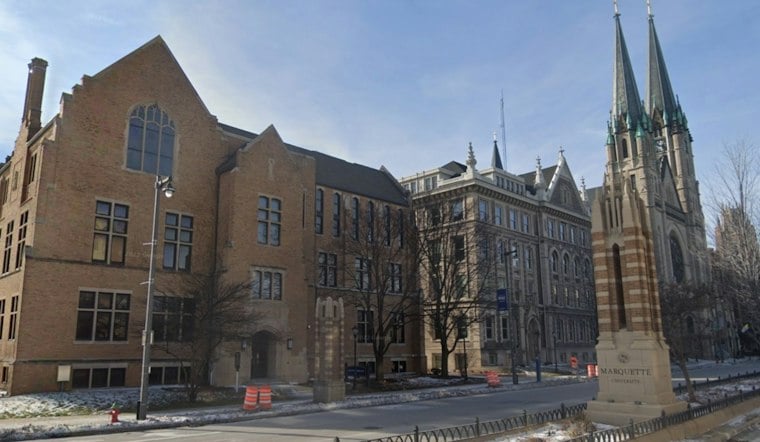
Natalia Beans was diagnosed with leukemia at 18 months old, according to the seed facts behind this story, and by October 2006 doctors had identified it specifically as Pre-B Acute Lymphoblastic Leukemia. She has been in remission since she was four years old. Today she is a Marquette University student balancing a budding cancer research career with a second life as a competitive salsa dancer.
From Hospital Bed to Research Lab
According to Marquette University, Beans wrote of her diagnosis in her own words: “In October 2006, I was diagnosed with Pre-B Acute Lymphoblastic Leukemia (Standard Risk).” That same university report describes her, as of spring 2025, as a Milwaukee native majoring in biochemistry and molecular biology. FOX6 News Milwaukee separately referred to her as “Marquette Junior Natalia Beans,” while a more recent university account from September 2026 describes her as “now a senior majoring in biochemistry and molecular biology” — a progression that reflects the different publication dates of each report rather than any discrepancy in her actual standing.
Her path into the lab began, per FOX6's reporting, the summer after her freshman year, when she joined a research group to investigate how proteins misfold inside cells and how that process can contribute to diseases including cancer. Beans serves as an undergraduate researcher in the lab of Dr. Anita Manogaran, an associate professor of biological sciences, and was a co-author on the lab's recent publication in Molecular Biology of the Cell, the university reported.
A Goldwater Scholarship and a Future in Drug Discovery
That research work helped earn Beans the Barry Goldwater Scholarship for the 2025-26 academic year — she was one of 441 recipients chosen from a pool of more than 5,000 applicants nationwide, Marquette reported. The honor comes with $7,500 in support for each of her junior and senior years of college. As Madison365 reported, Beans intends to use that foundation to earn a Ph.D. in cell biology, pursuing advancements in drug discovery for cancer research.
FOX6 reported that surviving the disease as a child inspired her to serve others facing the same struggle, and that her ultimate goal is to find a cure for cancer. Nationally, outcomes for young patients have improved dramatically over recent decades: according to the National Cancer Institute's SEER data, the five-year survival rate for childhood and adolescent cancer survivors rose from 63% in 1975 to more than 84% by 2010.
Finding Her Footing on the Dance Floor
Beans learned to dance at age five, and according to the seed facts behind this reporting, she mastered her salsa skills after returning to Milwaukee, eventually performing in Puerto Rico at age 11. She did not reach the championship round in that performance but kept dancing, and she has since become a seven-time world champion salsa dancer through solo and group performances, per those same seed facts.
She now performs with and teaches at Salsabrositas, where she also serves as team captain. According to Salsabrositas, the organization is a Milwaukee-based nonprofit dedicated to enriching lives through Latin dance, cultural education, and community engagement, founded in 2017 and offering public salsa classes to the community. TMJ4 reported that Beans leads classes and teaches many forms of Latin dance there.
Beans identifies as Afro-Latina, with African American and Guatemalan roots, and told TMJ4, “Seeing how I am Afro-Latina,” in describing how salsa dancing helped her embrace her identity and culture. Salsa itself originates from the Caribbean island of Cuba and is rooted in African rhythm and tradition, according to the seed facts in this story. Her competitive record includes podium finishes documented by the World Salsa Summit, which lists Beans and partner Layanet Quijano taking first place in the Amateur Ladies' Same Gender Anything Goes Salsa Showcase Adult category with a score of 83.06, and Beans and Natalia Pastor winning an Amateur Ladies' Same Gender Bachata Shines Duo Showcase Adult event with a score of 79.46.
Family Support and a Sacrifice-Filled Schedule
Her stepfather, Danny Balderas, serves as Salsabrositas co-director, according to the seed reporting, and has said that people who get a second chance to dance should take it. Beans has credited her family's support throughout her recovery and her dual pursuits, and has said she makes sacrifices to achieve her goals in both school and dance — telling interviewers that dance gave her peace of mind after cancer and that she leaves her heart on the dance floor every time she performs.
There is scientific backing for the idea that movement and dance can support people navigating a cancer journey. A systematic review published on PMC found that physical activity can help physical and mental well-being, that dance can positively affect day-to-day tasks, fatigue levels, and mental health for people along a cancer journey, and that community dance classes are a safe and feasible form of exercise for people with all types and stages of cancer.
Beans is now applying to graduate school as she looks ahead to a research career focused on fighting the disease she survived. She has said she plans to keep dancing for as long as she can, continuing to teach salsa when she is not competing — a balance between the lab and the dance floor that, by her own account, has shaped who she has become.



