

























































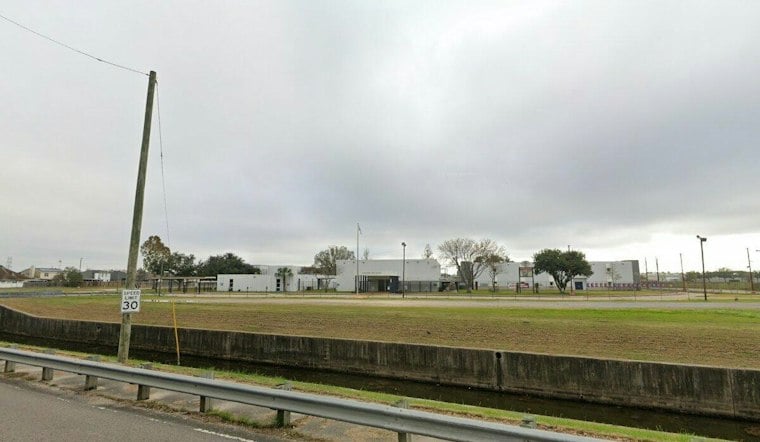
Alicia Lapoint was born premature and deaf, and her mother says she has spent 15 years fighting to get her the support she needs in school. That fight followed her into ninth grade at John Ehret High School in Marrero, where her mother, Lauren Fricano, says the campus did not always provide an interpreter and sometimes fell short on the resources Alicia needed to succeed.
Fricano says her daughter was placed in classes beyond her level without the support called for in her individualized education program, according to reporting by WDSU. Alicia has since been accepted into the Louisiana School for the Deaf, a shift her family hopes will finally match her classroom setting to her needs. Jefferson Parish Schools told the station it cannot comment on an individual student's situation because educational information is confidential, though records provided to WDSU showed the school communicated with Fricano about interpreter concerns and providing necessary resources.
How Jefferson Parish Says It Serves Deaf Students
Jefferson Parish Schools says it provides interpreting services, classroom accommodations, specialized instruction and other supports for deaf or hard-of-hearing students, with the specific services for each child determined through the IEP process involving parents and relevant educational professionals. The district's own description of its speech and hearing program, posted on jpschools.org, says students qualify for services through an evaluation and an IEP, and that those services are designed to support students in developing communication skills to be successful in their educational environment.
The district also says teachers of deaf and hard-of-hearing students provide direct instruction, consultation, monitoring and self-advocacy skills based on each student's IEP needs, while audiology services include hearing screening and testing and support for amplification devices. Louisiana law adds another layer of obligation: under the state's Deaf Child's Bill of Rights, public schools and publicly funded early-intervention programs must provide appropriate screening and assessment of hearing and vision capabilities and communication and language needs at the earliest possible age, with screening continuing throughout a student's educational experience, according to the Louisiana State Legislature.
A New Statewide Registry, and a Thin List of Names
Louisiana's interpreter shortage comes as the state is, for the first time, trying to formally count and qualify the people who do this work. The Louisiana Department of Health's Louisiana Commission for the Deaf launched its interpreter registry in 2026, and sign-language interpreters were able to begin applying to join the updated online system on July 1 of that year. The commission maintains the registry pursuant to Louisiana Revised Statute 46:2353, per the Louisiana Commission for the Deaf registry, which describes the tool as a way to locate a sign language interpreter who has met the state's minimum qualifications.
As of the WDSU report, the registry listed 96 active profiles statewide — a number the station's investigation centers as evidence of how thin the pipeline is. Of those profiles, 49 interpreters report being available anytime for appointments involving children upon request, per registry data cited by the station. The registry also includes independent contractors open to accepting assignments, though some listed interpreters may be full-time employees elsewhere and unavailable for additional assignments, the same registry data shows.
Jana Broussard said approximately 8% of Louisiana's population, roughly 360,000 people, are deaf, deafblind or hard of hearing, a figure that includes people with age-related hearing loss, according to the WDSU investigation. The Louisiana Department of Education separately noted that 1,032 students were registered in its system as of July 2024. Broussard also said Louisiana public and private service providers have long been required to secure qualified sign-language interpreters, but that the state previously lacked a clear, statewide definition of what qualified meant — a gap she said the new regulations are meant to close by giving both providers and recipients clarity about interpreter qualifications.
What the New Rules Actually Require
The regulatory shift traces to standards released by the Louisiana Department of Health through the Louisiana Commission for the Deaf, which the Louisiana Department of Health describes as establishing minimum qualification, training and registration requirements for sign-language interpreters statewide. Under the framework, the registry is meant to show which interpreters are eligible to work in Louisiana based on adherence to those qualification standards, according to a FAQ document posted by the Louisiana Department of Health.(ldh.la.gov/assets/docs/deafcommission/FAQSInterpreter.pdf) Registration requirements took effect after the Louisiana Commission for the Deaf's final rules were published in the Louisiana Register on May 20, 2026, per a Louisiana Department of Education newsletter, though enforcement of the registration requirement itself does not begin until January 1, 2027 — meaning interpreters have a window to get on the rolls before the rule has teeth.
Beyond the registry itself, the Louisiana Department of Health is launching new funding and programs aimed at increasing the overall number of sign-language interpreters in the state, and the Louisiana Commission for the Deaf already offers resources and professional development opportunities for interpreters, including a mentorship program with one-on-one coaching, study groups, job shadowing, internships and continuing education units.
A Familiar Shortage Beyond Louisiana
Louisiana is not alone in struggling to staff classrooms for deaf and hard-of-hearing students. In Washington, Yakima County and the state as a whole face a documented scarcity of qualified deaf-education teachers and American Sign Language interpreters, according to the Yakima Herald-Republic. The Yakima School District has just two deaf-education teachers, one for elementary students and one covering the upper grades, while a nearby educational service district stopped offering deaf-education services altogether, telling the paper, “We just cannot find highly qualified staff in our region.”
Even outside contractors hired to fill the gap are stretched thin, the Yakima Herald-Republic reported, noting that third-party interpreter companies are struggling to find people willing to work in person and can sometimes only provide virtual interpreters. Some Washington districts have tried to grow their own workforce instead, helping existing employees obtain deaf-education or interpreter endorsements. For families like Fricano's in Marrero, that same basic math — too few qualified interpreters for too many students who need them — is now playing out against the backdrop of Louisiana's brand-new, still-small registry.





