

























































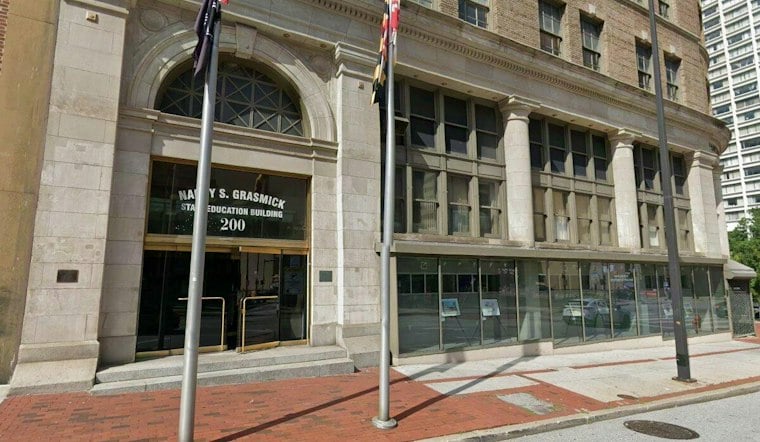
Maryland’s chronic absenteeism rate fell to 22.8% in 2026, its fourth consecutive annual decline, but no school system reached the state’s 15% goal. The statewide figure also masks sharp local differences: Baltimore City Schools recorded the state’s highest rate, 41.4%, and Excel Academy, Achievement Academy, and Edmondson Westside High School each reported rates above 90%.
The figures, detailed in a report from WBFF, show that attendance has improved since the pandemic-era peak but remains above its earlier level. Maryland’s rate reached 30.9% in 2022; the current 22.8% is still about three percentage points higher than the 19.5% recorded in the 2018–2019 school year, according to The Southern Maryland Chronicle. Under Maryland State Department of Education standards, a student is chronically absent after missing at least 10% of school days—about 18 days in a standard 180-day year, whether absences are excused or unexcused.
A Patchwork of Progress Across Counties
The county-by-county breakdown reveals a wide gap between Maryland's better-performing suburban districts and its urban core. Howard County Public Schools and Harford County Public Schools each reported a 15.4% chronic absenteeism rate, per the station's report, putting them closest to the state's goal. Carroll County Schools came in at 16.6%, Anne Arundel County Schools reported 17.8%, and Baltimore County Public Schools posted 21.5%.
Joshua Michael, president of the Maryland State Board of Education, framed the statewide dip as encouraging but incomplete. “This is a story of progress. We are encouraged but not satisfied,” Michael said, according to the same account. He added that the focus should remain on improving outcomes for children, and argued that setting ambitious goals has created urgency and focus in Maryland's public schools.
Transit problems are one reported obstacle to attendance in Baltimore, not the only one. Student advocates and district officials have cited transit breakdowns, long bus waits, and missed connections as structural challenges; students rallied at City Hall this week seeking more state funding for MTA service.
Attendance Barriers and Student Groups
Published accounts caution against treating transportation as a complete explanation for absenteeism. In a March 6, 2025, report on a Baltimore City Council hearing, WYPR quoted committee chair John Bullock distinguishing transit-related tardiness from absence and noting that family, neighborhood, academic, and bullying issues can also contribute. Howard County Public School System’s March 2026 Quarter 2 data update found higher chronic absenteeism rates among several student groups than among their peers, including economically disadvantaged students, multilingual learners, and students with IEPs, as well as students in several listed gender and racial or ethnic categories, according to the school system’s data update.
A Retiring Senator Questions the Blueprint's Payoff
State Senator Joanne Benson, who has represented Prince George's County in Annapolis since 1991 and plans to retire later in 2026, did not mince words about what the numbers mean for one of the state's signature education initiatives. “Academic progress in Maryland public schools sends a very unfortunate sign,” Benson said, per WBFF's report. She said lawmakers should revisit the Blueprint for Maryland's Future, arguing that the state's education funding is not serving the law's intended purpose.
The Blueprint, a landmark 10-year education reform law passed in 2021, increases state and local public school funding by roughly $3.8 billion annually — about $30 billion over its first decade — across five policy pillars, according to Wikipedia. Governor Moore proposed a record $10.2 billion state investment in public K-12 education for Fiscal Year 2027 in January, a $373.8 million increase over the prior year meant to fulfill the state's funding commitments under the law, per the Office of Governor Wes Moore.
Michael, for his part, struck a more measured tone on the funding question, saying specific Blueprint policy provisions should be examined rather than the law itself being abandoned. Maryland's third through eighth grade proficiency scores offered some evidence for cautious optimism: ELA proficiency rose about three percentage points since 2024 to reach 50.2% in 2026, while math proficiency climbed the same amount to 27.1%, per WBFF.
State Launches New Attendance Push as Testing Changes Loom
State Superintendent of Schools Carey M. Wright launched the “Maryland Shows Up” attendance campaign this month, establishing a recognition program for high-performing schools and distributing attendance toolkits developed with Attendance Works, according to the Maryland State Department of Education. Lawmakers also created the Task Force to Improve Attendance and Reduce Chronic Absenteeism in Schools through House Bill 879, signed by Moore in May 2025. The enacted law set December 31, 2025, as the deadline for the task force to report its findings and recommendations to the governor and General Assembly, according to Chapter 243.
Not every district is waiting on state-level fixes. St. Mary's County Public Schools lowered its chronic absenteeism rate from 27.7% to 23.1% by June 2026 through a tiered system offering direct family visits, student mentoring, and assistance with housing and transit, according to The BayNet. Maryland's overall trend still tracks closely with the rest of the country: nationwide chronic absenteeism fell slightly to 22.6% in the 2025–2026 school year, according to American Enterprise Institute data cited by The Washington Post, remaining well above the national pre-pandemic average of about 15%.
Looking ahead, the 2025–2026 school year marked the final administration of the Maryland Comprehensive Assessment Program. Beginning in spring 2027, grades 3 through 8 will shift to the Maryland System of Testing Academic Readiness, which features test sessions roughly 25% shorter — a change that will reset the baseline for tracking academic trends in the years to come.




