

























































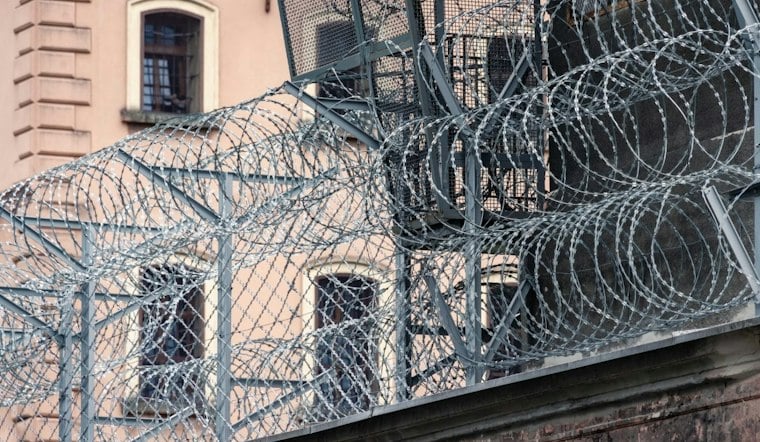
Federal detainees are heading back to Mecklenburg County lockups for the first time in years, under a new agreement between the Mecklenburg County Sheriff's Office and the U.S. Marshals Service that will relocate an initial group of 60 people in federal custody to Jail Central and Jail North. Most of that group is expected to land at Jail North, the long-shuttered facility that only recently reopened its doors.
A Deal Years in the Making
According to WSOC-TV, the two agencies have reached an agreement to relocate federal detainees to Mecklenburg County Jail Central in Uptown Charlotte and the Mecklenburg County Detention Center North. The initial wave will include 60 federal detainees, though that number could grow as local space becomes available, the station reports. Right now, about 350 of the roughly 450 federal detainees tied to the Western District of North Carolina are housed in facilities outside the state while they await trial, a gap the new arrangement is meant to start closing.
Jail North itself has quite a recent history. It was closed back in 2022, but it reopened after more than 200 state detainees were transferred there in September, per the same WSOC-TV report. Now, federal payments tied to the new U.S. Marshals agreement will help keep that facility running, according to WHQR. The federal government pays Mecklenburg County on a per-detainee, per-day basis for housing people in U.S. Marshals custody, the station notes.
Why Jail North Needed Reinforcements
Jail North's reopening wasn't just about federal dollars. The Mecklenburg County Sheriff's Office announced plans in May to bring the facility back online because Detention Center Central was bursting at the seams. By May 18, the resident population inside that main jail had climbed to 2,084, a number the sheriff's office said was continuing to rise dramatically, and by the next day, 288 residents were being held in overflow areas using temporary stack-a-bunk sleeping arrangements, per the Mecklenburg County Sheriff's Office. To staff the reopened facility, the sheriff's office said it planned to hire up to 50 qualified detention officers immediately.
Sheriff Garry McFadden said the new federal arrangement demonstrates collaboration, accountability, public safety and professionalism, according to The Charlotte Post. Chief Deputy U.S. Marshal Chris Edge said the agency is pleased to again house detainees with the sheriff's office, the Post reports, describing the relationship as a long-standing partnership between the two agencies. Edge also told WHQR that federal detainees can be moved elsewhere if Mecklenburg County needs additional space or runs into staffing shortages, a caveat that keeps the arrangement flexible rather than fixed.
The Long Road Back From a 2023 Falling-Out
This isn't the first time Mecklenburg County has housed federal detainees, and the gap that preceded this deal was not small. The previous arrangement ended in 2023 amid a dispute over daily reimbursement rates. WFAE reported at the time that the jail was receiving $160 per day for each federal inmate, but the sheriff's office wanted that rate raised to $191 per day, and when the U.S. Marshals' Prisoner Operations Division wouldn't agree, nearly 200 inmates held on federal charges were transferred out starting on August 10, 2023. The sheriff's office estimated at the time that losing the federal housing arrangement could cost it nearly $12 million in federal funds that year, per WFAE.
What followed was a scattershot system that put detainees far from Charlotte. WFAE reported that a large group was sent to the privately operated Robert A. Deyton Detention Center south of Atlanta, more than a four-hour drive away. WSOC-TV reports that since the 2023 split, federal pretrial detainees tied to the district have been held in as many as 14 different facilities across states including Georgia, Virginia, South Carolina and Kentucky, with some locations up to six hours from Charlotte.
Faster Cases, Closer Families
U.S. Attorney Russ Ferguson framed the new deal as both a financial and judicial win. He said housing detainees locally could reduce case timelines by up to a year and a half for some cases, according to WSOC-TV, and separately said the renewed arrangement returns millions of federal dollars to North Carolina while improving the efficiency of the federal justice system, per the Post. WHQR's reporting echoes that local housing is expected to reduce transportation costs and make court appearances easier to schedule.
Beyond logistics, officials point to the human stakes. Keeping detainees closer to Charlotte is expected to help defendants stay nearer their attorneys and prepare their defense more easily, and to support greater proximity between defendants and their families, which officials say can increase the likelihood of successful rehabilitation and reentry, per the Post. Federal prosecutors are also expected to gain better access to jailed witnesses in other federal cases once detainees are housed closer to the federal courthouse, reducing the transportation challenges that come with far-flung facilities, the Post reports.
The U.S. Marshals Service has long depended on partnerships with state and local governments to house its detainees, according to the U.S. Marshals Service. A separate intergovernmental agreement published by the Marshals Service confirms the arrangement allows the agency to house federal detainees with Mecklenburg County at the jail, formalizing the partnership that both sides now describe as restored.


