

























































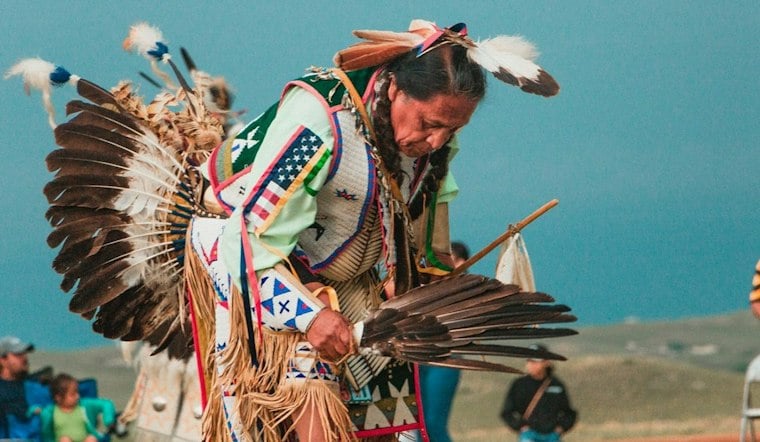
The Catawba Nation is throwing open the doors of its cultural center in Rock Hill on Nov. 21 for the annual Yap Yè Iswà Festival, a free, all-day celebration that this year includes a first look at a brand-new living-history exhibit called the Catawba Life Village. The festival runs from 10 a.m. to 4 p.m. at the Catawba Cultural Center on Tom Steven Road, and organizers say it remains open to anyone who wants to learn about the tribe's traditions, from pottery to language to dance.
According to the Post and Courier, the Catawba Nation is South Carolina's only federally recognized Native American tribe, with more than 3,300 enrolled members and a reservation that spans 700 acres in eastern York County. The name of the festival, Yap Yè Iswà, translates to “day of the people of the river” and is commonly rendered as “day of the Catawba,” according to WFAE. The public event celebrates Catawba heritage and cultural contributions, the Post and Courier reports.
Kassidy Plyler, the nation's cultural programs coordinator, said the festival exists to share Catawba culture and language with others, and that it also gives children a chance to connect with practices that were once outlawed. Catawba citizen Caitlin Rogers echoed that sense of continuity, telling the Post and Courier that Catawba culture continues to evolve even as its long history deserves recognition. Rogers said her children attend every festival as a family tradition — her daughter participates in a language revitalization program and a pottery apprenticeship with the Georgia Harris Foundation, while her son is a dancer.
A New Village Brings Catawba History to Life
The biggest addition to this year's festival is the Catawba Life Village, a project funded by a grant from South Carolina 250, the state initiative that supports historic commemorations statewide. The village will portray Catawba Nation history through live actors and will be open from noon to 2 p.m. on Nov. 21 for special programming, per the Post and Courier's reporting. The cultural center plans to hire three or four docents to staff the village going forward, and Rogers said she hopes the exhibit will expand over time.
Beyond the new village, the day's schedule leans heavily on hands-on demonstrations and scholarship. Catawba citizens will sell pottery, beadwork, ribbon skirts and other art throughout the grounds, with some of those pieces made live on-site during cultural center classes. The festival will also include traditional dances, storytelling, a guided nature trail walk, a bird release and a blowgun competition that caps off a blowgun class taught at the center.
Four Talks Dig Into Catawba History and Archaeology
Organizers have lined up four scheduled talks exploring different corners of Catawba history. At 11 a.m., Blue Heron Clay will speak on “Passing the Clay: Growing the Next Generation of Catawba Potters.” At noon, a panel featuring Mary Elizabeth Fitts, Lindsay Bloch, Beth Bollwerk, Brandi MacDonald, Karen Smith and researchers from the UNC-Chapel Hill Research Laboratories of Archaeology will discuss eighteenth-century Catawba pottery craft and trade.
At 1 p.m., South Carolina State Archaeologist Christopher Judge will give a talk on the Catawba peace pipe. At 2 p.m., Zachary Lemhouse, director of the Southern Revolutionary War Institute at the Culture & Heritage Museums of York County, will speak on “Our Name Is High: Catawba in the American Revolution.”
Getting There and Festival Etiquette
The festival will provide shuttles from the Church of Jesus Christ of Latter-day Saints building at 1989 Reservation Road and from Avenue of the Nations, according to the Post and Courier's reporting. Attendees are asked to be mindful during the day's cultural performances — photography will not be permitted during certain dances.
This year's gathering builds on past festivals that have drawn the public into the same cultural center grounds. In 2025, WFAE reported that the celebration featured traditional dances, drumming, artisan vendors and speakers, also running from 10 a.m. to 4 p.m. with parking at the Longhouse and shuttle service to the event grounds. Back in 2019, the Herald reported that the Catawba Indian Nation had revived the festival after a 12-year hiatus, with that year's program featuring inter-tribal dances, pottery and beadwork demonstrations, and traditional Native American food. Accounts differ on exactly when the tradition began — the Herald's 2019 story traced it to 1990, while WFAE's 2025 coverage placed its roots more broadly in the 1990s.




