

























































Charlotte-Mecklenburg parents who spent the spring asking for a daily hour of kindergarten play are back with a bigger request: take the pilot out of a handful of schools and put it in every elementary school.
Parents asked on Nov. 9 to expand the play-based learning pilot from nine schools to all elementary schools, WCNC Charlotte reported. They say the hour gives children more hands-on work and more time with classmates instead of screens, and they hope the district finds a way to pay for that beyond the first campuses.
Toy Cars, Then a Story
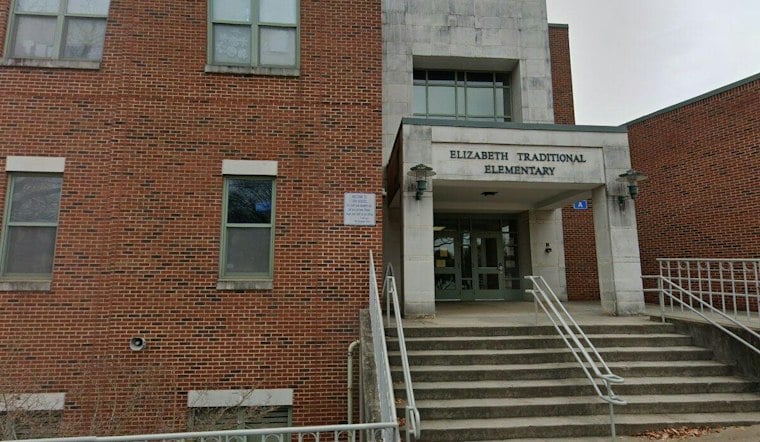
At Elizabeth Traditional Elementary, 6-year-old Myles Hess told WCNC his favorite part of school was playing with toy cars in the play lab. His mother, Becky Hess, advocates for the program through K Needs Play. She said the hour teaches math, science, reading and writing through dramatic play, and that Myles loves school because he looks forward to that lab.
The classroom writing center is where the argument gets less abstract. Students there make their own stories. Hess said children who had never written are now writing and drawing full stories.
That hour is already on the clock in at least some buildings. WFAE reported that kindergartners at some CMS elementary schools are getting an hour of play every day this school year. K Needs Play says kindergarteners in nine schools now have access.
Play, Just Not the Model
The campaign started as a restoration project, not a brand-new theory. In early March, Mollie Auerbach, a former kindergarten teacher and CMS mom, set out to restore one hour of play-based learning a day in kindergarten, The Charlotte Observer reported. By mid-April, K Needs Play was asking the district to adopt that hour, according to BPR.
CMS's answer then was that play was already in the building. Officials told BPR that teachers regularly incorporate play and enrichment activities designed to encourage imagination and creativity. Kindergarten classrooms, though, did not explicitly use a play-based learning model. Enrichment scattered through the day is not the same thing as a protected hour.
The version parents won is more specific than a tub of blocks in the corner. The Charlotte Post described an added hour of screen-free choice time, with teachers guiding play that lines up with the curriculum. New America reported the district's K-Play announcement the same way: daily, choice-based and screen-free, set for the 2026–27 school year.
$200,000 and a Moving Head Count
In June, WBTV reported that CMS had identified seven schools for the initial cohort: Collinswood, Eastover, Elizabeth Traditional, Hawk Ridge, Lansdowne, River Gate and Villa Heights. The district's plan was to learn from that cohort before deciding whether, and how, K-Play could grow.
The money had a deadline attached. The Observer reported that CMS said it would take about $200,000 for supplies and teacher training at schools that wanted in, and that the district needed the money by July 1. Parents raised it in less than a month, with a little extra to spare. After that, the Observer reported, CMS planned the program for nine campuses and 38 classrooms. If the pilot succeeded, the district was considering a districtwide rollout for 2027–28.
That is still a consideration, not a vote. Nothing in the later reporting shows the board has approved a districtwide expansion. A board member's enthusiasm is not the same document as a budget for every kindergarten.
Crayons Are a Recurring Bill
The founder of K Needs Play told WCNC that proposed funding would help pay for classroom equipment. The unglamorous part of the program does not stop after the first purchase order. Recurring costs include basic supplies such as crayons and construction paper.
One parent told WCNC that some children may have few chances to play outside school because their parents work. Advocate Carolyn Breedlove, whose own children will soon start kindergarten, described a different childhood: recess, PE and roaming the woods on her family's 28-acre property. She said being able to move her body helped her excel academically. A 28-acre woods is not the CMS floor plan.
School board member Dr. Charlitta Hatch told WCNC she championed K Needs Play from the beginning and that play matters to children's academic, social and emotional development. Parents are still hoping the district finds a way to extend the hour so more kindergarteners can use it.
Next door, the model is already ordinary. Cabarrus County Schools says it uses play-based learning in all kindergarten classrooms, building early math, literacy, problem-solving, vocabulary and social-emotional skills through hands-on exploration. BPR described kindergarteners at Charles E. Boger Elementary in Kannapolis rotating through play stations that mirror their lessons.
The broader case parents are borrowing is not new. BPR reported that a Lego Foundation review of 26 studies found play-based approaches can help close achievement gaps, and that state Superintendent Mo Green's strategic plan calls for expanding play-based learning statewide. The Observer noted that, over the last two decades, U.S. kindergartens have shifted from play toward structured academics.
CMS said in June it would use the cohort to decide the next step. The parents' Nov. 9 ask does not wait on the 2027–28 maybe. It is an hour, equipment, and a supply list that starts with construction paper, for kindergarteners who are not in the nine.




