

























































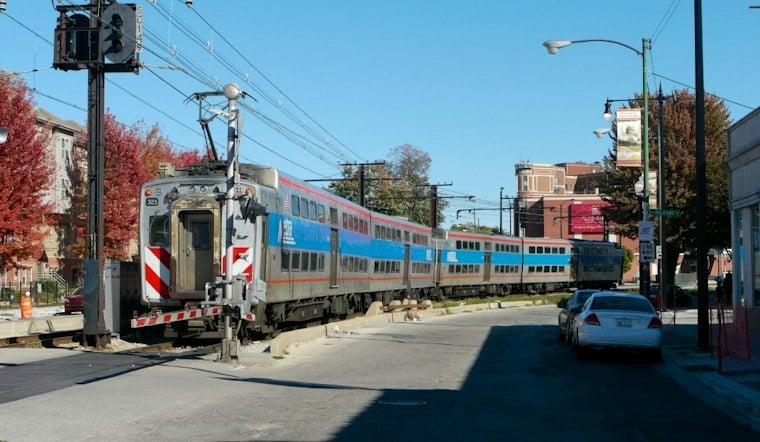
A Metra Electric train bound for downtown Chicago struck a pedestrian near Stony Island Station on the South Side during Monday morning rush hour, stopping the train in its tracks and triggering widespread delays across the line. Metra police and the Chicago Fire Department responded to the scene near 71st Street off Stony Island Avenue in South Shore, where the train had been scheduled to arrive at Millennium Station downtown at 7:22 a.m.
According to CBS News Chicago, the train was identified as Electric Train 302, and it will not continue on its route following the incident. Metra's own service alert confirms that account, stating that train number 302, scheduled to arrive at Millennium Station at 7:22 a.m., “will not operate past Stony Island due to Police Investigation,” according to Metra. The agency added that South Chicago inbound and outbound trains remained on the move but could face extensive delays because of the same police investigation.
Metra's service alert identified Train No. 302 near Stony Island and said South Chicago inbound and outbound trains remained in service, though extensive delays were possible. The duration of the disruption remains unknown.
Why Clearing the Tracks Takes So Long
Metra has explained why pedestrian strikes routinely produce lingering delays rather than quick fixes. The agency says any incident involving a pedestrian or vehicle requires a full response from railroad and emergency personnel, including police, paramedics, fire crews, coroners and railroad supervisors, according to Metra's own explanation of service disruptions. Only after authorities clear the scene can railroad personnel inspect the rails and the train itself to confirm there is no damage, a process that must finish before the affected train can move again.
That is also why Metra says it usually cannot offer exact delay estimates while a scene remains under local authorities' jurisdiction. The agency's service area is large by design, covering six counties and more than 110 municipalities, per WBEZ, meaning a single incident on one line can ripple into delays felt far beyond the immediate scene.
A Recurring Problem Across the System
Monday's incident is not an isolated one for Metra's network. A similar strike on the Metra Electric and South Shore lines during a Monday evening commute previously forced Metra police to halt all train traffic at 7:55 p.m., with service not resuming until 8:21 p.m. and trains running 40 to 45 minutes behind schedule, according to NBC Chicago. In that case, police did not clear the scene until 8:42 p.m., and individual trains on the line reported delays stretching 45 to 60 minutes or more.
Metra officials have said delays stemming from a single pedestrian incident can run anywhere from 30 to 110 minutes once residual effects on other trains are factored in, per the same WBEZ report. The scale of the underlying issue is stark: Northwestern University researcher Ian Savage counted 338 pedestrian deaths by train across the six-county Chicago area between 2004 and 2012, roughly one every 10 days, with about 47 percent of those incidents determined to be suicides.
Riders along the South Chicago and South Shore corridors were urged to check Metra's alerts directly for the latest status Monday, as the agency cautioned that South Chicago inbound and outbound trains could face extensive delays because of the police investigation near Stony Island.





