

























































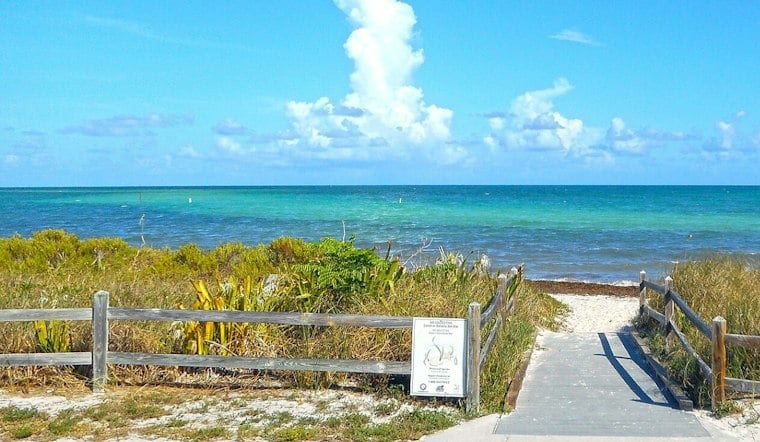
A 66-year-old Miami man spent the night in jail after a Monroe County Sheriff's marine deputy pulled a dead tarpon out of his pickup truck bed at Bahia Honda State Park. Lazaro Morales had told the deputy he hadn't caught any fish that evening, but the discovery told a different story, and he was arrested on a misdemeanor charge of illegally harvesting tarpon.
According to the Miami Herald, Lower Keys marine deputy Luis Guiardinu was patrolling Bahia Honda State Park on Saturday when he encountered Morales fishing nearby. Morales denied catching anything before Guiardinu checked his pickup truck and found the dead tarpon in the bed, per the Monroe County Sheriff's Office. Separately, Tampa Free Press reported that the arrest occurred at approximately 8:34 p.m. Saturday.
Florida's tarpon fishery is catch-and-release only, with one narrow exception. Under Florida Statute § 379.357, anglers may purchase a single $50 tarpon tag per year, but only if they're attempting to set an official state or world record, and the tag must be attached through the fish's lower jaw immediately upon landing. Morales had no such tag, according to the Monroe County Sheriff's Office account relayed by the Miami Herald.
Why the Law Treats a Dead Fish as a Crime
A first-time charge of illegally removing a tarpon greater than 40 inches from the water can carry up to 60 days in jail and a $500 fine under Florida law published through Online Sunshine.
The Florida Fish and Wildlife Conservation Commission's own guidelines add another layer of protection: tarpon measuring over 40 inches must remain in the water. The guidance calls for keeping large tarpon in the water, including when they are caught in waters like those around Bahia Honda.
A Nursery Ground Patrolled for a Reason
Bahia Honda State Park and the surrounding Lower Keys channels function as critical migratory routes and nursery habitat for tarpon, which is why wildlife and marine law enforcement keep a regular presence there, Tampa Free Press noted. The waters around the park are tarpon fishing grounds, drawing anglers who practice catch-and-release as the norm rather than the exception.
That norm isn't just tradition — it's tied to money and biology. The Bonefish & Tarpon Trust found that the Florida Keys flats fishery, which depends heavily on catch-and-release tarpon, bonefish, and permit angling, generates more than $465 million in annual economic impact. Tarpon also grow slowly, meaning a depleted population could take decades to rebound, according to research summarized by Flylords Magazine.
A Fish Rarely Worth Keeping
Part of what makes illegal tarpon harvest especially frustrating to guides and wildlife officers is that the fish offers almost nothing in return for the risk. In a statement issued during an earlier prosecution, the Florida Fish and Wildlife Conservation Commission noted that tarpon are rarely eaten because their meat is tough, bony, and considered poor eating.
More recently, Derrick Lee Vivian was arrested on November 5, 2025, while Christopher Jeffrey Smith was booked on Wednesday of the week of the January 29, 2026, report. The men entered Florida Keys Aquarium Encounters in Marathon in May 2025, caught a tarpon from a private lagoon, and left it to die after posing for photos; both faced second-degree misdemeanor charges carrying up to 60 days in jail, as reported by The Independent.





