

























































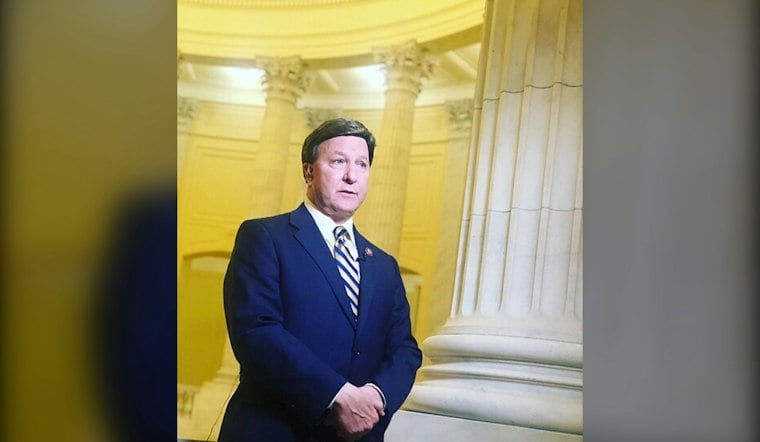
A Michigan Republican running for Senate and the union representing thousands of the state's autoworkers rarely find themselves on the same side of anything. But General Motors just gave them one: Mike Rogers and the United Auto Workers both tore into the automaker this week after it unveiled a new $20 billion stock-buyback plan, each accusing GM of putting shareholders ahead of the people who build its cars.
A Rare Point of Agreement
Rogers, a former U.S. House member and the Michigan Republican Senate candidate, and the UAW separately accused General Motors of choosing shareholders over workers, according to investing.com. The criticism followed General Motors' board approving the new $20 billion share-repurchase authorization, a move confirmed in the company's own third-quarter results release. It is an unusual alignment: the UAW endorsed Rogers' Democratic opponent, Abdul El-Sayed, in the race for Michigan's open Senate seat.
Rogers argued that GM had misspent years chasing electric vehicles that didn't sell, framing the buyback as proof the company's priorities are misplaced. The station's report quotes him saying GM lost billions investing in EVs nobody wanted, and that the company could have spent the past two years reinvesting in Michigan workers and manufacturing vehicles consumers actually want to buy. According to the same account, Rogers said GM chose profits over people, putting Michigan autoworkers at risk, though he did not elaborate on exactly how the EV investments factored into the buyback decision.
Fain Calls the Buyback Outrageous
UAW President Shawn Fain was even blunter. In a statement posted to uaw.org, Fain said, “This company has spent $30 billion on stock buybacks and dividends in the past 5 years alone.” He added that “just five Wall Street firms — companies like Blackrock and State Street — will get nearly $7 billion” from the new buyback, calling it outrageous given that, per the UAW, 80% of GM autoworkers lack pensions or retiree healthcare benefits. Fain argued the buyback shows GM is choosing Wall Street profits over blue-collar America, and said stock buybacks funnel billions generated by working-class labor straight to Wall Street investors.
GM's own accounting of its buyback spending differs somewhat from Fain's figure. Investing.com reported that the company has bought back about $29.5 billion in stock since 2023, a separate timeframe and total than the $30 billion in buybacks and dividends combined that Fain cited over five years.
GM Defends Its Spending Priorities
General Motors has pushed back by pointing to its broader investment record. The company said its first priority is investing in its business and employees, noting it has reinvested more than $100 billion since 2020 to fund growth in products, factories and people. GM has separately said it plans to spend more than $16 billion in the United States this year on manufacturing and research and development, according to a company release tied to a July visit to a GM facility where Rogers appeared alongside President Donald Trump. At that event, the pair argued that policies accelerating EV adoption threaten U.S. manufacturing jobs.
CEO Mary Barra said GM viewed its shares as undervalued in explaining the buyback decision. That comes as the company has scaled back electric-vehicle production and investment plans amid softer demand and policy shifts under the Trump administration. GM has recorded $11.2 billion in EV-related charges since 2025, and Bloomberg reported that GM shares fell as investors looked past the new buyback to focus on a narrower 2026 profit outlook, which now sits below the $14 billion to $16 billion range the company had projected in July.
A Senate Race Shadowed by the Auto Industry
Rogers has generally focused his broader criticism on government policies promoting electric vehicles rather than on automakers themselves, making his direct shot at GM notable. He is competing against El-Sayed in a closely watched race that could help determine control of the Senate, with Republicans increasingly courting autoworkers and other blue-collar voters across Michigan, a state whose economy remains closely tied to the auto industry. Polls through mid-October generally showed El-Sayed ahead by a few points heading into the November 3 election, though several surveys fell within the margin of error, per investing.com.
El-Sayed did not immediately respond to a request for comment on GM's buyback or Rogers' criticism, according to the same report. With the election two weeks away, the dispute over GM's spending choices has become one more flashpoint in a race where both candidates are vying to claim the mantle of defending Michigan's autoworkers.


