

























































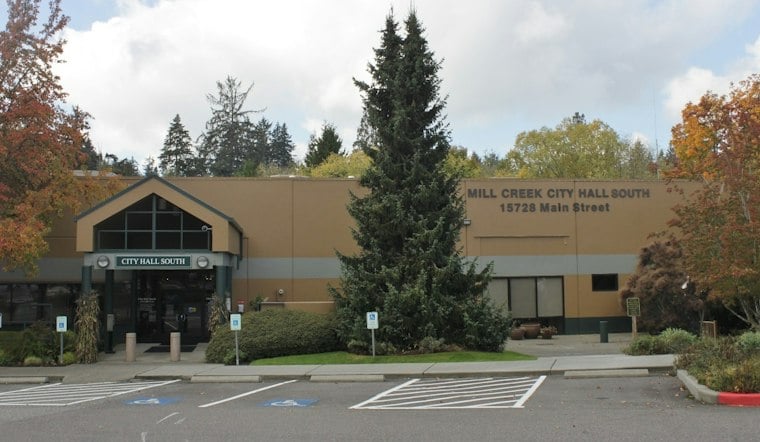
Mill Creek is moving toward its biggest expansion in nearly two decades, after the City Council voted 6-0, with one abstention, to authorize staff to begin working with Snohomish County and the state Boundary Review Board on a plan that could add an estimated 11,700 residents south of the city. If it goes through, the annexation would be Mill Creek's first since 2008 and could push the city's population from about 21,000 to roughly 32,000.
The proposed area includes neighborhoods near 180th Street Southeast and 192nd Street Southeast, with boundaries generally extending east toward 35th Avenue Southeast and west toward the North Creek Park corridor, according to HeraldNet.com. City staff currently estimate the annexation would take effect Jan. 1, 2028, if it is ultimately approved. Tuesday's vote did not finalize anything — it simply authorized the next round of technical work.
Revenue Projections Driving the Pitch
Financial projections cited in the council discussion estimate the southern annexation area would generate $2.7 million in city revenue in its first year and roughly $5.3 million annually by 2045, per the same HeraldNet.com report. Those numbers have become the central selling point for supporters, who argue the additional tax base would help keep property taxes in check as the city's costs continue to climb.
Council Member Vince Cavaleri, who is also a Mill Creek City Council member, cast the lone abstention. He said he doesn't believe the financial projections accurately reflect larger financial trends, including shifts in the housing market, and he's wary of leaning on numbers he considers shaky. “There might be an initial sugar high, but I don't trust the data,” Cavaleri said, according to HeraldNet.com's reporting on the meeting.
A Manageable First Step, Not the Biggest Option
City leaders had multiple annexation scenarios on the table before narrowing their focus. According to Citizen Portal, the council indicated a clear preference for a manageable, fiscally positive first step rather than the largest scenario, which would have paired the southern area with a western annexation zone. Consultants told the council that residential-heavy annexation tends to produce slower long-term growth than scenarios that include commercial and industrial corridors, which generate the largest near-term net revenues, the outlet reported.
Staff have cautioned that all of the fiscal figures are still estimates and will be refined at the block level as planning continues, per the same consultant briefing. That caveat looms over the debate: both sides are arguing about projected numbers that the city itself says aren't finalized.
Cavaleri's Long-Term Concerns
Beyond doubting the revenue math, Cavaleri has raised broader worries about what a bigger Mill Creek means down the road. He has said annexation may provide a short-lived boost but could hurt the city and residents over the long term, and he's cautioned that slowing growth in new homes and businesses could make the promised tax windfall fall short of expectations. Cavaleri has also pointed out that a larger city population allows municipalities to borrow more money, meaning annexation could ultimately increase Mill Creek's debt load.
He has said he'd like to see the annexation proposal put to a public vote, and has expressed concern that the issue was brought before the public prematurely. The city is expected to decide in December whether to pursue the annexation through a council vote or an interlocal agreement with the county, followed by a final ordinance — meaning the process by which this ultimately gets decided remains unresolved.
How Washington's Annexation Process Works
Under Washington law, cities exploring this kind of expansion aren't necessarily just negotiating with county officials from scratch. State statute allows a qualifying code city to collaborate with the county where it's located to form an interlocal agreement covering annexation of unincorporated territory within an urban growth area, so long as the process includes procedures for public participation, according to RCW 35A.14.472. A related statute, RCW 35A.14.296, permits that kind of interlocal agreement to include phased annexation, with a public hearing required before any agreement is executed.
Not the Only City Eyeing Expansion
Mill Creek isn't alone in weighing this kind of move. HeraldNet.com's report notes that Edmonds and Everett are also currently exploring annexation of their own. In Edmonds, the city council voted 5-2 in late July to extend a utility tax increase through Dec. 31, 2028, and directed staff to further evaluate annexing unincorporated territory near Esperance, according to My Edmonds News.
For now, Mill Creek's plan remains a work in progress rather than a done deal. The council's authorization sends staff back to the table with the county and the Boundary Review Board, with the bigger decisions — how to formally pursue annexation, and whether residents get a direct vote on it — still ahead this December.





