

























































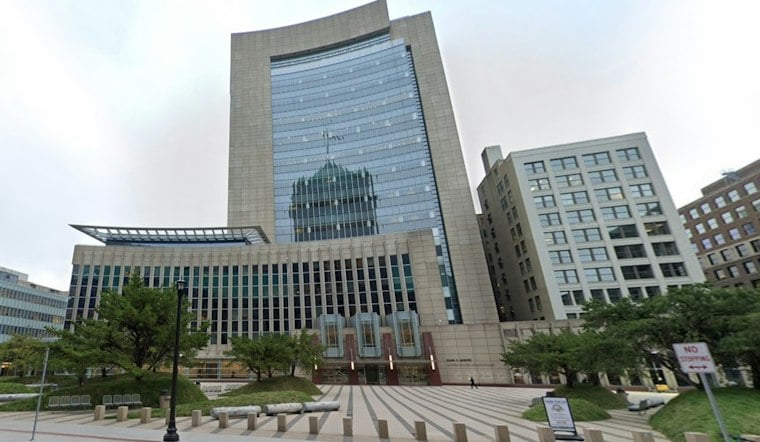
A federal jury acquitted Minneapolis violence interrupter Kashmir Khaliffa McReynolds, 37, of providing a firearm to a felon, a charge arising from a March 10, 2025, shootout after a backyard barbecue in north Minneapolis. The verdict resolves that federal charge only: co-defendant Alvin Anthony Watkins Jr. still faces federal firearm charges, and both men face state felony charges tied to the shooting, the Star Tribune reported.
The shooting took place near the 3600 block between Queen and Penn avenues, where McReynolds was wounded. Prosecutors alleged that after someone fired toward the men, McReynolds and Watkins returned fire. The federal charge against McReynolds centered on whether he supplied Watkins, a felon, with a gun knowing Watkins was prohibited from possessing one. The jury’s acquittal does not decide Watkins’s case or the separate state allegations.
A case involving two different roles
McReynolds was working as an armed security guard for 21 Days of Peace that night and had a permit to carry, according to court filings cited by the Star Tribune. That is distinct from the usual violence-interruption role: the Star Tribune describes violence interrupters as community workers who try to defuse conflicts, not as armed guards. The case therefore involves both a specific federal gun-transfer allegation and questions about how armed security fits alongside violence-prevention work.
Oversight and contracts remain part of the backdrop
The acquittal comes amid scrutiny of how Minneapolis monitors violence-prevention contracts. A city audit found no standardized process for site visits to check whether the work was being done, the Star Tribune reported. FOX 9 also reported that an internal audit found the city had not properly overseen millions of dollars in violence-prevention contracts.
Contract decisions involving Rev. Jerry McAfee’s organizations should not all be treated as the same program or award. The Star Tribune reported that city officials recommended separate community-trauma-response contract extensions for Salem Inc. and McAfee’s church—$303,000 and nearly $348,000, respectively—distinct from the proposed violence-interruption contract. Separately, a proposed violence-prevention contract worth nearly $650,000 was pulled for review after the men were initially charged, the Star Tribune reported. Minneapolis later tightened contract terms; The Trace reported that only three organizations accepted the new terms, while at least four others left city contracts, and 21 Days of Peace was not then contracted with the city.
What evaluations can—and cannot—show
Evidence about other violence-interruption programs offers context, not a verdict on 21 Days of Peace or this shooting. A National Institute of Justice summary of Chicago’s separate CeaseFire program reported that an analysis using 17 years of data found shootings decreased 16% to 28% in four of seven sites studied. Those results do not establish the effectiveness of 21 Days of Peace or explain what happened at the Minneapolis barbecue.



