

























































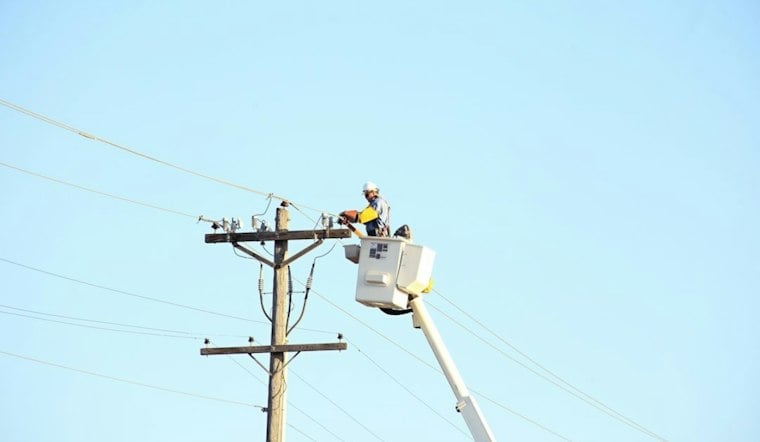
Crews began a six-day grid-hardening project on eastern Molokaʻi Saturday, cutting power daily between 8 a.m. and 4 p.m. while they replace 8 miles of copper power lines and upgrade 27 poles along East Kamehameha V Highway. The work, scheduled to run through Thursday, covers the highway from Onioni Drive to ʻUalapuʻe, while outages affect customers between Onioni Drive and Puʻu O Hōkū Ranch. It has reignited worries among residents who depend on reliable electricity to keep hunted and fished food from spoiling.
According to Maui Now, Hawaiian Electric says planned outages are required for the work to be completed safely, and the utility has framed the project as part of ongoing efforts to harden the electrical grid and reduce wildfire risk on the island. Affected customers between Onioni Drive and Puʻu O Hōkū Ranch were notified directly by mail ahead of the shutoffs, per the same report. As first detailed by Civil Beat, Hawaiian Electric has said its notice period exceeded the utility's typical advance warning, sending letters to customers on September 11, following up with emails starting September 16, and holding a virtual webinar the week before the outage began.
A Grid Built for Hurricanes, Now Rebuilt for Fire
Civil Beat reports that Hawaiian Electric shifted its infrastructure priorities from hurricane resilience toward wildfire prevention following the 2023 Maui wildfires, which killed 102 people and destroyed much of Lahaina. On Molokaʻi, that shift now means replacing aging copper conductors with aluminum lines and swapping out poles identified for upgrades — work the utility says will reduce wildfire risk, improve service reliability, and make future maintenance and repairs easier and quicker, according to Civil Beat.
Hawaiian Electric spokesperson Darren Pai said the blackout is necessary for public safety, per Civil Beat's reporting, while Shayna Decker with the utility said customers received notifications up to three weeks in advance, followed by reminders. The company has trucks and linemen from other islands staged for the project and is providing a generator to a local restaurant and market, which will serve as a customer hub with cell phone charging stations and internet access, Civil Beat reports.
Fish, Venison and a Fragile Food System
For many eastern Molokaʻi households, the outage lands squarely in hunting and fishing season. Civil Beat reports that Molokaʻi has a high percentage of Native Hawaiian residents who hunt, fish and farm during the summer months, relying on subsistence practices in part because groceries are expensive and the nearest Costco is on Maui. Residents say the planned outage threatens their summer food stocks, according to Civil Beat.
The Molokaʻi Clean Energy Hui proposed delaying the outages until later in 2026 or early 2027, and separately proposed spreading the work over 12 days with outages limited to four hours per day, arguing a modified schedule could prevent venison and fish from thawing and spoiling, Civil Beat reports. The group also estimated the financial burden on families from the outage, though the broader figure cited in that reporting could not be independently verified here. Hawaiian Electric rejected the community's schedule proposals, saying the work could not be completed in four-hour shifts for technical and safety reasons and that it could not accommodate the requests, according to Civil Beat. Molokaʻi Clean Energy Hui's Leilani Chow said the community is asking Hawaiian Electric for some accommodation, telling Civil Beat that Molokaʻi needs unique solutions, while Michael Colón said Molokaʻi residents are extremely vulnerable, per the same report.
An Island Already Running on Thin Margins
The anxiety over a six-day outage reflects a deeper structural reality. Molokaʻi's grid-connected electricity is primarily produced by Hawaiian Electric's diesel-powered plant, and these sources together supply roughly 93 percent of residents, while the remainder live off-grid with diesel generators and propane, according to Grist. The island, home to about 7,300 residents, has roughly 500 rooftop solar arrays generating 15 percent of its power, Grist reports — though Hawaiʻi Public Radio has separately reported that rooftop solar accounts for 14 percent of the island's energy consumption, a figure cited in the context of Molokaʻi having no utility-scale renewable energy projects as of 2023.
Molokai Clean Energy Hui says all of the island's critical infrastructure — more than 40 facilities — currently relies on diesel power from Pālāʻau, with none of those buildings equipped with renewable energy or batteries to keep operating during frequent blackouts or isolation during heavy rain. The group also says the island currently has only two weeks of fuel stored for electricity generation. Hawaiʻi's state preparedness guidance, meanwhile, recommends residents store 14 gallons of water per person — enough for two weeks at one gallon per day — according to the Hawaiʻi Emergency Management Agency.
Microgrids and Millions in Planned Upgrades
Community-driven plans aim to chip away at that dependence on diesel. Two proposed Molokaʻi microgrids would add a 250-kilowatt solar array at the Kualapuʻu recreation center and a 2.2-megawatt array in Pālāʻau, each paired with battery storage, per Grist and Molokai Clean Energy Hui's own project descriptions. Hawaiʻi Public Radio reports that Molokaʻi's energy projects are focused on increasing emergency preparedness by decentralizing generation and strengthening critical infrastructure.
At the utility level, Hawaiian Electric is seeking regulatory approval to invest about $190 million over five years in a climate-adaptation transmission and distribution resilience program, according to the company. Hawaiian Electric says it began developing its Wildfire Mitigation Plan in 2019, continuing to adapt it as the Hawaii Emergency Management Agency named wildfires the state's top hazard in its October 2023 statewide hazard mitigation plan. The utility has also said it may shut off power proactively during forecast high winds and dry conditions.
For eastern Molokaʻi residents watching the clock through Thursday, those longer-term investments offer little immediate relief. The island's outage this week is, for now, the most tangible sign of a utility working to retrofit infrastructure built for a different kind of disaster — even as the community it serves waits to see whether its freezers, and its food, survive the week intact.


